Justice for Murder Victims Act
Summary
What This Bill Does
The Justice for Murder Victims Act adds 18 U.S.C. section 1123 so federal homicide prosecutions may be filed without regard to how much time passed between the defendant's act or omission and the victim's death. It preserves any otherwise applicable statute of limitations under 18 U.S.C. section 3282(a). It also amends the federal murder penalty rule so the death penalty is unavailable unless the government proves beyond a reasonable doubt that the victim died not more than one year and one day after the act or omission.
Who Benefits and How
Families of delayed-death homicide victims, federal prosecutors, FBI and federal law-enforcement investigators, victim-rights advocates, and communities affected by serious assaults benefit because a homicide charge is not blocked solely by medical survival beyond the old year-and-a-day period. Prosecutors gain authority to pursue homicide when injuries, coma, life support, or delayed medical decline link the later death to the original federal offense.
Who Bears the Burden and How
Criminal defendants in federal homicide cases, federal public defenders, defense attorneys, federal courts, expert witnesses, and prison-system planners bear the burden of litigating causation across longer timelines. The government still must prove causation and comply with statutes of limitation, and it cannot seek the death penalty when more than one year and one day elapsed between the act or omission and death.
Key Provisions
- Adds 18 U.S.C. section 1123 allowing federal homicide prosecution regardless of the elapsed time between the act or omission and the victim's death.
- Protects existing statutes of limitation by stating that section 1123 does not supersede section 3282(a) where it applies.
- Prohibits a federal death sentence unless the government proves beyond a reasonable doubt that death occurred within one year and one day.
- Amends 18 U.S.C. section 1111(b) so delayed-death murder remains punishable by any term of years or life imprisonment, but not death.
- Applies the new rule only to acts or omissions occurring after enactment.
Evidence Chain:
This summary is generated from the full bill text using AI analysis. Expand "Detailed Analysis" below for identified beneficiaries/burden bearers with clause-level evidence links.
At a Glance
What This Bill Does
Abolishes the federal homicide common-law year-and-a-day barrier by allowing prosecution regardless of elapsed time between the act or omission and the victim's death, while preserving statutes of limitation and barring the death penalty when death occurs after more than one year and one day.
Key Policy Areas
Criminal Justice, Federal Courts, Victims Rights
Primary Purpose
Abolishes the federal homicide common-law year-and-a-day barrier by allowing prosecution regardless of elapsed time between the act or omission and the victim's death, while preserving statutes of limitation and barring the death penalty when death occurs after more than one year and one day.
Policy Domains
Substantive provisions
Identified Gains
- Families of delayed-death homicide victims
- Federal prosecutors
- Federal law-enforcement investigators
- Victim-rights advocates
Identified Costs
- Criminal defendants in federal homicide cases
- Federal public defenders
- Defense attorneys
- Federal courts
- Expert witnesses
Sponsors

Legislative Progress
Passed SenateReceived in the House.
Held at the desk.
Message on Senate action sent to the House.
Passed/agreed to in Senate: Introduced in the Senate, read twice, …
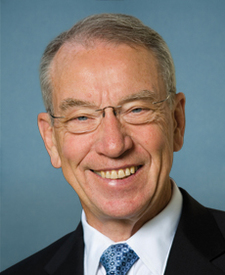
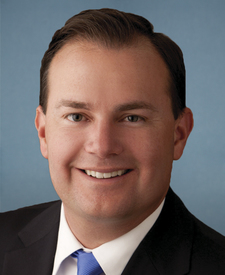
Mr. Grassley (for himself, Mr. Ossoff, and Mr. Lee) introduced …
Introduced in Senate
Passed Senate (inferred from es version)
Introduced in the Senate, read twice, considered, read the third …
Stakeholder Effects
cui bono?How this legislation distributes effects. Mention counts reflect frequency, not effect magnitude.
Federal courts, Federal prosecutors
Positive-direction: Federal prosecutors
Negative-direction: Federal courts
Criminal defendants in federal homicide cases, Families of delayed-death homicide victims
Positive-direction: Families of delayed-death homicide victims
Negative-direction: Criminal defendants in federal homicide cases
Bill Structure & Actor Mappings
Who is "The Secretary" in each section?
- "year_and_a_day_rule"
- → A common-law timing barrier that limited homicide liability when death occurred more than one year and one day after the act.
We use a combination of our own taxonomy and classification in addition to large language models to assess meaning and potential beneficiaries. High confidence means strong textual evidence. Always verify with the original bill text.
Learn more about our methodology