To amend titles XIX and XXI of the Social Security Act to improve maternal health coverage under Medicaid and CHIP, and for other purposes.
Analysis under review: This bill has generated analysis that may be too generic or incomplete. Clause-level evidence remains available below.
Summary
What This Bill Does
The Healthy Moms and Babies Act aims to improve maternal and infant health outcomes for women enrolled in Medicaid and CHIP programs. It requires states to track and report on maternal health quality measures, establishes optional maternity health homes for coordinated pregnancy care, and creates programs to reduce unnecessary cesarean deliveries. The bill also supports integrating doulas, midwives, and community health workers into maternity care teams.
Who Benefits and How
Pregnant and postpartum women on Medicaid gain access to better coordinated care through maternity health homes, telehealth services, and extended postpartum coverage. Doulas, midwives, and community health workers benefit from expanded roles in healthcare teams and new training programs. Hospitals and birthing centers can access grant funding for quality improvement initiatives to reduce cesarean rates.
Who Bears the Burden and How
State Medicaid programs face new mandatory reporting requirements on maternal health quality measures and cesarean delivery rates. States must submit annual reports and participate in quality improvement activities. The Centers for Medicare and Medicaid Services (CMS) must develop multiple guidance documents, establish advisory committees, and conduct biennial PERM audits.
Key Provisions
- Requires states to report on maternal and perinatal health quality measures and cesarean section rates
- Creates optional maternity health homes for coordinated pregnancy and postpartum care with 90% federal matching for first 8 quarters
- Establishes national expert group to evaluate birthing practices and issue best practice recommendations
- Authorizes grants for telehealth demonstration projects and perinatal quality collaboratives
Evidence Chain:
This summary is generated from the full bill text using AI analysis. Expand "Detailed Analysis" below for identified beneficiaries/burden bearers.
At a Glance
What This Bill Does
Improve maternal health coverage and outcomes under Medicaid and CHIP by requiring quality reporting, establishing maternity health homes, supporting doulas and midwives, and addressing social determinants of health.
Key Policy Areas
Healthcare, Public Health, Maternal Health, Medicaid/CHIP
Primary Purpose
Improve maternal health coverage and outcomes under Medicaid and CHIP by requiring quality reporting, establishing maternity health homes, supporting doulas and midwives, and addressing social determinants of health.
Policy Domains
Healthy Moms and Babies Act
Identified Gains
Contextual inference, no direct clause citation- Pregnant and postpartum women on Medicaid/CHIP
- Doulas and midwives
- Community health workers
- Hospitals and birthing centers
- Infants born to Medicaid-enrolled mothers
Contextual inference, no direct clause citation
Identified Costs
Contextual inference, no direct clause citation- State Medicaid programs
- Centers for Medicare & Medicaid Services
- HHS Secretary
Contextual inference, no direct clause citation
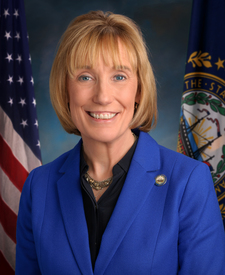
Sponsors

Legislative Progress
IntroducedMr. Grassley (for himself and Ms. Hassan) introduced the following …
Stakeholder Effects
cui bono?How this legislation distributes effects. Mention counts reflect frequency, not effect magnitude.
Community health workers, Designated maternity care providers, Doulas
Positive-direction: Community health workers, Designated maternity care providers, Doulas, Doulas (including community-based doulas), Doulas and community health workers, Doulas, peer support specialists, and community health workers, Hospitals with low cesarean rates, Midwives, Midwives and doulas, Perinatal quality collaboratives, Telehealth service providers
Negative-direction: Hospitals participating in Medicaid, Hospitals receiving Medicaid payments, Hospitals receiving Medicare payments
CMS Administrator, State Medicaid programs
State Medicaid programs faces effects in multiple directions
Pregnant and postpartum women in rural/underserved areas, Pregnant women, Pregnant women on Medicaid
Maternity care providers (OB-GYNs, midwives, community health centers), Obstetricians and gynecologists
Positive-direction: Maternity care providers (OB-GYNs, midwives, community health centers)
Negative-direction: Obstetricians and gynecologists
Freestanding birth centers, Rural health clinics and community health centers
Positive-direction: Rural health clinics and community health centers
Negative-direction: Freestanding birth centers
Medical education institutions (graduate medical education programs)
Behavioral health providers
Bill Structure & Actor Mappings
Who is "The Secretary" in each section?
- "the_secretary"
- → Secretary of Health and Human Services
- "the_administrator"
- → Administrator of the Centers for Medicare & Medicaid Services
- "the_comptroller_general"
- → Comptroller General of the United States
Key Definitions
Terms defined in this bill
Children's Health Insurance Program established under title XXI of the Social Security Act (42 U.S.C. 1397aa et seq.)
Individual eligible for medical assistance under State plan who is pregnant or had pregnancy end within last 365 days
Woman eligible for and receiving medical assistance under State Medicaid plan who is or becomes pregnant, through end of month in which 365-day period after pregnancy ends
Administrator of the Centers for Medicare & Medicaid Services
Medicaid program established under title XIX of the Social Security Act (42 U.S.C. 1396 et seq.)
Secretary of Health and Human Services
Has the meaning given for purposes of titles V, XIX, and XXI of the Social Security Act
Has the meaning given in section 1903(m)(1)(A) of the Social Security Act (42 U.S.C. 1396b(m)(1)(A))
Designated provider, team of health care professionals, or health team providing coordinated pregnancy and postpartum care services
We use a combination of our own taxonomy and classification in addition to large language models to assess meaning and potential beneficiaries. High confidence means strong textual evidence. Always verify with the original bill text.
Learn more about our methodology