NASA Transition Authorization Act of 2025
Summary
What This Bill Does
The NASA Transition Authorization Act authorizes $25.50754 billion for NASA in fiscal year 2025 and tells the agency how to manage the transition from legacy programs to newer exploration and commercial-space systems. It reaffirms Artemis, the Space Launch System, Orion, lunar landers, advanced spacesuits, lunar communications, and celestial time work; directs NASA toward commercial low-Earth-orbit destinations after the International Space Station; sustains independent space technology; expands aeronautics work on hypersonics, advanced materials, UAS, advanced air mobility, emergency response, hydrogen aviation, and chase aircraft; protects a balanced science portfolio including Landsat, commercial satellite data, planetary defense, lunar science, commercial lunar payload services, Mars Sample Return, heliophysics, and the Geospace Dynamics Constellation; and adds workforce, cost-estimate, production-contract, commercial-space, China-restriction, Chincoteague water, mentoring, and astronaut-transport provisions.
Who Benefits and How
NASA mission directorates benefit from a full-year authorization that names funding levels and gives programmatic direction across exploration, space technology, aeronautics, science, STEM, and operations. Artemis, Space Launch System, Orion, lunar lander, and spacesuit contractors benefit because Congress reaffirms those exploration systems as central to Moon-to-Mars policy. Commercial low-Earth-orbit destination companies benefit because NASA is directed to use commercial destinations to maintain a continuous U.S. crew presence after the International Space Station transition. Earth science, planetary science, heliophysics, and lunar science researchers benefit from language protecting balanced science portfolios, data acquisition, cost-cap discipline, and mission-specific programs. Universities, Space Grant institutions, skilled technical workforce students, and mentoring participants benefit from STEM engagement and workforce provisions. The Town of Chincoteague, Virginia benefits because NASA may enter an agreement for drinking water well replacement related to local infrastructure needs.
Who Bears the Burden and How
NASA administrators must produce briefings and reports on suborbital crew missions, lunar communications, hydrogen aviation, mentoring, commercial space roles, and other directed topics. The Government Accountability Office must review NASA early cost estimates and report on fire and emergency services at certain NASA facilities. NASA procurement offices must implement production-contract authority after other-transaction prototypes and manage restrictions on China-linked space and scientific activity. Commercial space companies seeking NASA work face programmatic conditions, safety expectations, data requirements, and China-related federal funding restrictions. Federal taxpayers bear the cost of the $25.5 billion authorization and any NASA agreements, research, infrastructure, or workforce programs funded under it. NASA operations staff must administer astronaut passenger-carrier use and public-private talent assignments under new statutory rules.
Key Provisions
- Authorizes $25.50754 billion for NASA for fiscal year 2025 across mission directorates and agency accounts.
- Strengthens Artemis, Space Launch System, Orion, lunar landing, spacesuit, lunar communications, and celestial-time policy for Moon-to-Mars exploration.
- Directs NASA to use commercial low-Earth-orbit destinations while managing the International Space Station transition and nongovernmental missions.
- Expands aeronautics and space technology work on hypersonics, materials, unmanned aircraft systems, advanced air mobility, emergency response, hydrogen aviation, and chase aircraft.
- Protects science programs covering Earth science, commercial satellite data, planetary defense, lunar exploration, Mars Sample Return, heliophysics, and geospace dynamics.
- Requires workforce, cost-estimate, procurement, China-restriction, GAO, public-private talent, Chincoteague water, mentoring, and astronaut-transport actions.
Evidence Chain:
This summary is generated from the full bill text using AI analysis. Expand "Detailed Analysis" below for identified beneficiaries/burden bearers with clause-level evidence links.
At a Glance
What This Bill Does
Authorizes NASA fiscal year 2025 funding and updates exploration, commercial low-Earth-orbit, aeronautics, science, workforce, procurement, China-restriction, emergency-services, public-private talent, Chincoteague, and astronaut-transport policies.
Key Policy Areas
Space, Science, Aviation, Government Operations
Primary Purpose
Authorizes NASA fiscal year 2025 funding and updates exploration, commercial low-Earth-orbit, aeronautics, science, workforce, procurement, China-restriction, emergency-services, public-private talent, Chincoteague, and astronaut-transport policies.
Policy Domains
Bill provisions
Identified Gains
- NASA mission directorates
- Artemis contractors
- Commercial low-Earth-orbit destination companies
- NASA science researchers
- Space Grant institutions
- Town of Chincoteague
Identified Costs
- NASA administrators
- Government Accountability Office
- NASA procurement offices
- Commercial space companies
- Federal taxpayers
- NASA operations staff
Sponsors
Legislative Progress
ReportedCommittee on Commerce, Science, and Transportation. Ordered to be reported …
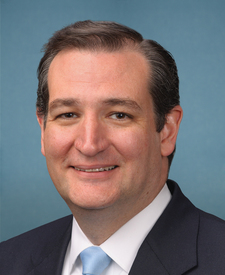
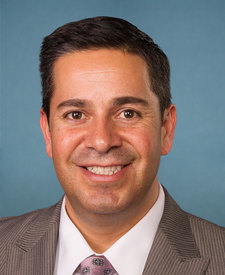
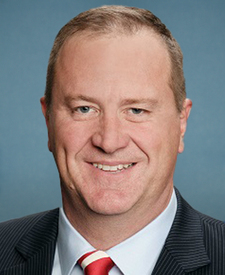
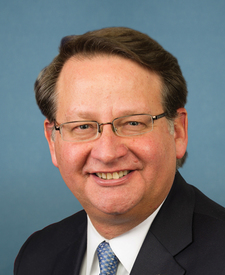
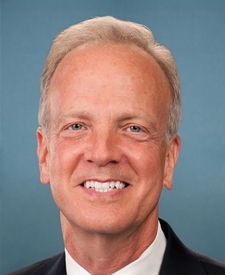
Mr. Cruz (for himself, Ms. Cantwell, Mr. Moran, Mr. Peters, …
Read twice and referred to the Committee on Commerce, Science, …
Introduced in Senate
Stakeholder Effects
cui bono?How this legislation distributes effects. Mention counts reflect frequency, not effect magnitude.
Government Accountability Office, International partner astronauts, NASA administrators
Positive-direction: International partner astronauts, Planetary Defense Coordination Office
Negative-direction: Government Accountability Office, NASA administrators, NASA exploration staff, NASA human spaceflight staff, NASA infrastructure staff, NASA mentoring program staff, NASA procurement offices, NASA report writers, NASA science mission managers, NASA transportation offices
Commercial satellite data providers, International Space Station transition program, NASA mission directorates
Positive-direction: Commercial satellite data providers, NASA mission directorates, Orion program, Space Launch System program
Negative-direction: International Space Station transition program
Artemis contractors, Commercial low-Earth-orbit destination companies, Commercial lunar payload services companies
NASA aeronautics researchers, NASA science researchers
Skilled technical workforce students, Space Grant institutions, Universities conducting aeronautics research
Emergency response agencies, NASA fire services
Advanced air mobility companies, Passenger carrier operators
Government astronauts, NASA public-private talent participants, U.S. Government crew members
Bill Structure & Actor Mappings
Who is "The Secretary" in each section?
- "administrator"
- → Administrator of the National Aeronautics and Space Administration
We use a combination of our own taxonomy and classification in addition to large language models to assess meaning and potential beneficiaries. High confidence means strong textual evidence. Always verify with the original bill text.
Learn more about our methodology