Bipartisan Health Care Act
Analysis under review: This bill has generated analysis that may be too generic or incomplete. Clause-level evidence remains available below.
Summary
What This Bill Does
The bill requires streamlines Medicaid enrollment for out-of-state healthcare providers serving children under 21, expands reporting requirements and establishes demonstration program for home and community-based services, and exempts removes age cap (65) for Medicaid eligibility for working adults with disabilities. It relies on compliance mandates, appropriations, grants, and exemptions. The main policy areas are Healthcare, Medicaid, Medicare, and Pandemic Preparedness.
Who Benefits and How
Substance use treatment providers could gain revenue opportunities, Recovery community organizations could gain revenue opportunities, and Public health agencies could gain revenue opportunities.
Who Bears the Burden and How
State Medicaid agencies would take on compliance duties, Durable medical equipment suppliers would take on compliance duties, and State Medicaid programs could face higher costs.
Key Provisions
- Requires streamlines Medicaid enrollment for out-of-state healthcare providers serving children under 21.
- Expands reporting requirements and establishes demonstration program for home and community-based services.
- Exempts removes age cap (65) for Medicaid eligibility for working adults with disabilities.
- Requires protects Medicaid eligibility and HCBS waiting list positions for military families during relocations.
- Requires states to regularly verify and update address information for Medicaid enrollees.
Evidence Chain:
This summary is generated from the full bill text using AI analysis. Expand "Detailed Analysis" below for identified beneficiaries/burden bearers with clause-level evidence links.
At a Glance
What This Bill Does
The bill requires streamlines Medicaid enrollment for out-of-state healthcare providers serving children under 21, expands reporting requirements and establishes demonstration program for home and community-based services, and exempts removes age cap (65) for Medicaid eligibility for working adults with disabilities.
Key Policy Areas
Healthcare, Medicaid, Medicare, Pandemic Preparedness
Primary Purpose
The bill requires streamlines Medicaid enrollment for out-of-state healthcare providers serving children under 21, expands reporting requirements and establishes demonstration program for home and community-based services, and exempts removes age cap (65) for Medicaid eligibility for working adults with disabilities.
Policy Domains
Title I - Medicaid Provisions
Identified Gains
- Substance use treatment providers
- Recovery community organizations
- Public health agencies
- Mental health training programs
- Mental health providers
Identified Costs
- State Medicaid agencies
- Durable medical equipment suppliers
- State Medicaid programs
- Pharmacy benefit managers (PBMs)
- Hospitals with off-campus outpatient departments
Sponsors
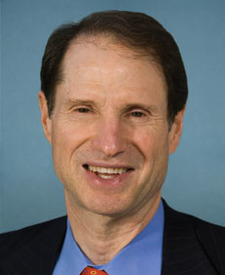
Ron Wyden
D-OR | Primary Sponsor
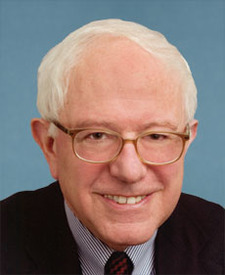
Legislative Progress
In CommitteeMr. Wyden (for himself and Mr. Sanders) introduced the following …
Read twice and referred to the Committee on Finance.
Introduced in Senate
Stakeholder Effects
cui bono?How this legislation distributes effects. Mention counts reflect frequency, not effect magnitude.
Child trauma treatment centers, Durable medical equipment suppliers, FASD research and treatment providers
Positive-direction: Child trauma treatment centers, FASD research and treatment providers, Family health information centers, Hospitals and healthcare coalitions, Independent pharmacies, Mental health providers, National Health Service Corps providers, Out-of-state healthcare providers, Pharmacies, Quality measure endorsement organizations, Safety-net hospitals serving uninsured patients, State Health Insurance Assistance Programs (SHIPs), Telehealth providers
Negative-direction: Durable medical equipment suppliers, Hospitals with off-campus outpatient departments, Prescribers of controlled substances, Suicide prevention hotline operators
DEA enforcement, Medicare program administration, Public health agencies
State Medicaid programs faces effects in multiple directions
Positive-direction: DEA enforcement, Medicare program administration, Public health agencies, State Medicaid and CHIP programs, State and local health departments, State health departments, States with HCBS waiver programs
Negative-direction: State Medicaid agencies, State governments
9/11 responders and survivors, Low-income Medicare Part D beneficiaries, Medicaid beneficiaries needing HCBS
Substance use disorder treatment providers, Substance use treatment providers
Medical countermeasure manufacturers, Pharmaceutical manufacturers of antivirals, Rare disease drug developers
Abstinence education providers, Mental health training programs, Teen pregnancy prevention program providers
Prematurity research institutions, Public health laboratories, Research institutions with biocontainment facilities
Bill Structure & Actor Mappings
Who is "The Secretary" in each section?
- "the_state"
- → State Medicaid agencies
- "the_secretary"
- → Secretary of Health and Human Services
- "cms"
- → Centers for Medicare & Medicaid Services
- "the_secretary"
- → Secretary of Health and Human Services
- "the_secretary"
- → Secretary of Health and Human Services
- "the_secretary"
- → Secretary of Health and Human Services
- "dea"
- → Drug Enforcement Administration
- "samhsa"
- → Substance Abuse and Mental Health Services Administration
- "the_secretary"
- → Secretary of Health and Human Services
- "cdc"
- → Centers for Disease Control and Prevention
- "aspr"
- → Assistant Secretary for Preparedness and Response
- "barda"
- → Biomedical Advanced Research and Development Authority
- "the_secretary"
- → Secretary of Health and Human Services
- "the_secretary"
- → Secretary of Health and Human Services
Note: 'The Secretary' refers to the Secretary of Health and Human Services throughout the bill, with no conflicts between titles.
Key Definitions
Terms defined in this bill
A provider located in another state that has been screened and enrolled in Medicare or another state's Medicaid program with limited fraud risk determination.
An individual enrolled under State Medicaid plan who is a member of the Armed Forces (or dependent) relocated to another State by reason of active duty service.
A screening test for the purpose of detecting cancer that is intended to detect signals for 2 or more cancers simultaneously with a single assay.
A list maintained by a State of individuals requesting HCBS for whom the State has not yet completed an eligibility assessment due to service limits.
An individual under 21 years of age who is enrolled under the State Medicaid plan.
We use a combination of our own taxonomy and classification in addition to large language models to assess meaning and potential beneficiaries. High confidence means strong textual evidence. Always verify with the original bill text.
Learn more about our methodology