To increase the number of landlords participating in the Housing Choice Voucher program.
Analysis under review: This bill has generated analysis that may be too generic or incomplete. Clause-level evidence remains available below.
Summary
This bill aims to get more landlords to accept Housing Choice Vouchers (Section 8) by offering financial incentives. Landlords in low-poverty neighborhoods who accept vouchers for the first time would receive a one-time bonus payment of up to 200% of the monthly rent subsidy, plus the government could pay security deposits on behalf of tenants. The bill streamlines housing inspections by accepting recent inspections from other federal housing programs (like LIHTC and HOME). It requires HUD to expand the use of small area fair market rents to at least three times the current number of metro areas, so voucher payments better reflect local neighborhood costs. The bill also authorizes $7 million per year for Native American veteran housing assistance and requires annual reports on program effectiveness.
Evidence Chain:
This summary is generated from the full bill text using AI analysis. Expand "Detailed Analysis" below for identified beneficiaries/burden bearers.
At a Glance
What This Bill Does
Increases landlord participation in the Housing Choice Voucher program through financial incentives, security deposit assistance, streamlined inspections, expanded small area fair market rents, modernized assessment metrics, and authorized Tribal HUD-VASH funding.
Who Benefits
- Low-income voucher holders (better neighborhood access)
- Landlords in low-poverty areas (incentive payments, security deposits)
- Native American veterans (Tribal HUD-VASH funding)
Who Bears Costs
- Federal government (incentive payments, security deposits, expanded SAFMR costs)
- HUD (program expansion, assessment reform, reporting requirements)
Key Policy Areas
Housing, Veterans Affairs, Tribal Affairs
Primary Purpose
Increases landlord participation in the Housing Choice Voucher program through financial incentives, security deposit assistance, streamlined inspections, expanded small area fair market rents, modernized assessment metrics, and authorized Tribal HUD-VASH funding.
Policy Domains
Legislative Strategy
"Address declining landlord participation in the Housing Choice Voucher program through a combination of direct financial incentives (one-time payments, security deposits), reduced administrative burden (streamlined inspections), and expanded rent setting (small area FMRs) to open up higher-opportunity neighborhoods."
Sponsors


Legislative Progress
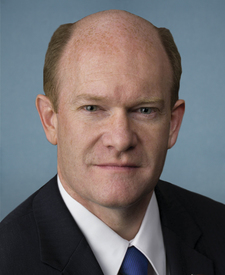
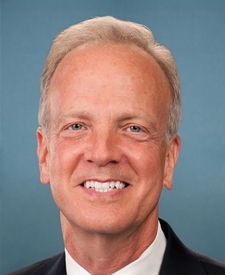
IntroducedMr. Coons (for himself, Ms. Smith, Mr. Warnock, Mr. Moran, …
Stakeholder Effects
cui bono?How this legislation distributes effects. Mention counts reflect frequency, not effect magnitude.
Existing voucher tenants, Landlords accepting vouchers, Landlords in higher-rent ZIP codes
Federal government, HUD, Indian Tribes and tribally designated housing entities
Positive-direction: Indian Tribes and tribally designated housing entities, Public housing agencies
Negative-direction: Federal government, HUD
Bill Structure & Actor Mappings
Who is "The Secretary" in each section?
- "the_secretary"
- → Secretary of Housing and Urban Development
- "the_secretary"
- → Secretary of Housing and Urban Development
- "the_secretary"
- → Secretary of Housing and Urban Development
- "the_secretary"
- → Secretary of Housing and Urban Development
- "the_secretary"
- → Secretary of Housing and Urban Development
Key Definitions
Terms defined in this bill
The tenant-based assistance program under section 8(o) of the United States Housing Act of 1937.
Tribal Housing and Urban Development-Veterans Affairs Supportive Housing program under the Consolidated and Further Continuing Appropriations Act, 2015.
A dwelling unit in a census tract with poverty rate below 20% that has not previously been under a housing assistance payment contract.
We use a combination of our own taxonomy and classification in addition to large language models to assess meaning and potential beneficiaries. High confidence means strong textual evidence. Always verify with the original bill text.
Learn more about our methodology