To modify the requirements applicable to locatable minerals on public domain land, and for other purposes.
Sponsors
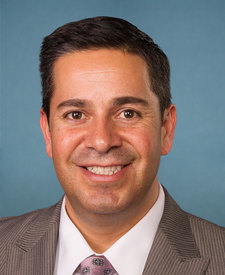
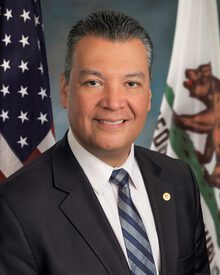



Legislative Progress
IntroducedMr. Luján (for himself, Mr. Bennet, Mr. Booker, Mr. Heinrich, …
Summary
What This Bill Does
The Mining Waste, Fraud, and Abuse Prevention Act of 2025 fundamentally reforms the 1872 Mining Law, which has governed hardrock mining on federal lands for over 150 years. It ends the patent system that allowed miners to purchase federal land for as little as $2.50-$5.00 per acre, imposes new royalties of 5-8% on mineral production, and establishes comprehensive environmental permitting, reclamation, and financial assurance requirements for mining operations on public lands.
Who Benefits and How
Federal government and taxpayers: The government gains new revenue streams through royalties (5-8% of gross income), maintenance fees ($200/claim/year), location fees ($50/new claim), land use fees, and reclamation fees (1-3% of production value). Taxpayers benefit from reduced liability for abandoned mine cleanup through mandatory financial assurance requirements.
Environmental and conservation groups: The bill significantly strengthens environmental protections by requiring permits for surface-disturbing activities, mandating reclamation to pre-disturbance conditions, preventing "undue degradation," and creating a process to withdraw sensitive areas like wilderness study areas and wild and scenic rivers from mining.
Indian Tribes: The bill mandates meaningful consultation before any mining activities that may impact Tribal lands, cultural practices, or treaty rights including water, hunting, gathering, and fishing rights.
Environmental remediation contractors: A new Hardrock Minerals Reclamation Fund funded by royalties and fees will finance cleanup of abandoned mines, creating business opportunities for remediation companies.
Who Bears the Burden and How
Hardrock mining companies on federal lands: Mining companies face substantial new costs including 5-8% royalties on gross income (an entirely new cost under the 1872 law), 1-3% abandoned mine reclamation fees, annual maintenance fees, land use fees, and the cost of obtaining permits, providing financial assurance (bonds), and meeting reclamation requirements. Compliance burdens increase significantly through permitting requirements, quarterly inspections, 7-year recordkeeping, and monitoring obligations.
Mining exploration and junior mining companies: New exploration permits with public notice and comment requirements, financial assurance, and environmental plans create higher barriers to entry for smaller companies seeking to explore federal lands.
Uranium mining companies: A National Academy of Sciences study may lead to additional regulations or land withdrawals specifically affecting uranium mining.
Mining claim speculators: Automatic forfeiture rules for non-payment and the requirement that claims be used for mineral activities penalize speculative claim holding.
Key Provisions
-
Ends mining patents: No new patents will be issued, meaning miners can no longer obtain private ownership of federal land through their mining claims (grandfathering only claims filed before September 30, 1994).
-
Establishes 5-8% royalty: For the first time, hardrock miners on federal lands must pay royalties on production, with existing producing operations exempted.
-
Requires comprehensive permits: All surface-disturbing mining activities now require permits with operations plans, reclamation plans, and environmental compliance documentation.
-
Mandates financial assurance: Operators must provide bonds or trust funds sufficient to cover reclamation costs, land restoration, and long-term water treatment, reviewed every 3 years.
-
Creates reclamation fund: A new Hardrock Minerals Reclamation Fund receives all royalties and fees to fund cleanup of the estimated 500,000+ abandoned hardrock mines on federal lands.
-
Strengthens enforcement: Civil penalties up to $5,000/day per violation and criminal penalties up to $50,000 and 2 years imprisonment for knowing violations.
-
Protects sensitive lands: Requires review of wilderness study areas, roadless areas, and other sensitive areas for potential withdrawal from mining.
Evidence Chain:
This summary is derived from the structured analysis below. See "Detailed Analysis" for per-title beneficiaries/burden bearers with clause-level evidence links.
Primary Purpose
Reforms the Mining Law of 1872 by establishing new royalty requirements, fees, environmental standards, permitting processes, and reclamation requirements for hardrock mining on federal public lands.
Policy Domains
Legislative Strategy
"Modernize the 1872 Mining Law by imposing royalties, environmental standards, and reclamation requirements on hardrock mining while eliminating the patent system that allowed miners to obtain private ownership of federal land."
Likely Beneficiaries
- Federal government (through royalties and fees)
- Taxpayers (reduced liability for abandoned mine cleanup)
- Environmental and conservation groups (stronger protections)
- Indian Tribes (consultation requirements)
- Nearby communities (environmental protections)
Likely Burden Bearers
- Hardrock mining companies (new royalties 5-8%, fees, permits)
- Mining claim holders (maintenance fees, location fees)
- Operators on federal lands (compliance, financial assurance requirements)
- Uranium mining companies (subject to special review)
Bill Structure & Actor Mappings
Who is "The Secretary" in each section?
- "the_secretary"
- → Secretary of the Interior
- "the_secretary"
- → Secretary of the Interior
- "the_secretary_concerned"
- → Secretary of Agriculture (Forest Service land) or Secretary of Interior (BLM land)
- "the_secretary"
- → Secretary of the Interior
- "the_secretary"
- → Secretary of the Interior
- "the_secretary_concerned"
- → Secretary of Agriculture (Forest Service land) or Secretary of Interior (BLM land)
Note: 'The Secretary' generally refers to Secretary of the Interior throughout the bill.
Key Definitions
Terms defined in this bill
Any mineral the legal and beneficial title to which remains in the United States and that is not subject to disposition under the Mineral Leasing Act, Geothermal Steam Act, Materials Act, or Mineral Leasing Act for Acquired Lands (i.e., hardrock minerals like gold, silver, copper, uranium).
Same as locatable mineral except legal and beneficial title need not be held by the United States.
Any person proposing or authorized by a permit to conduct mineral activities, and any agent of such person.
Mineral activities that ordinarily result in no or negligible disturbance of Federal land or resources, including hand tools, hand panning, or nonmotorized sluicing. Does not include mechanized equipment, suction dredging, explosives, road construction, or toxic materials.
Creating a surface disturbance (other than casual use) to evaluate the type, extent, quantity, or quality of minerals present. Includes sampling, drilling, developing workings. Does not include extraction for commercial use or sale.
A person holding a mining claim, millsite, or tunnel site located under the general mining laws and maintained in compliance with those laws and this Act.
Any activity on a mining claim, millsite, or tunnel site for, relating to, or incidental to mineral exploration, mining, beneficiation, processing, or reclamation activities for any locatable mineral.
Substantial irreparable harm to significant scientific, cultural, or environmental resources on public land.
Secretary of Agriculture (through Chief of Forest Service) for National Forest System land; Secretary of Interior (through Director of BLM) for BLM or other Federal land.
We use a combination of our own taxonomy and classification in addition to large language models to assess meaning and potential beneficiaries. High confidence means strong textual evidence. Always verify with the original bill text.
Learn more about our methodology