To amend the National Labor Relations Act, the Labor Management Relations Act, 1947, and the Labor-Management Reporting and Disclosure Act of 1959, and for other purposes.
Analysis under review: This bill has generated analysis that may be too generic or incomplete. Clause-level evidence remains available below.
Summary
What This Bill Does
The PRO Act (Protecting the Right to Organize Act) is a sweeping reform of federal labor law designed to make it easier for workers to form unions and harder for employers to interfere with organizing efforts. It expands who qualifies as an 'employee' under the law, strengthens collective bargaining requirements, and dramatically increases penalties for employers who violate workers' rights.
Who Benefits and How
Workers and labor unions benefit significantly: gig workers and independent contractors may gain employee status and union rights under the ABC test; striking workers cannot be permanently replaced; workers can receive double damages plus attorney fees if fired for organizing; and unions can collect fair-share fees even in states with 'right-to-work' laws. The National Labor Relations Board gains expanded enforcement powers including automatic civil penalties.
Who Bears the Burden and How
Employers in all industries face new restrictions: they cannot permanently replace striking workers, must bargain in good faith for first contracts with binding arbitration if negotiations stall, and face penalties up to $100,000 per violation. Companies using independent contractors (gig economy companies like Uber, Lyft, DoorDash) may be required to reclassify workers as employees. Anti-union consultants and law firms must disclose persuader activities previously exempt from reporting.
Key Provisions
- Adopts the ABC test making most gig workers and contractors 'employees' with union rights
- Prohibits employers from permanently replacing striking workers
- Eliminates state 'right-to-work' laws by allowing union fair-share fees nationwide
- Creates mandatory mediation and binding arbitration for first union contracts
- Increases civil penalties to $50,000-$100,000 per violation with personal liability for executives
Evidence Chain:
This summary is generated from the full bill text using AI analysis. Expand "Detailed Analysis" below for identified beneficiaries/burden bearers with clause-level evidence links.
At a Glance
What This Bill Does
Comprehensive reform of the National Labor Relations Act to strengthen workers' rights to organize, bargain collectively, and strike, while increasing penalties for employer unfair labor practices.
Key Policy Areas
Labor, Employment Law, Worker Rights, Union Organizing
Primary Purpose
Comprehensive reform of the National Labor Relations Act to strengthen workers' rights to organize, bargain collectively, and strike, while increasing penalties for employer unfair labor practices.
Policy Domains
Title I - Worker Freedom and Workplace Democracy
Identified Gains
- Workers seeking to organize
- Labor unions
- Gig workers and independent contractors
- Striking workers
- National Labor Relations Board
Identified Costs
- Employers in all industries
- Gig economy companies
- Companies using independent contractors
- Anti-union consultants
Title II - Conforming Amendments
Identified Gains
- Workers
- Labor unions
- Transparency advocates
Identified Costs
- Anti-union consultants and law firms
- Employers hiring persuader services
Title III - General Provisions
Identified Gains
- Federal agencies implementing the Act
Identified Costs
- Taxpayers
Sponsors
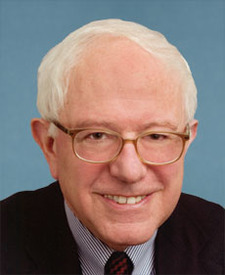

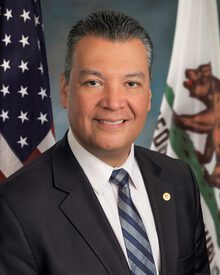


Legislative Progress
IntroducedMr. Sanders (for himself, Mrs. Murray, Mr. Schumer, Ms. Alsobrooks, …
Stakeholder Effects
cui bono?How this legislation distributes effects. Mention counts reflect frequency, not effect magnitude.
Labor unions, Labor unions seeking to organize workers, Undocumented workers
Employers charged with serious ULPs, Employers facing union organizing campaigns, Employers in all industries
Federal courts, National Labor Relations Board
National Labor Relations Board faces effects in multiple directions
Anti-union consultants and law firms, Labor and employment attorneys
Positive-direction: Labor and employment attorneys
Negative-direction: Anti-union consultants and law firms
Gig economy companies (Uber, Lyft, DoorDash, etc.)
Bill Structure & Actor Mappings
Who is "The Secretary" in each section?
- "the_board"
- → National Labor Relations Board (NLRB)
- "the_secretary"
- → Secretary of Labor
- "the_board"
- → National Labor Relations Board (NLRB)
Key Definitions
Terms defined in this bill
Two or more persons are employers with respect to an employee if each codetermines or shares control over the employee's essential terms and conditions of employment, including indirect control or reserved authority to control.
An individual performing any service is an employee (not independent contractor) unless: (A) free from control in fact and contract, (B) service outside employer's usual course of business, (C) customarily engaged in independent trade of same nature.
Definition narrowed to require supervisory duties for a majority of worktime; removes authority to 'assign' or 'responsibly direct' from supervisor definition.
We use a combination of our own taxonomy and classification in addition to large language models to assess meaning and potential beneficiaries. High confidence means strong textual evidence. Always verify with the original bill text.
Learn more about our methodology