To establish competitive Federal grants that will empower community colleges and minority-serving institutions to become incubators for infant and toddler child care talent, training, and access on their campuses and in their communities, and for other purposes.
Analysis under review: This bill has generated analysis that may be too generic or incomplete. Clause-level evidence remains available below.
Summary
What This Bill Does
The PROSPECT Act creates a $9 billion federal grant program (2021-2025) to help community colleges and minority-serving institutions provide free infant and toddler child care to student parents. It also aims to grow and diversify the early childhood educator workforce by funding training programs, credentials, and partnerships.
Who Benefits and How
Student parents at community colleges and minority-serving institutions receive free child care for children under age 3, including drop-in and flexible care during nontraditional hours. Community colleges and minority-serving institutions receive grants up to $20 million individually or $220 million for consortia to build child care centers and programs. Early childhood educators and aspiring teachers benefit from microgrants for tuition, training programs, and career pathway development. Child care workers at on-campus centers must be paid wages comparable to elementary school teachers. Home-based and community child care providers can access training, mentorship, and microenterprise grants to expand infant/toddler care.
Who Bears the Burden and How
Federal government/taxpayers fund the $9 billion program. Child care centers receiving grants must meet extensive requirements including state licensing, quality standards, background checks, specific wage requirements, and detailed annual reporting on demographics and outcomes. States may need to update eligibility rules for the Child Care and Development Block Grant to include postsecondary students.
Key Provisions
- Authorizes $9 billion for four grant types: planning grants, access grants (free child care), impact grants (community provider support), and pipeline grants (workforce development)
- Requires on-campus child care centers to provide free care to student parents, with 85% being Pell Grant eligible, and pay child care staff wages comparable to elementary teachers
- Expands Child Care and Development Block Grant eligibility to include students in postsecondary education programs
Evidence Chain:
This summary is generated from the full bill text using AI analysis. Expand "Detailed Analysis" below for identified beneficiaries/burden bearers.
At a Glance
What This Bill Does
Establishes a comprehensive federal grant program to expand infant and toddler child care access for student parents at community colleges and minority-serving institutions while strengthening the early childhood educator workforce pipeline.
Key Policy Areas
Education, Child Care, Workforce Development, Higher Education
Primary Purpose
Establishes a comprehensive federal grant program to expand infant and toddler child care access for student parents at community colleges and minority-serving institutions while strengthening the early childhood educator workforce pipeline.
Policy Domains
Title I - Infant and Toddler Child Care for Student Parents
Identified Gains
Contextual inference, no direct clause citation- Student parents at community colleges and minority-serving institutions
- Community colleges and minority-serving institutions
- Early childhood educators and students in educator programs
- Child care workers at on-campus centers
- Home-based and community child care providers
- Infants and toddlers of student parents
Contextual inference, no direct clause citation
Identified Costs
Contextual inference, no direct clause citation- Federal government (taxpayers)
- Child care centers receiving grants (compliance requirements)
Contextual inference, no direct clause citation
Title II - Child Care and Development Block Grant Act Amendments
Identified Gains
Contextual inference, no direct clause citation- Students in higher education who are parents
Contextual inference, no direct clause citation
Identified Costs
Contextual inference, no direct clause citation- States administering CCDBG
Contextual inference, no direct clause citation
Sponsors
Legislative Progress
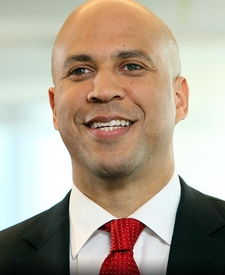
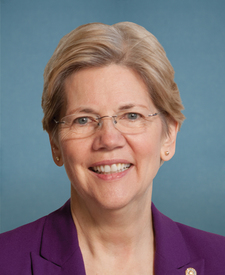
IntroducedMr. Booker (for himself and Ms. Warren) introduced the following …
Stakeholder Effects
cui bono?How this legislation distributes effects. Mention counts reflect frequency, not effect magnitude.
Child care centers receiving grants (compliance), Child care providers at higher education institutions, Child care providers in institutional service areas
Positive-direction: Child care providers at higher education institutions, Child care providers in institutional service areas, Child care workers at funded centers, Child care workers at grant-funded centers, Existing community child care providers, Head Start and Early Head Start programs, Home-based child care providers, Infant and toddler child care providers, Local child care resource and referral agencies, Local child care resource and referral organizations, Multilingual child care providers, New child care program startups, Off-campus licensed child care providers, On-campus child care centers
Negative-direction: Child care centers receiving grants (compliance), Grant-funded child care programs, On-campus child care centers funded under PROSPECT Act
4-year institutions with ECE articulation agreements, Community college early childhood education programs, Community colleges
Positive-direction: 4-year institutions with ECE articulation agreements, Community college early childhood education programs, Community colleges and minority-serving institutions, Consortia of community colleges and minority-serving institutions, Early childhood education faculty, High schools with early childhood CTE programs, Individual community colleges and minority-serving institutions, Institutions serving high-need populations
Negative-direction: Community colleges and minority-serving institutions applying for grants, Grant recipient institutions
Early childhood education students, Secondary education students who are parents, Student parents at community colleges and MSIs
State child care assistance programs, States providing adequate infant/toddler care rates
Positive-direction: States providing adequate infant/toddler care rates
Negative-direction: State child care assistance programs
Children in funded child care programs (safety), Protected classes (race, sex, disability, etc.)
Bill Structure & Actor Mappings
Who is "The Secretary" in each section?
- "the_secretary"
- → Secretary of Education
Key Definitions
Terms defined in this bill
A public institution of higher education that provides an educational program of not less than 2 years that culminates in an associate degree and is acceptable for full credit toward a baccalaureate degree.
An individual who is a parent or legal guardian of a child who qualifies for infant and toddler child care and is a full-time or part-time student at a community college or minority-serving institution.
Child care for children who are under the age of 3 as of the first day of the academic year of the applicable community college or minority-serving institution.
A community that the State or tribal entity involved determines has a low supply of quality, affordable infant and toddler child care.
A community college, a minority-serving institution, or a consortium of 2 or more community colleges or minority-serving institutions.
An institution described in section 371(a) of the Higher Education Act of 1965.
The hours before 9 a.m. and after 4 p.m.; and any hours during weekends, breaks during the academic year, and holidays.
Child care that does not require prescheduling a definite number of days or hours per week, or is short term (less than 5 hours per day).
Teaching using the cultural characteristics, experiences, and perspectives of ethnically diverse students as conduits for teaching them more effectively.
We use a combination of our own taxonomy and classification in addition to large language models to assess meaning and potential beneficiaries. High confidence means strong textual evidence. Always verify with the original bill text.
Learn more about our methodology