To amend the Federal Food, Drug, and Cosmetic Act to establish a process for science-focused drug development meetings led by the Reagan-Udall Foundation for the Food and Drug Administration with respect to drugs for rare diseases and conditions, and for other purposes.
Analysis under review: This bill has generated analysis that may be too generic or incomplete. Clause-level evidence remains available below.
Summary
What This Bill Does
The Scientific EXPERT Act of 2025 creates a formal process for bringing together FDA officials, pharmaceutical companies, patient advocates, and medical experts to discuss how to speed up the development of drugs for rare diseases. The Reagan-Udall Foundation would organize at least 4 meetings per year focused on specific rare diseases, with the goal of clarifying regulatory pathways and reducing uncertainty for drug developers.
Who Benefits and How
Pharmaceutical and biotechnology companies developing drugs for rare diseases benefit significantly from clearer regulatory guidance and reduced development uncertainty. The Reagan-Udall Foundation receives approximately $2 million per year in authorized funding to organize these meetings. Patients with rare diseases may benefit indirectly through faster drug development timelines, while academic researchers and patient advocacy groups gain new opportunities to influence FDA decision-making.
Who Bears the Burden and How
FDA review divisions face new compliance requirements to participate in at least 4 meetings annually, produce public reports within 180 days of each meeting, disclose how meeting input affected drug approvals, and submit annual reports to Congress. Federal taxpayers bear the cost of up to $2 million per year (authorized through FY 2029) to fund these activities.
Key Provisions
- Creates a new Section 770A of the Federal Food, Drug, and Cosmetic Act establishing "externally-led, science-focused drug development meetings" (EL-SFDD)
- Requires the Reagan-Udall Foundation to convene at least 4 meetings per year, each focused on a different rare disease
- Establishes a permanent Steering Committee with FDA, industry, patient, and academic representatives
- Mandates FDA to publicly disclose whether EL-SFDD meetings influenced drug approval decisions
- Authorizes $1 million annually for each new section (770A and 770B) through fiscal year 2029
Evidence Chain:
This summary is generated from the full bill text using AI analysis. Expand "Detailed Analysis" below for identified beneficiaries/burden bearers.
At a Glance
What This Bill Does
Creates a formal process for externally-led, science-focused drug development meetings (EL-SFDD) organized by the Reagan-Udall Foundation to help facilitate the development and approval of drugs for rare diseases and conditions.
Who Benefits
- Pharmaceutical and biotechnology companies developing rare disease drugs
- Reagan-Udall Foundation for the FDA (receives funding and mandate)
- Patients with rare diseases and conditions
Who Bears Costs
- FDA review divisions (required to participate in meetings and produce reports)
- Federal taxpayers (\ million annual appropriation authorized)
Key Policy Areas
Health, Pharmaceuticals, FDA Regulation, Rare Diseases
Primary Purpose
Creates a formal process for externally-led, science-focused drug development meetings (EL-SFDD) organized by the Reagan-Udall Foundation to help facilitate the development and approval of drugs for rare diseases and conditions.
Policy Domains
Legislative Strategy
"Create a structured, government-funded process to bring together FDA, pharmaceutical industry, patient advocates, and academic researchers to expedite rare disease drug development through consensus-building meetings"
Identified Gains
- Pharmaceutical and biotechnology companies developing rare disease drugs
- Reagan-Udall Foundation for the FDA (receives funding and mandate)
- Patients with rare diseases and conditions
- Medical researchers and academics specializing in rare diseases
Identified Costs
- FDA review divisions (required to participate in meetings and produce reports)
- Federal taxpayers (\ million annual appropriation authorized)
Sponsors
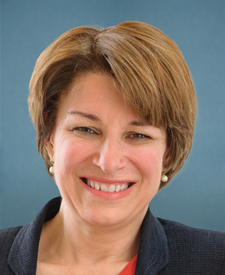
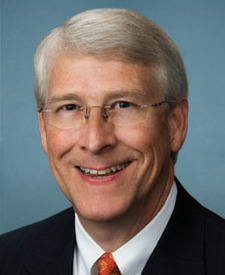
Legislative Progress
No timeline data available
Stakeholder Effects
cui bono?How this legislation distributes effects. Mention counts reflect frequency, not effect magnitude.
Congress (oversight committees), FDA (Secretary of HHS), FDA Center for Biologics Evaluation and Research
Positive-direction: Congress (oversight committees)
Negative-direction: FDA (Secretary of HHS), FDA Center for Biologics Evaluation and Research, FDA Center for Drug Evaluation and Research, FDA review divisions (CDER, CBER, CDRH)
Rare disease patient advocacy organizations, Reagan-Udall Foundation for the FDA
Pharmaceutical and biotechnology companies developing rare disease drugs, Pharmaceutical companies with drugs pending approval
General public and transparency advocates, Patients with rare diseases
Academic medical researchers specializing in rare diseases
Bill Structure & Actor Mappings
Who is "The Secretary" in each section?
- "the_secretary"
- → Secretary of Health and Human Services
- "the_foundation"
- → Reagan-Udall Foundation for the FDA
- "the_secretary"
- → Secretary of Health and Human Services
- "the_foundation"
- → Reagan-Udall Foundation for the FDA
- "steering_committee"
- → Science-Focused Drug Development Multistakeholder Steering Committee
- "the_secretary"
- → Secretary of Health and Human Services
Key Definitions
Terms defined in this bill
An externally led, science-focused drug development meeting
Has the meaning given such term in section 526 of the Federal Food, Drug, and Cosmetic Act (generally a disease affecting fewer than 200,000 persons in the US)
The Science-Focused Drug Development Multistakeholder Steering Committee established under subsection (b)(3)
We use a combination of our own taxonomy and classification in addition to large language models to assess meaning and potential beneficiaries. High confidence means strong textual evidence. Always verify with the original bill text.
Learn more about our methodology