United States Research Protection Act of 2025
Summary
What This Bill Does
The United States Research Protection Act amends the CHIPS and Science Act research-security provision on malign foreign talent recruitment programs. It narrows the country concept to foreign countries of concern but also clarifies that support can be provided directly or indirectly, making the restriction harder to avoid through intermediaries or renamed programs.
Who Benefits and How
University research security offices benefit from clearer statutory language about covered foreign talent recruitment programs. Federal research agencies benefit because grant-review and compliance rules can focus on foreign countries of concern. U.S. research teams benefit if sensitive federally funded research is less exposed to talent-recruitment programs tied to adversarial governments. National security officials benefit from a cleaner definition for enforcing research-protection rules.
Who Bears the Burden and How
Researchers with foreign talent program ties face stricter review when a foreign country of concern supports the program directly or indirectly. Universities must update disclosure, certification, and compliance screening processes. Foreign talent recruitment programs tied to countries of concern face exclusion from federally funded research participation. Federal grant officers must apply the revised definition when reviewing awards and disclosures.
Key Provisions
- Amends the definition used for malign foreign talent recruitment restrictions.
- Modifies foreign country language so the restriction applies to foreign countries of concern.
- Provides that indirect support from a foreign country of concern can still trigger the restriction.
- Tightens the list structure in the research-security statute through conforming edits.
Evidence Chain:
This summary is generated from the full bill text using AI analysis. Expand "Detailed Analysis" below for identified beneficiaries/burden bearers.
At a Glance
What This Bill Does
Clarifies the malign foreign talent recruitment restriction by tying the definition to foreign countries of concern and covering indirect support from those countries.
Key Policy Areas
Research, National Security, Higher Education
Primary Purpose
Clarifies the malign foreign talent recruitment restriction by tying the definition to foreign countries of concern and covering indirect support from those countries.
Policy Domains
Bill provisions
Identified Gains
Contextual inference, no direct clause citation- University research security offices
- Federal research agencies
- U.S. research teams
- National security officials
Contextual inference, no direct clause citation
Identified Costs
Contextual inference, no direct clause citation- Researchers with covered foreign ties
- Universities
- Foreign talent recruitment programs
- Federal grant officers
Contextual inference, no direct clause citation
Sponsors

Legislative Progress
ReportedReported by Mr. Cruz, without amendment
Placed on Senate Legislative Calendar under General Orders. Calendar No. …
Committee on Commerce, Science, and Transportation. Reported by Senator Cruz …
Committee on Commerce, Science, and Transportation. Ordered to be reported …
Introduced in Senate
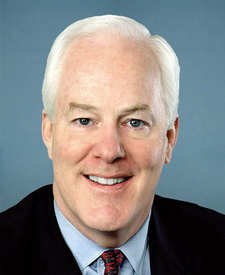
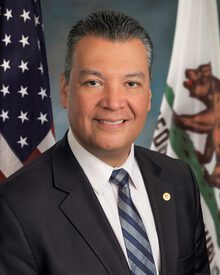
Mr. Cornyn (for himself and Mr. Padilla) introduced the following …
Read twice and referred to the Committee on Commerce, Science, …
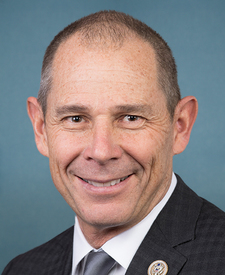
Mr. Cornyn (for himself, Mr. Padilla, and Mr. Curtis) introduced …
Bill Structure & Actor Mappings
Who is "The Secretary" in each section?
- "agency"
- → Federal research agency
We use a combination of our own taxonomy and classification in addition to large language models to assess meaning and potential beneficiaries. High confidence means strong textual evidence. Always verify with the original bill text.
Learn more about our methodology