Overdose RADAR Act
Analysis under review: This bill has generated analysis that may be too generic or incomplete. Clause-level evidence remains available below.
Summary
The Overdose RADAR Act is a comprehensive package to combat the opioid crisis through better data and expanded prevention programs. It authorizes grants to states and localities to improve tracking of opioid overdose deaths, including better toxicology testing and electronic death reporting. The bill calls for elevating the Director of the Office of National Drug Control Policy to Cabinet level and requires federal drug control agencies to coordinate to prevent duplication of services and grants. State opioid response grants would be expanded to require assessment of implementation challenges and sharing of best practices. A new 3-year pilot program would fund wastewater treatment facilities to test for fentanyl and xylazine in community water, providing early warning of drug prevalence. The bill expands existing naloxone grant programs to include drug administration (not just prescribing) and creates a new grant program to place overdose reversal drugs and devices in elementary and secondary schools, with requirements for trained personnel on premises during operating hours. Finally, the bill legalizes fentanyl test strips by exempting them from the drug paraphernalia definition in the Controlled Substances Act.
Evidence Chain:
This summary is generated from the full bill text using AI analysis. Expand "Detailed Analysis" below for identified beneficiaries/burden bearers.
At a Glance
What This Bill Does
Comprehensive opioid overdose response legislation that improves data collection on overdoses, reforms the Office of National Drug Control Policy, expands state opioid response grants, authorizes wastewater surveillance for illicit substances, extends naloxone availability to schools, and legalizes fentanyl test strips.
Who Benefits
- State health departments
- Schools and students at risk of opioid exposure
- Harm reduction organizations
Who Bears Costs
- Federal budget (multiple grant programs)
- ONDCP and drug control agencies (coordination and reporting requirements)
Key Policy Areas
Healthcare, Public Health, Drug Policy
Primary Purpose
Comprehensive opioid overdose response legislation that improves data collection on overdoses, reforms the Office of National Drug Control Policy, expands state opioid response grants, authorizes wastewater surveillance for illicit substances, extends naloxone availability to schools, and legalizes fentanyl test strips.
Policy Domains
Legislative Strategy
"Address the opioid crisis through better data, institutional coordination, expanded treatment access, school-based emergency response, and removal of legal barriers to harm reduction tools"
Sponsors
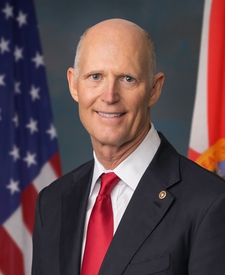
Legislative Progress
In CommitteeMr. Scott of Florida introduced the following bill; which was …
Read twice and referred to the Committee on Health, Education, …
Introduced in Senate
Stakeholder Effects
cui bono?How this legislation distributes effects. Mention counts reflect frequency, not effect magnitude.
National Drug Control Program agencies, Office of National Drug Control Policy, State and local health departments
Positive-direction: State and local health departments, States, territories, and localities
Negative-direction: National Drug Control Program agencies
Communities affected by fentanyl, Drug surveillance researchers, Medical examiner and coroner offices
Public and private schools (elementary and secondary), School districts and administrators, School personnel requiring overdose response training
Naloxone and overdose treatment manufacturers, Naloxone distribution programs, Naloxone manufacturers (Narcan, Kloxxado)
Bill Structure & Actor Mappings
Who is "The Secretary" in each section?
- "the_secretary"
- → Secretary of Health and Human Services
- "doj"
- → Department of Justice
- "hhs"
- → Department of Health and Human Services
- "ondcp_director"
- → Director of ONDCP
- "cdc_director"
- → Director of CDC
- "the_secretary"
- → Secretary of HHS
- "attorney_general"
- → Attorney General
Key Definitions
Terms defined in this bill
Entity with jurisdiction over public and private elementary and secondary schools for purposes of opioid overdose treatment grants
We use a combination of our own taxonomy and classification in addition to large language models to assess meaning and potential beneficiaries. High confidence means strong textual evidence. Always verify with the original bill text.
Learn more about our methodology