To provide rental vouchers for the homeless, and for other purposes.
Analysis under review: This bill has generated analysis that may be too generic or incomplete. Clause-level evidence remains available below.
Summary
What This Bill Does
The Affordable Housing Credit Improvement Act is a comprehensive housing reform package that strengthens existing federal affordable housing programs and creates new incentives for housing development. It improves the Low-Income Housing Tax Credit (LIHTC), creates new middle-income and neighborhood housing tax credits, establishes a renters credit for low-income tenants, and provides a first-time homebuyer tax credit of up to $15,000.
Who Benefits and How
Residential real estate developers and investors benefit from expanded tax credits (up to 50% higher credits for extremely low-income housing projects), reduced bond financing thresholds (from 50% to 25%), and streamlined allocation processes. Low-income renters benefit from new rental reduction credits that subsidize their rent. First-time homebuyers earning under $200,000 (joint filers) can receive up to $15,000 in refundable tax credits. Rural housing developers gain access to preserved USDA loan programs and $50 million in technology upgrades. Homeless individuals and families gain expanded voucher eligibility and $10 billion annually in Housing Trust Fund appropriations.
Who Bears the Burden and How
Taxpayers bear the cost of expanded tax expenditures through reduced federal revenue from multiple new and enhanced tax credits. Local governments lose some control over LIHTC project approval as the bill prohibits consideration of local opposition in project selection criteria. State housing agencies face increased administrative responsibilities for managing new credit programs and allocation processes.
Key Provisions
- Creates new Middle-Income Housing Tax Credit for households earning 60-100% of area median income
- Establishes Neighborhood Homes Credit to address the value gap in distressed communities, potentially generating 500,000 homes over 10 years
- Provides up to $15,000 refundable tax credit for first-time homebuyers
- Reduces tax-exempt bond financing threshold from 50% to 25% for LIHTC eligibility (2024-2028)
- Requires 8% of LIHTC allocations go to buildings serving extremely low-income households (30% AMI)
- Authorizes $10 billion annually for Housing Trust Fund for homeless assistance
- Permanently authorizes McKinney-Vento homeless assistance grants
Evidence Chain:
This summary is generated from the full bill text using AI analysis. Expand "Detailed Analysis" below for identified beneficiaries/burden bearers.
At a Glance
What This Bill Does
Expands and improves federal affordable housing programs through enhanced tax credits, rural housing preservation, homeless assistance vouchers, and new homebuyer incentives.
Key Policy Areas
Housing, Tax Policy, Rural Development, Homelessness
Primary Purpose
Expands and improves federal affordable housing programs through enhanced tax credits, rural housing preservation, homeless assistance vouchers, and new homebuyer incentives.
Policy Domains
Title I - Homeless Assistance
Identified Gains
Contextual inference, no direct clause citation- Homeless individuals and families
- Public housing agencies
- Continuums of care
Contextual inference, no direct clause citation
Identified Costs
Contextual inference, no direct clause citation- Federal taxpayers
- State housing agencies
Contextual inference, no direct clause citation
Title II - Rural Housing Reinvestment
Identified Gains
Contextual inference, no direct clause citation- Rural low-income renters
- Farm laborers
- Rural housing developers
- Nonprofit housing organizations
Contextual inference, no direct clause citation
Identified Costs
Contextual inference, no direct clause citation- USDA Rural Housing Service
- Federal taxpayers
Contextual inference, no direct clause citation
Title III - Low-Income Housing Tax Credit Improvements
Identified Gains
Contextual inference, no direct clause citation- Residential real estate developers
- Low-income housing investors
- Low-income renters
- Middle-income renters
- First-time homebuyers
- Distressed neighborhood residents
Contextual inference, no direct clause citation
Identified Costs
Contextual inference, no direct clause citation- Federal taxpayers
- Local governments
- State housing credit agencies
Contextual inference, no direct clause citation
Sponsors
Legislative Progress
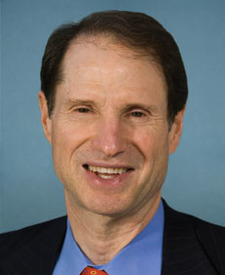
IntroducedMr. Wyden introduced the following bill; which was read twice …
Stakeholder Effects
cui bono?How this legislation distributes effects. Mention counts reflect frequency, not effect magnitude.
Continuums of care organizations, Extremely low-income households, Homeless individuals and families
Distressed community homebuyers, First-time homebuyers, First-time homebuyers in distressed communities
Positive-direction: Distressed community homebuyers, First-time homebuyers, First-time homebuyers in distressed communities, Homeowners receiving state energy subsidies, Real estate S corporations, Real estate partnerships, Rental property owners, Rental property owners in qualified buildings, Residential real estate brokers, Residential real estate industry, Rural multifamily housing developers, Rural multifamily housing owners
Negative-direction: LIHTC property owners seeking early exit, Rental property owners receiving renters credit
Affordable housing developers, Bond-financed affordable housing developers, Construction workers
Indian Tribes, Local governments, Local governments receiving HUD funding
Positive-direction: Indian Tribes, Public housing agencies, USDA Rural Housing Service
Negative-direction: Local governments, Local governments receiving HUD funding, Secretary of Agriculture, State housing agencies, State housing credit agencies, State rental reduction credit agencies
Housing credit investors, LIHTC investors, Mortgage lenders
Bill Structure & Actor Mappings
Who is "The Secretary" in each section?
- "the_secretary"
- → Secretary of Housing and Urban Development
- "the_secretary"
- → Secretary of Agriculture
- "the_secretary"
- → Secretary of the Treasury
- "housing_credit_agency"
- → State Housing Credit Agency
Note: The Secretary refers to Secretary of HUD in Title I (homeless assistance), Secretary of Agriculture in Title II (rural housing), and Secretary of Treasury in Title III (tax credits)
Key Definitions
Terms defined in this bill
An individual or family who is homeless or at risk of homelessness and is referred by a public child welfare agency or continuum of care
As defined in McKinney-Vento Act section 401(1), with 50% substituted for 30% in income threshold
Individual who receives substantial portion of income from primary production of agricultural or aquacultural commodities
Households with income not exceeding 30% of area median income or 100% of federal poverty line
The applicable percentage of the excess of applicable rent over the family rental payment required
Amounts for land acquisition, construction, rehabilitation, demolition, or environmental remediation as determined necessary by the neighborhood homes credit agency
Individual who has not owned a principal residence during the 3-year period ending on date of purchase
Broad-based nonprofits, housing developers, Indian Tribes, community organizations, or State/local agencies
A residence in a qualified census tract sold in an affordable sale as part of a qualified project
We use a combination of our own taxonomy and classification in addition to large language models to assess meaning and potential beneficiaries. High confidence means strong textual evidence. Always verify with the original bill text.
Learn more about our methodology