To amend title 5, United States Code, to provide for an alternative removal for performance or misconduct for Federal employees.
Summary
What This Bill Does
The bill repeals Section 4303 of title 5, which provided performance-based action procedures requiring agencies to give employees an opportunity to demonstrate acceptable performance before adverse actions. Eliminates, amends Section 7513 to establish new streamlined adverse action procedures, and establishes Section 7513 'Cause and procedure for actions other than furlough' with new streamlined procedures for adverse actions. It relies on compliance mandates, definition changes, repeal, and exemptions. The main policy areas are Civil Service and Labor.
Who Benefits and How
Federal agency management could face lower compliance burdens, Federal employees facing performance-based actions could face lower compliance burdens, and Federal employees subject to emergency furlough could face lower compliance burdens.
Who Bears the Burden and How
Federal supervisors would take on compliance duties, Federal employees subject to adverse actions would take on compliance duties, and Federal employees convicted of job-related felonies could face higher costs.
Key Provisions
- Repeals Section 4303 of title 5, which provided performance-based action procedures requiring agencies to give employees an opportunity to demonstrate acceptable performance before adverse actions. Eliminates...
- Amends Section 7513 to establish new streamlined adverse action procedures.
- Establishes Section 7513 'Cause and procedure for actions other than furlough' with new streamlined procedures for adverse actions.
- Amends procedures for actions against Senior Executive Service (SES) career appointees.
- Establishes Section 7543 with streamlined cause and procedure for adverse actions.
Evidence Chain:
This summary is generated from the full bill text using AI analysis. Expand "Detailed Analysis" below for identified beneficiaries/burden bearers with clause-level evidence links.
At a Glance
What This Bill Does
The bill repeals Section 4303 of title 5, which provided performance-based action procedures requiring agencies to give employees an opportunity to demonstrate acceptable performance before adverse actions. Eliminates, amends Section 7513 to establish new streamlined adverse action procedures, and establishes Section 7513 'Cause and procedure for actions other than furlough' with new streamlined procedures for adverse actions.
Key Policy Areas
Civil Service, Labor
Primary Purpose
The bill repeals Section 4303 of title 5, which provided performance-based action procedures requiring agencies to give employees an opportunity to demonstrate acceptable performance before adverse actions. Eliminates, amends Section 7513 to establish new streamlined adverse action procedures, and establishes Section 7513 'Cause and procedure for actions other than furlough' with new streamlined procedures for adverse actions.
Policy Domains
General - Federal Civil Service Reform
Identified Gains
- Federal agency management
- Federal employees facing performance-based actions
- Federal employees subject to emergency furlough
- Federal agency leadership
- Federal agency hiring managers
Identified Costs
- Federal supervisors
- Federal employees subject to adverse actions
- Federal employees convicted of job-related felonies
- Federal employees subject to furlough
- New federal employees in competitive service
Sponsors

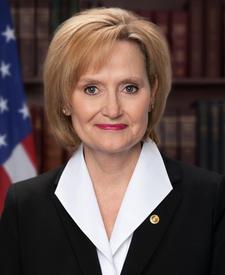
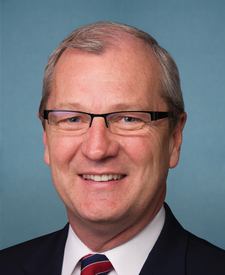
Legislative Progress
IntroducedMr. Sheehy (for himself, Mr. Cramer, and Mrs. Hyde-Smith) introduced …
Stakeholder Effects
cui bono?How this legislation distributes effects. Mention counts reflect frequency, not effect magnitude.
Federal agency heads, Federal agency hiring managers, Federal agency leadership
Positive-direction: Federal agency heads, Federal agency hiring managers, Federal agency leadership, Federal agency management, Federal retirement system
Negative-direction: Federal employees convicted of job-related felonies, Federal employees facing performance-based actions, Federal employees receiving bonuses, Federal employees subject to adverse actions, Federal employees subject to emergency furlough, Federal employees subject to furlough, Federal employees subject to non-furlough adverse actions, Federal employees with misconduct findings, Federal supervisors, New federal employees in competitive service, Senior Executive Service career appointees
Bill Structure & Actor Mappings
Who is "The Secretary" in each section?
- "the_board"
- → Merit Systems Protection Board
- "the_office"
- → Office of Personnel Management
- "the_head_of_agency"
- → Head of the employing federal agency
- "the_inspector_general"
- → Inspector General or senior ethics official of an agency
Key Definitions
Terms defined in this bill
Any day other than a Saturday, Sunday, or legal public holiday under section 6103(a) of title 5
A determination by the head of the agency that employee conduct violated agency policy (removable/suspendable offense) or violated a law punishable by more than 1 year imprisonment
Any performance award or cash award under sections 4505a, 5384, or 5754
Has the meaning given that term in section 7103(a) of title 5, U.S.C.
An individual in the competitive service not serving a probationary period or who has completed 1 year of current continuous employment; or a career appointee in the Senior Executive Service who has completed probationary period
The placing of an employee in a temporary status without duties and pay because of lack of work or funds or other nondisciplinary reasons
A furlough that is not due to a lapse in appropriations
A furlough due to a lapse in appropriations
We use a combination of our own taxonomy and classification in addition to large language models to assess meaning and potential beneficiaries. High confidence means strong textual evidence. Always verify with the original bill text.
Learn more about our methodology