Department of Energy Quantum Leadership Act of 2025
Analysis under review: This bill has generated analysis that may be too generic or incomplete. Clause-level evidence remains available below.
Summary
What This Bill Does
The bill creates reauthorize and expand DOE quantum information science program to include engineering and technology, creates create DOE Quantum Instrumentation and Foundry Program to develop specialized equipment, infrastructure, and quantum foundries for domestic supply chains, and creates detailed provisions of the Quantum Instrumentation and Foundry Program: develop, design, build, purchase, and commercialize specialized equipment. It relies on grants, appropriations, and procurement rules. The main policy areas are Technology, Energy, Education, and Defense.
Who Benefits and How
Department of Energy quantum programs could gain revenue opportunities, Quantum technology supply chain companies could gain revenue opportunities, and Quantum hardware and instrument manufacturers could gain revenue opportunities.
Who Bears the Burden and How
Institutions with Confucius Institutes could face higher barriers.
Key Provisions
- Creates reauthorize and expand DOE quantum information science program to include engineering and technology.
- Creates create DOE Quantum Instrumentation and Foundry Program to develop specialized equipment, infrastructure, and quantum foundries for domestic supply chains.
- Creates detailed provisions of the Quantum Instrumentation and Foundry Program: develop, design, build, purchase, and commercialize specialized equipment.
- Creates reauthorize National Quantum Information Science Research Centers: expand scope to engineering and technology and workforce development.
- Creates expand quantum network infrastructure R&D program to include diverse modalities, commercially available hardware/software, education pathways; add ground-to-space networking, quantum sensors, data centers...
Evidence Chain:
This summary is generated from the full bill text using AI analysis. Expand "Detailed Analysis" below for identified beneficiaries/burden bearers with clause-level evidence links.
At a Glance
What This Bill Does
The bill creates reauthorize and expand DOE quantum information science program to include engineering and technology, creates create DOE Quantum Instrumentation and Foundry Program to develop specialized equipment, infrastructure, and quantum foundries for domestic supply chains, and creates detailed provisions of the Quantum Instrumentation and Foundry Program: develop, design, build, purchase, and commercialize specialized equipment.
Key Policy Areas
Technology, Energy, Education, Defense
Primary Purpose
The bill creates reauthorize and expand DOE quantum information science program to include engineering and technology, creates create DOE Quantum Instrumentation and Foundry Program to develop specialized equipment, infrastructure, and quantum foundries for domestic supply chains, and creates detailed provisions of the Quantum Instrumentation and Foundry Program: develop, design, build, purchase, and commercialize specialized equipment.
Policy Domains
Section 2 - DOE quantum information science research program
Identified Gains
- Department of Energy quantum programs
- Quantum technology supply chain companies
- Quantum hardware and instrument manufacturers
- National Quantum Information Science Research Centers
- Domestic quantum computing companies
Identified Costs
- Institutions with Confucius Institutes
Sponsors
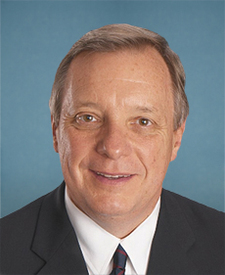
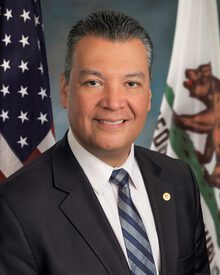
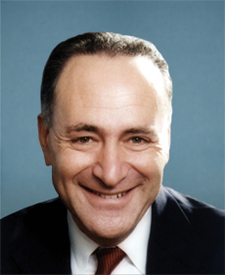
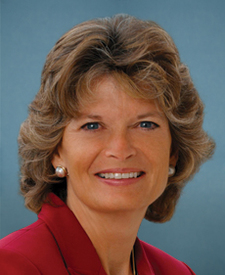
Legislative Progress
In CommitteeMr. Durbin (for himself, Mr. Daines, Mr. Schumer, Ms. Murkowski, …
Read twice and referred to the Committee on Energy and …
Introduced in Senate
Stakeholder Effects
cui bono?How this legislation distributes effects. Mention counts reflect frequency, not effect magnitude.
Commercial quantum companies partnering with centers, Domestic quantum computing companies, National Quantum Information Science Research Centers
Department of Energy quantum programs, National Laboratories
Institutions with Confucius Institutes, Research institutions and universities
Positive-direction: Research institutions and universities
Negative-direction: Institutions with Confucius Institutes
Bill Structure & Actor Mappings
Who is "The Secretary" in each section?
- "secretary_energy"
- → Secretary of Energy
- "secretary_energy"
- → Secretary of Energy
Key Definitions
Terms defined in this bill
A covered nation under 10 USC 4872(d) or any country determined by the Secretary of Energy to be detrimental to US national security
A foreign entity designated as terrorist organization, on OFAC blocked list, owned by a covered nation, or determined to engage in detrimental conduct
We use a combination of our own taxonomy and classification in addition to large language models to assess meaning and potential beneficiaries. High confidence means strong textual evidence. Always verify with the original bill text.
Learn more about our methodology