To enhance safety requirements for trains transporting hazardous materials, and for other purposes.
Analysis under review: This bill has generated analysis that may be too generic or incomplete. Clause-level evidence remains available below.
Summary
What This Bill Does
Requires DOT to issue comprehensive safety regulations within one year for trains transporting hazardous materials, including requirements for advance notification to state emergency response officials, gas discharge plans, and reduced blocked crossings.
Who Benefits and How
Communities along rail lines benefit from improved hazmat safety. State and tribal emergency responders receive advance notification of hazmat shipments. Local governments benefit from reduced blocked crossings.
Who Bears the Burden and How
Rail carriers face new operational requirements on train length, speed, and maintenance. Shippers must provide advance notification and gas discharge plans. Railroads bear compliance costs for track, bridge, and rail car maintenance.
Key Provisions
- One-year deadline for new safety regulations
- Advance notification to state emergency response commissioners
- Written gas discharge plans required for hazmat shipments
- Requirements for train length, weight, speed, and track standards
Evidence Chain:
This summary is generated from the full bill text using AI analysis. Expand "Detailed Analysis" below for identified beneficiaries/burden bearers.
At a Glance
What This Bill Does
Enhances safety requirements for trains transporting hazardous materials, responding to derailment concerns
Who Benefits
- Communities along rail lines
- Emergency responders
- Local governments
Who Bears Costs
- Rail carriers
- Hazmat shippers
- Railroads
Key Policy Areas
Transportation, Rail Safety, Hazardous Materials, Emergency Response
Primary Purpose
Enhances safety requirements for trains transporting hazardous materials, responding to derailment concerns
Policy Domains
Legislative Strategy
"Improve rail safety through comprehensive hazmat regulations"
Sponsors




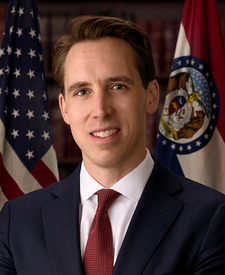
Legislative Progress
ReportedReported by Ms. Cantwell, with an amendment
Mr. Brown (for himself, Mr. Vance, Mr. Casey, Mr. Rubio, …
Mr. Brown (for himself, Mr. Vance, Mr. Casey, Mr. Rubio, …
Stakeholder Effects
cui bono?How this legislation distributes effects. Mention counts reflect frequency, not effect magnitude.
Class I railroads, Hazmat shippers and carriers, Large freight railroads
Positive-direction: Mechanical inspectors, Rail workers (conductors and engineers), Railroad inspectors, Railroad mechanical inspectors, Railroad workers, Roadway workers, Small and regional railroads, Small railroads
Negative-direction: Class I railroads, Hazmat shippers and carriers, Large freight railroads, Rail safety compliance programs, Railroad equipment inspectors, Railroads, Railroads blocking crossings, Railroads operating hazmat trains, Railroads operating high-hazard trains, Railroads operating long trains, Railroads transporting hazardous materials, Railroads violating safety regulations, Tank car fleet owners, Tank car owners with DOT-111 fleet
DOT Inspector General, FRA Office of Railroad Safety, FRA safety inspectors and specialists
Positive-direction: FRA safety inspectors and specialists, PHMSA hazmat programs, PHMSA tank car research, PHMSA tank car safety programs
Negative-direction: DOT Inspector General, FRA Office of Railroad Safety, Federal Railroad Administration, GAO, Office of Personnel Management
Communities affected by blocked crossings, Communities along rail lines, Communities near rail lines
Defect detector manufacturers, PPE and detection equipment manufacturers, Tank car manufacturers
Defect detector technology companies, Rail safety technology providers, Worker protection technology providers
Emergency response agencies, First responders and emergency services, First responders and firefighters
National Academy of Sciences, Rail safety researchers, Rail safety technology researchers
Bill Structure & Actor Mappings
Who is "The Secretary" in each section?
- "the_secretary"
- → Secretary of Transportation
We use a combination of our own taxonomy and classification in addition to large language models to assess meaning and potential beneficiaries. High confidence means strong textual evidence. Always verify with the original bill text.
Learn more about our methodology