To amend titles XVIII and XIX of the Social Security Act to increase access to services provided by advanced practice registered nurses under the Medicare and Medicaid programs, and for other purposes.
Analysis under review: This bill has generated analysis that may be too generic or incomplete. Clause-level evidence remains available below.
Summary
What This Bill Does
This bill significantly expands the role of advanced practice registered nurses (APRNs) in the healthcare system by allowing them to perform more services independently under Medicare and Medicaid. It removes physician supervision requirements for certified registered nurse anesthetists (CRNAs) and allows nurse practitioners, nurse-midwives, and clinical nurse specialists to order and certify more types of medical services and equipment.
Who Benefits and How
Advanced practice registered nurses (nurse practitioners, CRNAs, nurse-midwives, clinical nurse specialists) benefit by gaining authority to practice more independently and bill Medicare/Medicaid for more services. Patients in rural and underserved areas benefit from increased access to care as nurses can provide services without requiring physician oversight. Medical equipment suppliers (DMEPOS providers) gain access to more potential referral sources.
Who Bears the Burden and How
Physician groups, particularly anesthesiologists, may see reduced market share as CRNAs gain the ability to practice independently without physician supervision. State medical boards and HHS face administrative burden of implementing new regulations. Some quality/safety advocates express concern about reduced physician oversight.
Key Provisions
- Removes physician supervision requirements for certified registered nurse anesthetists (Section 204)
- Makes CRNA services a mandatory Medicaid benefit with Medicare-equivalent payment rates (Section 205)
- Allows nurse practitioners and nurse-midwives to order home health services, DMEPOS, and other equipment (Sections 302, 303)
- Expands cardiac/pulmonary rehabilitation and home infusion therapy to include APRN-ordered services (Sections 101, 105)
Evidence Chain:
This summary is generated from the full bill text using AI analysis. Expand "Detailed Analysis" below for identified beneficiaries/burden bearers.
At a Glance
What This Bill Does
Expands the scope of practice and Medicare/Medicaid payment authority for advanced practice registered nurses (APRNs) including nurse practitioners, certified registered nurse anesthetists, certified nurse-midwives, and clinical nurse specialists.
Key Policy Areas
Healthcare, Medicare, Medicaid, Nursing
Primary Purpose
Expands the scope of practice and Medicare/Medicaid payment authority for advanced practice registered nurses (APRNs) including nurse practitioners, certified registered nurse anesthetists, certified nurse-midwives, and clinical nurse specialists.
Policy Domains
Title I - Improving Access to Care
Identified Gains
Contextual inference, no direct clause citation- Nurse practitioners
- Physician assistants
- Clinical nurse specialists
- Medicare beneficiaries
Contextual inference, no direct clause citation
Identified Costs
Contextual inference, no direct clause citation- Physicians
Contextual inference, no direct clause citation
Title V - Effective Date
Identified Gains
Contextual inference, no direct clause citation- HHS
Contextual inference, no direct clause citation
Title II - CRNA Practice Authority
Identified Gains
Contextual inference, no direct clause citation- Certified registered nurse anesthetists
- Hospitals
- Ambulatory surgical centers
- Medicaid beneficiaries
Contextual inference, no direct clause citation
Identified Costs
Contextual inference, no direct clause citation- Anesthesiologists
- State Medicaid programs
Contextual inference, no direct clause citation
Title IV - Administrative Provisions
Identified Gains
Contextual inference, no direct clause citation- Healthcare providers
- APRNs
Contextual inference, no direct clause citation
Identified Costs
Contextual inference, no direct clause citation- Medicare contractors
Contextual inference, no direct clause citation
Title III - Nurse-Midwife and Home Health Access
Identified Gains
Contextual inference, no direct clause citation- Certified nurse-midwives
- Medicare beneficiaries
- DMEPOS suppliers
Contextual inference, no direct clause citation
Identified Costs
Contextual inference, no direct clause citation- Physicians
- Obstetricians
Contextual inference, no direct clause citation
Sponsors
Legislative Progress
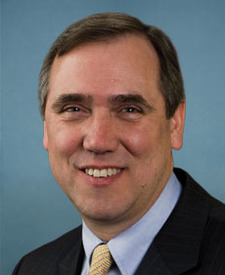
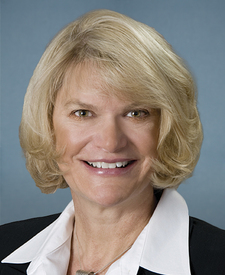
IntroducedMr. Merkley (for himself and Ms. Lummis) introduced the following …
Stakeholder Effects
cui bono?How this legislation distributes effects. Mention counts reflect frequency, not effect magnitude.
Department of Health and Human Services, Federal Pell Grant program, Federal budget
Anesthesiologists, Certified nurse-midwives, Certified registered nurse anesthetists (CRNAs)
Positive-direction: Certified nurse-midwives, Certified registered nurse anesthetists (CRNAs), DMEPOS suppliers
Negative-direction: Anesthesiologists, State Medicaid programs
DACA recipients seeking higher education, Defaulted borrowers, Future student loan borrowers
Positive-direction: DACA recipients seeking higher education, Future student loan borrowers, Low and middle-income undergraduate students, Low-income students receiving means-tested benefits, Student loan borrowers making prepayments
Negative-direction: Defaulted borrowers
Colleges and universities, Graduate and professional students, Graduate students
Medicaid beneficiaries requiring anesthesia services, Medicare beneficiaries needing DMEPOS
Bill Structure & Actor Mappings
Who is "The Secretary" in each section?
- "the_secretary"
- → Secretary of Health and Human Services
- "the_secretary"
- → Secretary of Health and Human Services
- "the_secretary"
- → Secretary of Health and Human Services
- "the_secretary"
- → Secretary of Health and Human Services
- "the_secretary"
- → Secretary of Health and Human Services
Key Definitions
Terms defined in this bill
A registered professional nurse licensed to practice nurse-midwifery under State law
Nurse practitioners and clinical nurse specialists as defined in existing Social Security Act section 1861(aa)(5)
A registered nurse who is licensed as a nurse anesthetist by the State and meets certification requirements
We use a combination of our own taxonomy and classification in addition to large language models to assess meaning and potential beneficiaries. High confidence means strong textual evidence. Always verify with the original bill text.
Learn more about our methodology