To require Federal agencies to impose in-person work requirements for employees of those agencies and to occupy a certain portion of the office space of those agencies, and for other purposes.
Analysis under review: This bill has generated analysis that may be too generic or incomplete. Clause-level evidence remains available below.
Summary
What This Bill Does
This bill, To require Federal agencies to impose in-person work requirements for employees of those agencies and to occupy a certain portion of the office space of those agencies, and for other purposes., changes federal law or congressional policy affecting federal agencies and legislative administrators. The main policy domain is Government Operations, Environment, Transportation.
Who Benefits and How
federal agencies and legislative administrators may benefit from new authority, funding, eligibility, regulatory clarity, or reduced risk created by the bill.
Who Bears the Burden and How
federal implementing agencies may take on implementation duties, reporting obligations, compliance costs, or oversight responsibilities.
Key Provisions
- Section S1: 1. Short title This Act may be cited as the Reinforce Occupancy Obligations for Maximized Interagency Efficiency Act or the ROOMIE Act.
- Section idf101aa1819614393bb47ee639b9a3d58: 2. Definitions In this Act: The term Administrator means the Administrator of General Services. The term Federal agency has the meaning given the term in...
- Section idd7ba1318c4674685a3bf21a7dbd18cba: 3. Findings Congress finds that— according to a 2023 review of Federal agencies by the Government Accountability Office— 17 Federal agencies used on average an...
- Section ida992fae18d494410bf7b460a069bbe75: 4. In-person work requirements Not later than 120 days after the date of enactment of this Act, the head of each Federal agency shall amend the policies of the...
- Section id0706cc62ec164d9b951217378f07fbde: 5. Noncompliance If a Federal agency fails to comply with section 4(a) by the deadlines described in that section, the Federal agency or the General Services...
Evidence Chain:
This summary is generated from the full bill text using AI analysis. Expand "Detailed Analysis" below for identified beneficiaries/burden bearers with clause-level evidence links.
At a Glance
What This Bill Does
This bill, To require Federal agencies to impose in-person work requirements for employees of those agencies and to occupy a certain portion of the office space of those agencies, and for other purposes., changes federal law or congressional policy affecting federal agencies and legislative administrators.
Key Policy Areas
Government Operations, Environment, Transportation
Primary Purpose
This bill, To require Federal agencies to impose in-person work requirements for employees of those agencies and to occupy a certain portion of the office space of those agencies, and for other purposes., changes federal law or congressional policy affecting federal agencies and legislative administrators.
Policy Domains
Whole bill
Identified Gains
- federal agencies and legislative administrators
Identified Costs
- federal implementing agencies
Sponsors
Legislative Progress
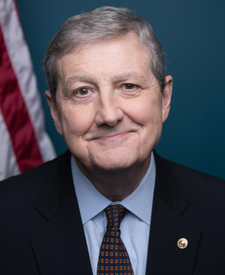
IntroducedMr. Kennedy introduced the following bill; which was read twice …
Impact analysis is available but no clear stakeholder effects identified. View clause-level analysis →
Bill Structure & Actor Mappings
Who is "The Secretary" in each section?
- "the_administrator"
- → The Administrator identified in the operative section
We use a combination of our own taxonomy and classification in addition to large language models to assess meaning and potential beneficiaries. High confidence means strong textual evidence. Always verify with the original bill text.
Learn more about our methodology