To ensure progress toward the fulfillment by the Federal Government of its trust and treaty obligations to Native Americans and Tribal governments, to ensure funding for programs for Native Americans and Tribal governments, and for other purposes.
Analysis under review: This bill has generated analysis that may be too generic or incomplete. Clause-level evidence remains available below.
Summary
What This Bill Does
This bill, To ensure progress toward the fulfillment by the Federal Government of its trust and treaty obligations to Native Americans and Tribal governments, to ensure funding for programs for Native Americans and Tribal governments, and for other purposes., changes federal law or congressional policy affecting law enforcement, courts, victims, and regulated public-safety actors. The main policy domain is Criminal Justice, Government Operations, Transportation.
Who Benefits and How
law enforcement, courts, victims, and regulated public-safety actors may benefit from new authority, funding, eligibility, regulatory clarity, or reduced risk created by the bill.
Who Bears the Burden and How
federal implementing agencies, law enforcement, courts, victims, and regulated public-safety actors may take on implementation duties, reporting obligations, compliance costs, or oversight responsibilities.
Key Provisions
- Section S1: 1. Short title; table of contents This Act may be cited as the Honoring Promises to Native Nations Act. The table of contents for this Act is as follows:
- Section id8ec85d22ab22427fb177bccf5f86fb5d: 2. Purposes The purposes of this Act are— to acknowledge the chronic failure of the Federal Government— to fulfill its trust responsibilities to American...
- Section id953F3CAB5C894589BB4ED16E4E4018C9: 3. Findings Congress finds that— in December 2018, the United States Commission on Civil Rights issued a report entitled Broken Promises: Continuing Federal...
- Section id4BC7AF985D284EE1AA4F1653C3CAF283: 4. Sense of Congress It is the sense of Congress that— Indian Tribes are distinct sovereigns that have a government-to-government relationship with the Federal...
- Section idd58035b8ba574dc99d361728cf22c3ec: 5. Definitions In this Act: The term Hawaiian home lands means land held in trust for Native Hawaiians by the State of Hawaii pursuant to the Hawaiian Homes...
Evidence Chain:
This summary is generated from the full bill text using AI analysis. Expand "Detailed Analysis" below for identified beneficiaries/burden bearers with clause-level evidence links.
At a Glance
What This Bill Does
This bill, To ensure progress toward the fulfillment by the Federal Government of its trust and treaty obligations to Native Americans and Tribal governments, to ensure funding for programs for Native Americans and Tribal governments, and for other purposes., changes federal law or congressional policy affecting law enforcement, courts, victims, and regulated public-safety actors.
Key Policy Areas
Criminal Justice, Government Operations, Transportation
Primary Purpose
This bill, To ensure progress toward the fulfillment by the Federal Government of its trust and treaty obligations to Native Americans and Tribal governments, to ensure funding for programs for Native Americans and Tribal governments, and for other purposes., changes federal law or congressional policy affecting law enforcement, courts, victims, and regulated public-safety actors.
Policy Domains
Whole bill
Identified Gains
- law enforcement, courts, victims, and regulated public-safety actors
Identified Costs
- federal implementing agencies
- law enforcement, courts, victims, and regulated public-safety actors
Legislative Progress
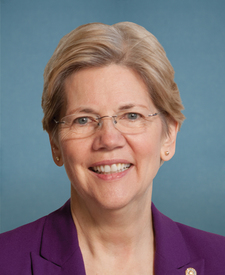
IntroducedMs. Warren introduced the following bill; which was read twice …
Impact analysis is available but no clear stakeholder effects identified. View clause-level analysis →
Bill Structure & Actor Mappings
Who is "The Secretary" in each section?
- "the_commission"
- → The commission identified in the operative section
- "the_administrator"
- → The Administrator identified in the operative section
- "secretary_of_health_and_human_services"
- → Secretary of Health and Human Services
Key Definitions
Terms defined in this bill
to engage in an open and free exchange of information and opinions that— leads to mutual understanding and comprehension
services— for which medical assistance is otherwise available under the State plan (or a waiver of such plan)
an Indian veteran who is—(aa)homeless or at risk of homelessness
a Tribal College or University (as defined in section 316(b) of the Higher Education Act of 1965 (20 U.S.C. 1059c(b))) that was in operation as such a Tribal College or University— during fiscal year 2024
an individual who— is an Indian or a Native Hawaiian
an institution of higher education that— is a Tribal College or University
an individual who— is an Indian or a Native Hawaiian
an individual who has suffered direct physical, sexual, financial, or emotional harm as a result of the commission of a crime. The Director shall— administer the grant program described in subsection (c)
an individual who has suffered direct physical, sexual, financial, or emotional harm as a result of the commission of a crime. The Director shall— administer the grant program described in subsection (c)
an institution of higher education that— is a Tribal College or University
any private nonprofit entity— that serves the best interests of Native Hawaiians
a Tribal College or University (as defined in section 316(b) of the Higher Education Act of 1965 (20 U.S.C. 1059c(b))) that was in operation as such a Tribal College or University— during fiscal year 2024
We use a combination of our own taxonomy and classification in addition to large language models to assess meaning and potential beneficiaries. High confidence means strong textual evidence. Always verify with the original bill text.
Learn more about our methodology