To promote defense innovation, and for other purposes.
Analysis under review: This bill has generated analysis that may be too generic or incomplete. Clause-level evidence remains available below.
Summary
What This Bill Does
The FoRGED Act (Fostering Reform and Government Efficiency in Defense Act) overhauls how the Department of Defense buys weapons, technology, and services. It repeals dozens of existing reporting requirements, raises procurement thresholds, and creates faster pathways to acquire software and prototypes. The goal is to reduce bureaucratic delays that slow down military modernization.
Who Benefits and How
Nontraditional defense contractors (startups, tech companies) benefit significantly through expanded exemptions from cost accounting rules and new consortia reserved exclusively for them. Large commercial product suppliers benefit from a new default presumption that DoD acquisitions are commercial, reducing compliance burdens. Portfolio acquisition executives gain expanded authority to manage programs with less oversight.
Who Bears the Burden and How
Traditional defense contractors face increased competition from nontraditional entrants who are exempt from many compliance requirements. Congressional defense committees lose oversight through the elimination of dozens of mandatory reports and the automatic sunset of future reporting requirements after 5 years. Government cost oversight functions are reduced as cost accounting requirements are relaxed.
Key Provisions
- Raises simplified acquisition threshold from current levels to $10 million, and other procurement thresholds to $50-100 million
- Creates mandatory consortia limited to nontraditional defense contractors for prototype and production work
- Establishes automatic 5-year sunset for all future defense reporting requirements to Congress
- Creates new software acquisition and consumption-based solutions pathways for faster technology fielding
Evidence Chain:
This summary is generated from the full bill text using AI analysis. Expand "Detailed Analysis" below for identified beneficiaries/burden bearers.
At a Glance
What This Bill Does
Reforms Department of Defense acquisition processes to streamline procurement, favor commercial products and nontraditional contractors, and accelerate the fielding of new military capabilities.
Key Policy Areas
Defense, Government Operations, Technology, Small Business
Primary Purpose
Reforms Department of Defense acquisition processes to streamline procurement, favor commercial products and nontraditional contractors, and accelerate the fielding of new military capabilities.
Policy Domains
Title I - Streamlining Acquisition Requirements
Identified Gains
Contextual inference, no direct clause citation- Defense contractors
- Department of Defense acquisition officials
Contextual inference, no direct clause citation
Identified Costs
Contextual inference, no direct clause citation- Congressional defense committees
- Government oversight functions
Contextual inference, no direct clause citation
Title V - Budget and Appropriations
Identified Gains
Contextual inference, no direct clause citation- Department of Defense budget offices
- Program managers
Contextual inference, no direct clause citation
Identified Costs
Contextual inference, no direct clause citation- Congressional appropriators
Contextual inference, no direct clause citation
Title II - Acquisition Organization Reform
Identified Gains
Contextual inference, no direct clause citation- Portfolio acquisition executives
- Defense acquisition workforce
Contextual inference, no direct clause citation
Identified Costs
Contextual inference, no direct clause citation- Joint Requirements Oversight Council
- Cost Assessment and Program Evaluation office
Contextual inference, no direct clause citation
Title IV - Supply Chain and Industrial Base
Identified Gains
Contextual inference, no direct clause citation- Secondary source manufacturers
- Parts suppliers
- Defense industrial base
Contextual inference, no direct clause citation
Identified Costs
Contextual inference, no direct clause citation- Prime contractors with sole source positions
Contextual inference, no direct clause citation
Title III - Acquisition Process Reforms
Identified Gains
Contextual inference, no direct clause citation- Nontraditional defense contractors
- Commercial technology companies
- Defense startups
Contextual inference, no direct clause citation
Identified Costs
Contextual inference, no direct clause citation- Traditional defense contractors
- Government cost accountants
Contextual inference, no direct clause citation
Legislative Progress
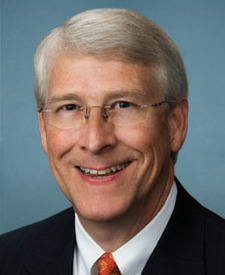
IntroducedMr. Wicker introduced the following bill; which was read twice …
Stakeholder Effects
cui bono?How this legislation distributes effects. Mention counts reflect frequency, not effect magnitude.
Congressional defense committees, Cost Assessment and Program Evaluation office, DARPA and Defense Innovation Unit
Positive-direction: DARPA and Defense Innovation Unit, Defense acquisition programs, Defense acquisition workforce, Defense program managers, Department of Defense, Department of Defense acquisition officials, Department of Defense modernization programs, Department of Defense procurement offices, Department of Defense reporting offices, DoD contracting officers, DoD procurement offices, Government cost estimators, Head of contracting activity, Joint Requirements and Programming Board, Military users, Portfolio acquisition executives, Program managers, Special Operations Command, Under Secretary for Acquisition
Negative-direction: Congressional defense committees, Cost Assessment and Program Evaluation office, Department of Defense budget officials, Government cost oversight, Government oversight functions, JCIDS process, Joint Requirements Oversight Council, Under Secretary of Defense for Acquisition
Body armor manufacturers, Commercial product suppliers, Defense contractors
Positive-direction: Body armor manufacturers, Commercial product suppliers, Defense contractors, Defense contractors competing for R&D awards, Defense contractors competing for prototypes, Defense contractors with technical data rights, Defense industrial base manufacturers, Defense prime contractors, Defense technology and modernization contractors, Defense technology companies, Parts Manufacturer Approval (PMA) holders, Prime contractors, Prototype developers, Rapid prototyping firms, Secondary source manufacturers and parts suppliers, Small defense businesses, Weapon system sustainment providers
Negative-direction: Incumbent sole-source defense suppliers, Traditional defense contractors
Cloud computing and managed services providers, Cloud computing providers, Commercial technology companies
Commercial product suppliers, Commercial subcontractors, Embedded systems developers
Cloud and technology service providers offering usage-based pricing, Commercial cloud computing providers, Technology service providers offering consumption-based models
Advanced manufacturing companies, Defense IT hardware manufacturers, Reverse engineering and manufacturing capability firms
Federally funded research and development centers (FFRDCs), Nonprofit technical advisory organizations, Science and technology reinvention laboratories
Bill Structure & Actor Mappings
Who is "The Secretary" in each section?
- "the_secretary"
- → Secretary of Defense
- "the_secretary"
- → Secretary of Defense
- "portfolio_acquisition_executive"
- → Primary stakeholder for acquisition programs
- "the_secretary"
- → Secretary of Defense
- "head_of_contracting_activity"
- → Officials with unlimited procurement authority
- "portfolio_acquisition_executive"
- → Primary stakeholder for acquisition programs
- "the_secretary"
- → Secretary of Defense
- "the_secretary"
- → Secretary of Defense
Key Definitions
Terms defined in this bill
A requirement for periodic reports to Congress without a specific termination date or time period
Primary stakeholder with overall management of requirements, programming, and acquisition of defense programs assigned by service acquisition executive
An entity not currently performing on defense contracts that either: (1) achieved 30%+ year-over-year revenue growth, (2) reinvested 10%+ of revenue in non-reimbursable R&D, or (3) raised equity funding of 5%+ of company value in last 2 years
Analysis of value to the Federal Government considering fitness for purpose, technical expertise, business model, cost avoidance, user input, or competitive capabilities within fixed budget
A model where technology-supported capability is provided using any combination of software, hardware, or equipment that is metered and billed based on actual usage with predetermined pricing
We use a combination of our own taxonomy and classification in addition to large language models to assess meaning and potential beneficiaries. High confidence means strong textual evidence. Always verify with the original bill text.
Learn more about our methodology