To improve the National Oceanic and Atmospheric Administration’s weather research, support improvements in weather forecasting and prediction, expand commercial opportunities for the provision of weather data, and for other purposes.
Analysis under review: This bill has generated analysis that may be too generic or incomplete. Clause-level evidence remains available below.
Summary
What This Bill Does
This bill reauthorizes the Weather Research and Forecasting Innovation Act of 2017 for fiscal years 2025-2029. It directs NOAA to improve weather forecasting capabilities including hurricane, tornado, flood, drought, and extreme heat predictions. The bill also expands opportunities for commercial weather data providers to sell data to the government.
Who Benefits and How
Commercial weather data companies benefit from expanded federal purchasing of their satellite and observational data through the Commercial Data Program (Sec. 301-305). Weather technology firms and research universities gain from increased research funding and partnerships. The general public benefits from improved forecasts that protect lives and property. Agricultural producers benefit from enhanced drought and soil moisture monitoring systems.
Who Bears the Burden and How
NOAA faces significant administrative requirements including new reporting mandates, technology assessments, and interagency coordination duties. The agency must also develop workforce pipelines and compete for technical talent. Federal taxpayers fund the authorization of approximately $15-17 million annually for various programs.
Key Provisions
- Authorizes appropriations for weather research through fiscal year 2029
- Expands the Commercial Data Program for federal purchase of commercial weather data
- Establishes the National Integrated Heat Health Information System
- Improves harmful algal bloom monitoring and forecasting
- Enhances hurricane, tornado, tsunami, and coastal flooding prediction capabilities
Evidence Chain:
This summary is generated from the full bill text using AI analysis. Expand "Detailed Analysis" below for identified beneficiaries/burden bearers.
At a Glance
What This Bill Does
Reauthorizes and updates the Weather Research and Forecasting Innovation Act of 2017 to improve NOAA weather research, support forecasting advancements, expand commercial weather data opportunities, and enhance public safety through better prediction of hurricanes, tornadoes, floods, droughts, and extreme heat events.
Key Policy Areas
Weather & Climate, Scientific Research, Public Safety, Commerce, Environmental Monitoring, Agriculture, Public Health
Primary Purpose
Reauthorizes and updates the Weather Research and Forecasting Innovation Act of 2017 to improve NOAA weather research, support forecasting advancements, expand commercial weather data opportunities, and enhance public safety through better prediction of hurricanes, tornadoes, floods, droughts, and extreme heat events.
Policy Domains
Title I - Weather Research and Forecasting Innovation
Identified Gains
Contextual inference, no direct clause citation- General public (improved weather warnings)
- Weather technology companies
- Research universities
- Emergency managers
Contextual inference, no direct clause citation
Identified Costs
Contextual inference, no direct clause citation- NOAA (implementation requirements)
- Federal taxpayers (appropriations)
Contextual inference, no direct clause citation
Title V - Environmental Observations
Identified Gains
Contextual inference, no direct clause citation- Agricultural producers
- Mesonet network operators
- Water prediction users
- Drought monitoring agencies
Contextual inference, no direct clause citation
Identified Costs
Contextual inference, no direct clause citation- Federal taxpayers
- NOAA
Contextual inference, no direct clause citation
Title X - Academic Research Fleet
Identified Gains
Contextual inference, no direct clause citation- Research universities
- Oceanographic researchers
- NSF-funded research programs
Contextual inference, no direct clause citation
Identified Costs
Contextual inference, no direct clause citation- National Science Foundation
Contextual inference, no direct clause citation
Title II - Subseasonal and Seasonal Forecasting Innovation
Identified Gains
Contextual inference, no direct clause citation- Agricultural producers
- Water management agencies
- Coastal communities
- Wildfire managers
Contextual inference, no direct clause citation
Identified Costs
Contextual inference, no direct clause citation- NOAA (new program requirements)
Contextual inference, no direct clause citation
Title IV - Federal Weather Enterprise
Identified Gains
Contextual inference, no direct clause citation- Weather science students
- Minority-serving institutions
- NOAA workforce
Contextual inference, no direct clause citation
Identified Costs
Contextual inference, no direct clause citation- Federal agencies (coordination requirements)
Contextual inference, no direct clause citation
Title IX - Fisheries
Identified Gains
Contextual inference, no direct clause citation- Domestic fishing industry
- Law enforcement agencies
- Consumers
Contextual inference, no direct clause citation
Identified Costs
Contextual inference, no direct clause citation- NIST (methodology development)
- NOAA (coordination)
Contextual inference, no direct clause citation
Title VI - Harmful Algal Blooms and Hypoxia
Identified Gains
Contextual inference, no direct clause citation- Coastal communities
- Fishing industry
- Public health agencies
- Tourism industry
Contextual inference, no direct clause citation
Identified Costs
Contextual inference, no direct clause citation- NOAA (program management)
- EPA (freshwater monitoring)
Contextual inference, no direct clause citation
Title XI - Miscellaneous
Identified Gains
Contextual inference, no direct clause citation- Pacific Island nations
- Arctic communities
- State governments
Contextual inference, no direct clause citation
Identified Costs
Contextual inference, no direct clause citation- NOAA (reporting and administration)
Contextual inference, no direct clause citation
Title III - Commercial Weather Data
Identified Gains
Contextual inference, no direct clause citation- Commercial weather data companies
- Satellite data providers
- Private sector weather enterprises
Contextual inference, no direct clause citation
Identified Costs
Contextual inference, no direct clause citation- Federal taxpayers (commercial data purchases)
- NOAA (procurement administration)
Contextual inference, no direct clause citation
Title VII - Heat Health
Identified Gains
Contextual inference, no direct clause citation- Outdoor workers
- Vulnerable populations
- Public health agencies
- Emergency responders
Contextual inference, no direct clause citation
Identified Costs
Contextual inference, no direct clause citation- Federal agencies (interagency committee participation)
Contextual inference, no direct clause citation
Title VIII - Natural Hazards
Identified Gains
Contextual inference, no direct clause citation- Communities at risk of landslides
- Emergency managers
- Tribal governments
Contextual inference, no direct clause citation
Identified Costs
Contextual inference, no direct clause citation- USGS (program implementation)
Contextual inference, no direct clause citation
Sponsors

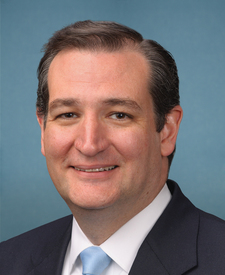
Maria Cantwell
D-WA | Primary Sponsor
Legislative Progress
IntroducedMs. Cantwell (for herself and Mr. Cruz) introduced the following …
Stakeholder Effects
cui bono?How this legislation distributes effects. Mention counts reflect frequency, not effect magnitude.
Administrator of NOAA, Congressional appropriations committees, Customs and Border Protection
NOAA, National Oceanic and Atmospheric Administration, Office of Oceanic and Atmospheric Research face effects in multiple directions
Positive-direction: Congressional appropriations committees, Environmental observation programs, Federal and state law enforcement agencies, Federal weather enterprise programs, Indian Tribes and Native Hawaiian organizations, NOAA Pacific region offices and programs, NOAA and the National Weather Service, NOAA employees, NOAA forecasting programs, NOAA subseasonal forecasting program, NOAA tsunami warning centers, NOAA workforce, Native Hawaiian organizations, Tsunami warning program, Wildfire management agencies
Negative-direction: Administrator of NOAA, Department of Commerce, Department of Energy, Drought monitoring agencies, Environmental Protection Agency, Federal weather agencies (DOD, DOE, NASA, etc.), Federal weather-related agencies, Harmful Algal Bloom Task Force agencies, NOAA computing operations, NOAA human resources, NOAA observation systems division, NOAA procurement office, NOAA research laboratories, NOAA satellite operations, NOAA technology transfer office, National Science Foundation, National Water Center, National Weather Service, Under Secretary of Commerce for Oceans and Atmosphere
Commercial data providers, Commercial environmental data companies, Commercial mesonet operators
Commercial weather data providers faces effects in multiple directions
Positive-direction: Commercial environmental data companies, Commercial mesonet operators, Commercial weather data companies, Commercial weather sector, Commercial weather technology companies, Environmental research contractors and consultants, Environmental technology startups, Heat health research contractors and institutions, Regional ocean observing systems, Research institutions eligible for cooperative institute, Small weather data companies, Weather and climate research institutions, Weather observation technology companies, Weather research companies, Weather technology and satellite companies, Weather technology startups
Negative-direction: Commercial data providers
Coastal communities, Coastal communities at tsunami risk, Communities at risk from landslides and atmospheric rivers
Positive-direction: Coastal communities, Coastal communities at tsunami risk, Communities at risk from landslides and atmospheric rivers, Communities in wildfire-prone areas, Flood-prone communities, Freshwater lake communities, General public in weather-affected areas, Great Lakes communities, Hurricane-affected coastal communities, Northern U.S. communities, Outdoor workers and vulnerable populations, Outdoor workers, elderly, and heat-vulnerable populations, Weather data users
Negative-direction: Taxpayers
Academic institutions studying tornadoes, Academic research institutions, Graduate students in weather research
Emergency management agencies, Emergency managers, State and local governments in areas affected by harmful algal blooms
Commercial satellite data providers, Private satellite operators, Satellite operators
Cybersecurity contractors and telecommunications providers, High-performance computing providers, Weather application developers
Bill Structure & Actor Mappings
Who is "The Secretary" in each section?
- "the_director"
- → Director of the National Weather Service
- "the_under_secretary"
- → Under Secretary of Commerce for Oceans and Atmosphere (NOAA Administrator)
- "the_under_secretary"
- → Under Secretary of Commerce for Oceans and Atmosphere
- "the_under_secretary"
- → Under Secretary of Commerce for Oceans and Atmosphere
- "the_council"
- → Interagency Council for Advancing Meteorological Services
- "the_under_secretary"
- → Under Secretary of Commerce for Oceans and Atmosphere
- "the_under_secretary"
- → Under Secretary of Commerce for Oceans and Atmosphere
- "the_administrator"
- → Administrator of the Environmental Protection Agency
- "the_under_secretary"
- → Under Secretary of Commerce for Oceans and Atmosphere
- "the_committee"
- → National Integrated Heat Health Information System Interagency Committee
- "the_under_secretary"
- → Under Secretary of Commerce for Oceans and Atmosphere
- "the_under_secretary"
- → Under Secretary of Commerce for Oceans and Atmosphere
- "the_administrator"
- → Administrator of NOAA
- "the_under_secretary"
- → Under Secretary of Commerce for Standards and Technology (NIST Director)
- "the_director"
- → Director of the National Science Foundation
- "the_under_secretary"
- → Under Secretary of Commerce for Oceans and Atmosphere
Note: The Under Secretary refers to the Under Secretary of Commerce for Oceans and Atmosphere (NOAA Administrator) in most titles, but in Title IX Section 902 it refers to the Under Secretary of Commerce for Standards and Technology (NIST Director).
Key Definitions
Terms defined in this bill
Information used to track and predict weather conditions and patterns, including forecasts, observations, and derivative products from such information.
United States-flagged vessels accepted into and administered within the University-National Oceanographic Laboratory System, operated by research universities, receiving NSF funding.
Has the meaning given the term in section 2101 of title 46, United States Code.
We use a combination of our own taxonomy and classification in addition to large language models to assess meaning and potential beneficiaries. High confidence means strong textual evidence. Always verify with the original bill text.
Learn more about our methodology