To authorize programs for the National Aeronautics and Space Administration for fiscal year 2025, and for other purposes.
Analysis under review: This bill has generated analysis that may be too generic or incomplete. Clause-level evidence remains available below.
Summary
What This Bill Does
This bill authorizes $25.5 billion for NASA in fiscal year 2025, continuing America's Artemis program to return astronauts to the Moon. It directs NASA to maintain U.S. leadership in space exploration while transitioning from the aging International Space Station to commercial low-Earth orbit platforms by 2030.
Who Benefits and How
Commercial space companies benefit significantly through mandated procurement of commercial lunar landers, commercial LEO destinations (at least 2 must be selected by 2026), and commercial satellite data services. U.S. aerospace contractors benefit from continued Space Launch System and Orion development funding. Universities and research institutions receive support through the Space Grant Program and STEM engagement activities. Defense contractors may benefit from hypersonic research collaboration between NASA and DOD.
Who Bears the Burden and How
Chinese aerospace entities and researchers face complete exclusion from any NASA collaboration, funding, or facility access under strict bilateral cooperation restrictions. NASA itself faces increased reporting requirements to Congress (over 15 mandated reports and briefings). International partners without reimbursement agreements face restrictions on astronaut transportation services.
Key Provisions
- Authorizes $7.6 billion for Exploration Systems (Artemis, SLS, Orion, lunar landers)
- Requires NASA to select 2+ commercial LEO destinations by March 2026 for ISS transition
- Mandates all human-rated lunar landing capabilities come from U.S. commercial providers
- Continues strict prohibition on bilateral cooperation with China in space activities
- Directs Mars Sample Return program with firm fixed-price industry contracts within 1 year
Evidence Chain:
This summary is generated from the full bill text using AI analysis. Expand "Detailed Analysis" below for identified beneficiaries/burden bearers.
At a Glance
What This Bill Does
Authorizes $25.5 billion for NASA programs in fiscal year 2025, continuing the Artemis lunar exploration program, supporting commercial space industry development, maintaining science missions, and ensuring continuity of human presence in low-Earth orbit.
Key Policy Areas
Space Exploration, Science & Research, Aeronautics, STEM Education, Commercial Space, National Security
Primary Purpose
Authorizes $25.5 billion for NASA programs in fiscal year 2025, continuing the Artemis lunar exploration program, supporting commercial space industry development, maintaining science missions, and ensuring continuity of human presence in low-Earth orbit.
Policy Domains
Title I - Authorization of Appropriations
Identified Gains
Contextual inference, no direct clause citation- NASA
- Aerospace contractors
Contextual inference, no direct clause citation
Title V - Aeronautics
Identified Gains
Contextual inference, no direct clause citation- Aerospace manufacturers
- Universities
- Defense contractors
- Aviation industry
Contextual inference, no direct clause citation
Title II - Human Spaceflight and Exploration
Identified Gains
Contextual inference, no direct clause citation- Commercial space companies
- Aerospace contractors
- Johnson Space Center workforce
Contextual inference, no direct clause citation
Identified Costs
Contextual inference, no direct clause citation- Foreign lunar landing providers
Contextual inference, no direct clause citation
Title IV - Space Technology
Identified Gains
Contextual inference, no direct clause citation- Space technology researchers
- NASA mission directorates
Contextual inference, no direct clause citation
Title VI - Science
Identified Gains
Contextual inference, no direct clause citation- Commercial Earth observation companies
- Planetary science researchers
- Mars exploration contractors
Contextual inference, no direct clause citation
Identified Costs
Contextual inference, no direct clause citation- NASA program managers facing cost caps
Contextual inference, no direct clause citation
Title III - Low-Earth Orbit and Cislunar Operations
Identified Gains
Contextual inference, no direct clause citation- Commercial LEO destination developers
- Commercial space station operators
Contextual inference, no direct clause citation
Title VII - STEM Engagement
Identified Gains
Contextual inference, no direct clause citation- Universities in all 50 states, DC, and Puerto Rico
- Students in vocational/technical education
Contextual inference, no direct clause citation
Title VIII - Other Matters
Identified Gains
Contextual inference, no direct clause citation- Prototype project participants gaining follow-on contracts
- Town of Chincoteague, Virginia
- NASA employees in talent exchange programs
Contextual inference, no direct clause citation
Identified Costs
Contextual inference, no direct clause citation- Chinese space entities
- Chinese researchers
Contextual inference, no direct clause citation
Sponsors

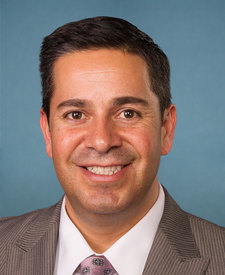
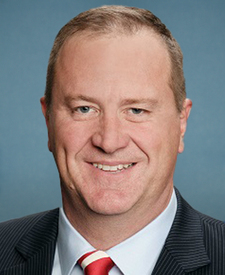

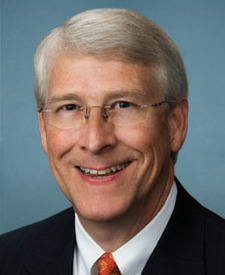
Legislative Progress
IntroducedMs. Cantwell (for herself, Mr. Cruz, Ms. Sinema, Mr. Schmitt, …
Stakeholder Effects
cui bono?How this legislation distributes effects. Mention counts reflect frequency, not effect magnitude.
Asteroid tracking and observation companies, Blue Origin (Human Landing System contractor), CLPS commercial lunar lander providers (Astrobotic, Intuitive Machines, Firefly)
Positive-direction: Asteroid tracking and observation companies, Blue Origin (Human Landing System contractor), CLPS commercial lunar lander providers (Astrobotic, Intuitive Machines, Firefly), Commercial LEO station developers (Axiom Space, Vast, Sierra Space), Commercial satellite providers, Commercial space companies seeking ISS access, Commercial space logistics providers (SpaceX, Blue Origin), Commercial space station companies (Axiom Space, Vast, Sierra Space, Northrop Grumman), Commercial suborbital spaceflight providers (Blue Origin, Virgin Galactic), Companies developing commercial LEO technologies, NASA Heliophysics Division, Private astronaut mission providers (Axiom Space), Private sector space and aerospace companies, Space surveillance and tracking contractors, Space technology R&D companies, Space technology companies, Space tourism companies, Space weather monitoring companies, SpaceX (Human Landing System contractor), U.S. commercial lunar lander providers (SpaceX, Blue Origin), U.S. commercial space companies, U.S. commercial space companies bidding for MSR
Negative-direction: Commercial spaceflight participants, Foreign commercial space providers, Foreign lunar lander providers
Government Accountability Office, Government astronauts, House and Senate committees
Positive-direction: Government astronauts, House and Senate committees, NASA, NASA Johnson Space Center workforce, NASA Planetary Defense Coordination Office, NASA Space Technology Mission Directorate, NASA civil servant workforce, NASA civil servants, NASA fire and emergency services workforce
Negative-direction: NASA Wallops Flight Facility, NASA program managers
Advanced materials manufacturers, Aerospace contractors (Boeing, Lockheed Martin, Northrop Grumman), Aerospace manufacturing workforce
Science mission contractors faces effects in multiple directions
Positive-direction: Advanced materials manufacturers, Aerospace contractors (Boeing, Lockheed Martin, Northrop Grumman), Aerospace manufacturing workforce, Aircraft parts manufacturers, Boeing (SLS prime contractor), Companies with successful NASA prototype projects, Defense aerospace contractors, Geospace science instrument developers, ISS partners and contractors, Lockheed Martin (Orion prime contractor), Lunar instrument developers, Lunar payload instrument developers, Mars mission contractors (Lockheed Martin, JPL), Planetary science mission contractors (Lockheed Martin, JPL), U.S. commercial spacesuit providers (Axiom Space, Collins Aerospace)
Negative-direction: Companies seeking new NASA contracts without prototype experience, Foreign spacesuit manufacturers
Aerospace research universities, Chinese researchers seeking NASA collaboration, Federally funded researchers using satellite data
Positive-direction: Aerospace research universities, Federally funded researchers using satellite data, Fire response technology developers, Hypersonic propulsion researchers, Lunar science researchers, Planetary science community, Planetary scientists and researchers, Research institutions receiving NASA grants, Universities conducting heliophysics research, Universities with hypersonic research programs
Negative-direction: Chinese researchers seeking NASA collaboration, Principal investigators leading science missions
Commercial Earth observation satellite operators (Planet, Maxar), Deep space network contractors, Foreign Earth observation satellite operators
Positive-direction: Commercial Earth observation satellite operators (Planet, Maxar), Deep space network contractors, Space communications companies, U.S. commercial Earth observation companies, U.S. commercial Earth observation companies (Planet, Maxar, BlackSky)
Negative-direction: Foreign Earth observation satellite operators
3D additive manufacturing companies, Aerial firefighting companies, Drone manufacturers
Community colleges and 2-year institutions, Larger state universities that received more under prior formula, Space grant consortium lead institutions
Positive-direction: Community colleges and 2-year institutions, Space grant consortium lead institutions, Students in STEM fields, Universities in all 50 states, DC, and Puerto Rico, Universities with aerospace engineering programs
Negative-direction: Larger state universities that received more under prior formula
State and local fire agencies, Town of Chincoteague, Virginia
Bill Structure & Actor Mappings
Who is "The Secretary" in each section?
- "the_administrator"
- → Administrator of NASA
- "the_administrator"
- → Administrator of NASA
- "the_administrator"
- → Administrator of NASA
- "the_administrator"
- → Administrator of NASA
- "the_administrator"
- → Administrator of NASA
- "the_administrator"
- → Administrator of NASA
- "the_administrator"
- → Administrator of NASA
- "the_comptroller_general"
- → Comptroller General of the United States
Key Definitions
Terms defined in this bill
Administrator of the National Aeronautics and Space Administration
The region of space beyond low-Earth orbit out to and including the region around the surface of the Moon
Any person providing space services or space-related capabilities, primary control of which is held by persons other than the Federal Government, a State or local government, or a foreign government
Maintenance by the United States of the presence, in low-Earth orbit on 1 or more space stations on a permanent, on-going basis, of not fewer than 1 government astronaut or 1 astronaut sponsored by the United States Government
The region of space beyond low-Earth orbit that includes cislunar space
The area encompassing Earth-centered orbits at an altitude not more than 1,200 miles (2,000 kilometers)
We use a combination of our own taxonomy and classification in addition to large language models to assess meaning and potential beneficiaries. High confidence means strong textual evidence. Always verify with the original bill text.
Learn more about our methodology