To establish the obligations of certain large business entities in the United States, and for other purposes.
Analysis under review: This bill has generated analysis that may be too generic or incomplete. Clause-level evidence remains available below.
Summary
What This Bill Does
This bill, To establish the obligations of certain large business entities in the United States, and for other purposes., changes federal law or congressional policy affecting federal agencies and legislative administrators. The main policy domain is Government Operations, Finance, Labor.
Who Benefits and How
federal agencies and legislative administrators may benefit from new authority, funding, eligibility, regulatory clarity, or reduced risk created by the bill.
Who Bears the Burden and How
federal implementing agencies may take on implementation duties, reporting obligations, compliance costs, or oversight responsibilities.
Key Provisions
- Section S1: 1. Short title This Act may be cited as the Accountable Capitalism Act.
- Section idF3D889EE32064E58AA6064035ED61091: 2. Definitions In this Act: The term covered employee— means— an individual who is, with respect to a corresponding covered employer or entity, is— an employee...
- Section id597E5CB380F143C9B735387B380A14D0: 3. Office of United States Corporations There is established within the Department of Commerce the Office of United States Corporations. There is established...
- Section id5AB2EFDD9F384C8D9A36C12FDDF38962: 4. Requirement for large entities to obtain charters An entity that is organized as a corporation, body corporate, body politic, joint stock company, or...
- Section idef6fe0155b1d410787a3007cdcbc91a6: 5. Responsibilities of United States corporations In this section: The term general public benefit means a material positive impact on society resulting from...
Evidence Chain:
This summary is generated from the full bill text using AI analysis. Expand "Detailed Analysis" below for identified beneficiaries/burden bearers with clause-level evidence links.
At a Glance
What This Bill Does
This bill, To establish the obligations of certain large business entities in the United States, and for other purposes., changes federal law or congressional policy affecting federal agencies and legislative administrators.
Key Policy Areas
Government Operations, Finance, Labor
Primary Purpose
This bill, To establish the obligations of certain large business entities in the United States, and for other purposes., changes federal law or congressional policy affecting federal agencies and legislative administrators.
Policy Domains
Whole bill
Identified Gains
- federal agencies and legislative administrators
Identified Costs
- federal implementing agencies
Legislative Progress
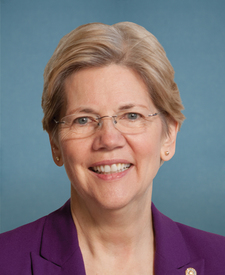
IntroducedMs. Warren introduced the following bill; which was read twice …
Impact analysis is available but no clear stakeholder effects identified. View clause-level analysis →
Bill Structure & Actor Mappings
Who is "The Secretary" in each section?
- "the_commission"
- → The commission identified in the operative section
- "secretary_of_labor"
- → Secretary of Labor
- "secretary_of_commerce"
- → Secretary of Commerce
Key Definitions
Terms defined in this bill
any— equity security of a United States corporation
the Office of United States Corporations established under section 3. The term officer means, with respect to a United States corporation— the president of the United States corporation
We use a combination of our own taxonomy and classification in addition to large language models to assess meaning and potential beneficiaries. High confidence means strong textual evidence. Always verify with the original bill text.
Learn more about our methodology