To reauthorize child welfare programs under part B of title IV of the Social Security Act, and for other purposes.
Analysis under review: This bill has generated analysis that may be too generic or incomplete. Clause-level evidence remains available below.
Summary
What This Bill Does
This bill reauthorizes federal child welfare programs through fiscal year 2029, providing increased funding for family support services, foster care, kinship care programs, and caseworker support. It modernizes state administration by reducing paperwork burdens and improving technology infrastructure for courts and social services.
Who Benefits and How
State child welfare agencies receive continued funding and reduced administrative burdens through streamlined reporting requirements. Kinship caregivers (grandparents, relatives caring for children) benefit from new navigator programs with $10 million annually in dedicated funding. Indian tribes receive direct funding (3% of appropriations) and reduced reporting burdens for tribes receiving under $50,000. Caseworkers benefit from mental health resources, safety improvements, and reduced caseload requirements funded at $26 million annually.
Who Bears the Burden and How
States must comply with new planning and reporting requirements related to Indian Child Welfare Act implementation, including biennial compliance reports to Congress. State agencies must provide information about legal representation to parents in child welfare proceedings. The Department of Health and Human Services must issue guidance on data collection practices and provide technical assistance for Indian Child Welfare Act compliance.
Key Provisions
- Extends child welfare program authorization through FY2029 with funding increases (e.g., $420 million annually for promoting safe and stable families)
- Creates kinship navigator grant program ($10 million/year) and family resource center definitions
- Establishes new grant program for incarcerated parent-child relationships ($35 million/year authorized)
- Strengthens Indian Child Welfare Act implementation with dedicated technical assistance and biennial compliance reports
- Reduces administrative burden on states and tribes with 15% paperwork reduction target
Evidence Chain:
This summary is generated from the full bill text using AI analysis. Expand "Detailed Analysis" below for identified beneficiaries/burden bearers.
At a Glance
What This Bill Does
Reauthorizes and expands child welfare programs under the Social Security Act through FY2029, increasing funding for family preservation, kinship navigator programs, caseworker support, and Indian Child Welfare Act implementation.
Key Policy Areas
Child Welfare, Social Services, Healthcare, Tribal Affairs
Primary Purpose
Reauthorizes and expands child welfare programs under the Social Security Act through FY2029, increasing funding for family preservation, kinship navigator programs, caseworker support, and Indian Child Welfare Act implementation.
Policy Domains
Main Act - Child Welfare Reauthorization
Identified Gains
Contextual inference, no direct clause citation- State child welfare agencies
- Kinship caregivers (grandparents, relatives)
- Indian tribes and tribal organizations
- Foster children and youth
- Child welfare caseworkers
- Community-based family service organizations
Contextual inference, no direct clause citation
Identified Costs
Contextual inference, no direct clause citation- Department of Health and Human Services
- State governments (compliance requirements)
Contextual inference, no direct clause citation
Sponsors

Legislative Progress
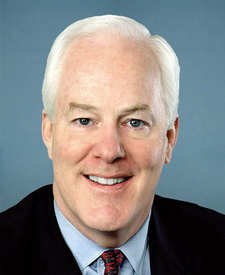
IntroducedMr. Cornyn (for himself and Mr. Bennet) introduced the following …
Stakeholder Effects
cui bono?How this legislation distributes effects. Mention counts reflect frequency, not effect magnitude.
Child welfare caseworkers, State and local agencies providing substance abuse services, State child welfare agencies
State child welfare agencies faces effects in multiple directions
Positive-direction: Child welfare caseworkers, State and local agencies providing substance abuse services, State child welfare agencies receiving federal funds, State child welfare and corrections partnership programs, State court systems administering child welfare cases, State governments requiring legislative changes
Negative-direction: State correctional facilities
Department of Health and Human Services, Indian tribes and tribal organizations, Indian tribes receiving child welfare funds
Positive-direction: Indian tribes and tribal organizations, Indian tribes receiving child welfare funds, Small tribes receiving under $50,000
Negative-direction: Department of Health and Human Services
Caseworker training and mental health service providers, Community-based organizations serving kinship families, Emergency assistance providers (housing, utilities, food)
Families affected by substance use disorder, Families in foster care, guardianship, and adoption proceedings, Foster children with incarcerated parents
Child welfare advocates and researchers, Indian Child Welfare Act implementation technical assistance providers, Youth advocacy organizations with lived experience
Legal aid organizations providing child welfare representation, Organizations providing legal services to incarcerated parents
Court technology vendors, Technology vendors for child welfare systems
Program evaluation and research organizations, Program evaluation researchers
Bill Structure & Actor Mappings
Who is "The Secretary" in each section?
- "the_secretary"
- → Secretary of Health and Human Services
Key Definitions
Terms defined in this bill
A community or school-based hub of support services for families that utilizes a multi-generational, strengths-based, family-centered approach, reflects community needs, provides support at no or low cost, and builds peer support to reduce isolation and stress.
An individual who has not attained 26 years of age.
A child that is in foster care and has at least 1 parent incarcerated in a Federal, State, or local correctional facility.
A structured, managed program in which children are appropriately matched with screened and trained adult volunteers for one-on-one relationships, involving meetings and activities on a regular basis.
We use a combination of our own taxonomy and classification in addition to large language models to assess meaning and potential beneficiaries. High confidence means strong textual evidence. Always verify with the original bill text.
Learn more about our methodology