To establish protections for individual rights with respect to computational algorithms, and for other purposes.
Analysis under review: This bill has generated analysis that may be too generic or incomplete. Clause-level evidence remains available below.
Summary
What This Bill Does
The Artificial Intelligence Civil Rights Act of 2024 creates the first comprehensive federal framework for regulating AI systems used to make important decisions about people's lives. It requires companies that develop or deploy AI algorithms for employment, housing, credit, healthcare, education, and other consequential decisions to conduct independent audits before deployment and annually thereafter, and to publicly disclose how their systems work.
Who Benefits and How
Consumers and workers benefit from protections against discriminatory AI systems, rights to human alternatives for consequential decisions, appeal mechanisms, and clear disclosures about how algorithms affect them. Independent AI auditors gain a new mandatory market for pre-deployment and annual algorithm assessments. Civil rights organizations benefit from a private right of action with treble damages and attorney fee recovery.
Who Bears the Burden and How
Technology companies developing AI systems face substantial new compliance costs including mandatory independent audits, detailed disclosure requirements, and 10-year record retention. Companies deploying AI in hiring, lending, housing, and healthcare must conduct impact assessments, provide human alternatives, maintain appeal mechanisms, and face potential penalties of $15,000 per violation or 4% of gross revenue. Small businesses using AI tools face the same compliance requirements as large corporations.
Key Provisions
- Prohibits AI systems that cause disparate impact discrimination based on race, sex, disability, and other protected characteristics
- Requires independent third-party audits before deploying AI for consequential decisions and annual impact assessments afterward
- Mandates public disclosure of AI practices, short-form notices, and explanations to affected individuals
- Creates private right of action with treble damages ($15,000 minimum per violation) and bans pre-dispute arbitration agreements
- Authorizes FTC to hire 500 additional staff and establishes federal algorithm auditing positions
Evidence Chain:
This summary is generated from the full bill text using AI analysis. Expand "Detailed Analysis" below for identified beneficiaries/burden bearers.
At a Glance
What This Bill Does
Establishes comprehensive federal regulation of AI and algorithmic decision-making systems used in consequential actions affecting employment, housing, credit, healthcare, and other critical areas, requiring pre-deployment evaluations, anti-discrimination safeguards, and transparency disclosures
Key Policy Areas
Technology Regulation, Civil Rights, Consumer Protection, Employment, Housing, Financial Services, Healthcare
Primary Purpose
Establishes comprehensive federal regulation of AI and algorithmic decision-making systems used in consequential actions affecting employment, housing, credit, healthcare, and other critical areas, requiring pre-deployment evaluations, anti-discrimination safeguards, and transparency disclosures
Policy Domains
Title I - Nondiscrimination and Algorithmic Evaluation
Identified Gains
Contextual inference, no direct clause citation- Consumers facing algorithmic decisions
- Independent AI auditors
- Civil rights organizations
- Workers subject to AI hiring/management
Contextual inference, no direct clause citation
Identified Costs
Contextual inference, no direct clause citation- AI/ML developers
- Companies deploying AI systems
- Technology companies
Contextual inference, no direct clause citation
Title V - Federal Resources
Identified Gains
Contextual inference, no direct clause citation- Federal workforce
- Algorithm auditing professionals
- FTC
- USDS
Contextual inference, no direct clause citation
Identified Costs
Contextual inference, no direct clause citation- Federal budget
- Taxpayers
Contextual inference, no direct clause citation
Title II - Standards for Developers and Deployers
Identified Gains
Contextual inference, no direct clause citation- Consumers and workers affected by AI
- Independent auditors
- Labor unions
Contextual inference, no direct clause citation
Identified Costs
Contextual inference, no direct clause citation- AI developers
- AI deployers
- Technology companies
- Employers using AI
Contextual inference, no direct clause citation
Title IV - Enforcement
Identified Gains
Contextual inference, no direct clause citation- Individuals harmed by AI
- Plaintiffs attorneys
- State AGs
- FTC
- Labor unions
Contextual inference, no direct clause citation
Identified Costs
Contextual inference, no direct clause citation- AI developers
- AI deployers
- Technology companies
- Financial institutions
- Employers
Contextual inference, no direct clause citation
Title III - Notice, Disclosure, and Study
Identified Gains
Contextual inference, no direct clause citation- Consumers
- Civil rights advocates
- Researchers
- Individuals with disabilities
Contextual inference, no direct clause citation
Identified Costs
Contextual inference, no direct clause citation- AI developers
- AI deployers
- FTC
Contextual inference, no direct clause citation
Sponsors
Legislative Progress
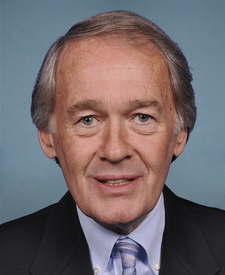
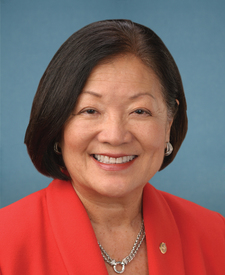
IntroducedMr. Markey (for himself and Ms. Hirono) introduced the following …
Stakeholder Effects
cui bono?How this legislation distributes effects. Mention counts reflect frequency, not effect magnitude.
AI deployers, AI deployers (potential future burden), AI developers and deployers
Positive-direction: Workers subject to AI employment decisions, Workers subject to AI-based management
Negative-direction: AI deployers, AI developers and deployers, Companies deploying AI systems, Companies using AI for employment decisions, Employers deploying AI workforce management tools
Federal Trade Commission, Federal workforce and job seekers, Federal workforce and job seekers in AI auditing
Positive-direction: Federal Trade Commission, Federal workforce and job seekers, Federal workforce and job seekers in AI auditing, State Attorneys General
Negative-direction: Government entities using AI
Communities affected by AI deployment, Consumers and individuals affected by AI, Consumers and the public
AI developers, AI/ML developers, AI/ML technology companies
Algorithm auditing professionals, Independent AI auditors, Independent AI auditors and consulting firms
Civil rights and consumer advocacy organizations, Nonprofit organizations using AI, Researchers and civil society organizations
Positive-direction: Civil rights and consumer advocacy organizations, Researchers and civil society organizations
Negative-direction: Nonprofit organizations using AI
Banks and financial institutions using AI, Financial institutions using AI for credit decisions
Bill Structure & Actor Mappings
Who is "The Secretary" in each section?
- "the_commission"
- → Federal Trade Commission
- "independent_auditor"
- → Third-party auditor meeting independence requirements
- "deployer"
- → Person that uses covered algorithms in commerce
- "developer"
- → Person that designs, codes, or produces covered algorithms
- "the_commission"
- → Federal Trade Commission
- "the_commission"
- → Federal Trade Commission
- "the_commission"
- → Federal Trade Commission
- "state_attorney_general"
- → State Attorneys General
- "the_director"
- → Director of the Office of Personnel Management
- "the_commission"
- → Federal Trade Commission
- "the_administrator"
- → Administrator of the United States Digital Service
Note: The Commission consistently refers to the Federal Trade Commission throughout all titles
Key Definitions
Terms defined in this bill
A computational process derived from machine learning, natural language processing, AI techniques, or other computational processing techniques that, with respect to a consequential action, creates products/information, promotes/ranks content, makes decisions, or facilitates human decision making
Non-de minimis adverse effect based on protected characteristic, involving force/coercion/harassment, or infringing constitutional rights
Person that uses a covered algorithm in or affecting interstate commerce
Person that designs, codes, customizes, produces, or substantially modifies an algorithm intended to be used as a covered algorithm
An act likely to have material effect on employment, education, housing, utilities, healthcare, credit, insurance, criminal justice, legal services, elections, government benefits, public accommodations, or other significant areas
Unjustified differential effect on an individual or group based on actual or perceived protected characteristic
Individual conducting pre-deployment evaluation or impact assessment with objective, impartial judgment, without employment or financial interest in the developer/deployer
We use a combination of our own taxonomy and classification in addition to large language models to assess meaning and potential beneficiaries. High confidence means strong textual evidence. Always verify with the original bill text.
Learn more about our methodology