To modernize voter registration, promote access to voting for individuals with disabilities, protect the ability of individuals to exercise the right to vote in elections for Federal office, and for other purposes.
Analysis under review: This bill has generated analysis that may be too generic or incomplete. Clause-level evidence remains available below.
Summary
What This Bill Does
This bill reauthorizes the Public Works and Economic Development Act of 1965, the primary federal law supporting economic development in distressed communities. It creates new grant programs for workforce training, broadband deployment, and supply chain site development, while establishing dedicated offices for Tribal economic development and disaster recovery within the Economic Development Administration.
Who Benefits and How
Distressed communities and rural areas benefit from expanded grant eligibility, higher federal cost-sharing (up to 60% from 50%), and new programs targeting areas with low labor force participation or median income below 80% of national average. Regional Commissions (Appalachian, Delta, Northern Border, etc.) receive increased funding authorization (40M annually each) and new flexibility to transfer funds between federal agencies. Indian tribes and colonias in the Southwest border region can receive up to 100% federal funding with waived matching requirements.
Who Bears the Burden and How
The Economic Development Administration faces new reporting and coordination requirements, including mandatory Congressional notification 3 days before grant awards over 100,000. The Secretary of Commerce must submit reports on environmental review modernization and establish new offices with staff. GAO must conduct multiple studies on program effectiveness within specified timeframes.
Key Provisions
- Authorizes 350-550 million annually (FY2025-2029) for EDA public works, planning, research, and economic adjustment grants
- Creates new workforce training grant program with career scholarship provisions for States
- Establishes Critical Supply Chain Site Development grant program for manufacturing-ready sites
- Creates Office of Tribal Economic Development and Office of Disaster Recovery and Resilience
- Establishes two new Regional Commissions: Mid-Atlantic and Southern New England
- Expands eligibility to include blue economy, outdoor recreation, and travel/tourism projects
Evidence Chain:
This summary is generated from the full bill text using AI analysis. Expand "Detailed Analysis" below for identified beneficiaries/burden bearers with clause-level evidence links.
At a Glance
What This Bill Does
Reauthorizes and modernizes the Public Works and Economic Development Act of 1965 to expand federal economic development investment, create new grant programs for workforce training and broadband, establish offices for tribal and disaster economic development, and strengthen Regional Commissions.
Key Policy Areas
Economic Development, Infrastructure, Workforce Development, Tribal Affairs, Disaster Recovery, Broadband, Regional Development
Primary Purpose
Reauthorizes and modernizes the Public Works and Economic Development Act of 1965 to expand federal economic development investment, create new grant programs for workforce training and broadband, establish offices for tribal and disaster economic development, and strengthen Regional Commissions.
Policy Domains
Title I - Economic Development Administration Amendments
Identified Gains
- Distressed communities with high unemployment
- Rural areas
- Indian tribes
- Workforce training providers
- Broadband infrastructure developers
- Manufacturing site developers
- Communities affected by disasters
- Economic development districts
- University centers
Identified Costs
- Economic Development Administration (new reporting and office requirements)
- Secretary of Commerce (environmental review modernization)
- GAO (multiple required studies)
Title II - Regional Commissions
Identified Gains
- Regional Commissions
- States in commission regions
- Counties added to existing commissions
- Delaware, Maryland, and Pennsylvania (new Mid-Atlantic Commission)
- Rhode Island, Connecticut, and Massachusetts (new Southern New England Commission)
- Indian tribes in Southwest border region
- Colonias in border states
- Denali Commission in Alaska
- Delta Regional Authority
- Northern Great Plains Regional Authority
Identified Costs
- Federal agencies (coordination requirements)
- Regional Commissions (new administrative procedures)
Legislative Progress
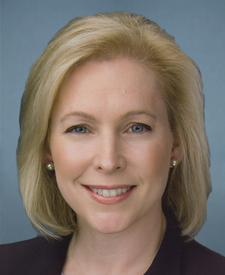
IntroducedMrs. Gillibrand introduced the following bill; which was read twice …
Stakeholder Effects
cui bono?How this legislation distributes effects. Mention counts reflect frequency, not effect magnitude.
Chief state election officials, Contributing agencies, Election officials implementing automatic registration
Poll workers, State election officials face effects in multiple directions
Positive-direction: Election officials implementing automatic registration, State election offices, States with existing AVR programs, States without voter registration (North Dakota), US territories and DC
Negative-direction: Chief state election officials, Contributing agencies, Exempt states (same-day registration states), State and local election officials, State and local governments receiving prison construction funds, State correctional facilities, State motor vehicle agencies, State secretaries of state and chief election officials
Absentee voters, College students, Eligible citizens
Positive-direction: Absentee voters, College students, Eligible citizens, Eligible voters, Eligible voters in agency records, Eligible voters seeking to register, Eligible voters served by agencies, Formerly incarcerated individuals, High school seniors, Hospitalized voters, Native American voters, Non-citizens inadvertently registered, Registered voters, Registered voters subject to caging, Student voters, Unregistered eligible voters, Voter registration applicants, Voters, Voters and advocacy groups, Voters changing addresses, Voters during emergencies, Voters eligible for electronic ballot transmission, Voters in underserved areas, Voters receiving misinformation, Voters seeking to register on election day, Voters seeking to vote by mail, Voters using alternative ID, Voters using mail ballots, Voters using mail-in voting, Voters who cast provisional ballots, Voters who have moved, Voters with changed polling places, Voters with disabilities, Voters with disabilities and older individuals, Voters with internet access, Voters with weekday work schedules, Voters without standard photo ID, Youth aged 16-17, Youth under 18
Negative-direction: Persons spreading election misinformation, Persons who obstruct voter registration
Department of Justice, Election Assistance Commission, Government Accountability Office
Election Assistance Commission, United States Postal Service face effects in multiple directions
Positive-direction: Indian Tribes, Overseas and military voters
Negative-direction: Department of Justice, Government Accountability Office, National Institute of Standards and Technology
Foreign paper manufacturers, Paper manufacturers, U.S. paper manufacturers
Positive-direction: Paper manufacturers, U.S. paper manufacturers
Negative-direction: Foreign paper manufacturers, Voting machine manufacturers
Colleges and universities, Higher education institutions, Local educational agencies
Local educational agencies faces effects in multiple directions
Positive-direction: Secondary schools
Negative-direction: Colleges and universities, Higher education institutions
Political campaigns, Political parties and campaigns, Political parties and campaigns engaging in voter caging
Assistive technology developers, Assistive technology vendors
Bill Structure & Actor Mappings
Who is "The Secretary" in each section?
- "the_secretary"
- → Secretary of Commerce
- "the_assistant_secretary"
- → Assistant Secretary of Commerce for Economic Development
- "the_commission"
- → Applicable Regional Commission (Appalachian, Delta, Northern Border, Southwest Border, etc.)
- "the_federal_cochairperson"
- → Federal Cochairperson of respective Regional Commission
Note: The term Commission refers to Regional Commissions established under 40 USC in Title II, while Title I refers to the Economic Development Administration programs under the Secretary of Commerce
Key Definitions
Terms defined in this bill
The sustainable use of marine, lake, or other aquatic resources in support of economic development objectives
The provision of 2-way data transmission with sufficient downstream and upstream speeds to end users to permit effective participation in the economy and to support economic growth
Difference between local and national prime-age (25-54) employment rates, 5% or more qualifies area for distress eligibility
All activities associated with early stage community-based project formation and conceptualization, prior to project predevelopment activity
All recreational activities undertaken for pleasure that generally involve some level of intentional physical exertion and occur in nature-based environments outdoors
All activities needed to advance a project to the stage at which it is eligible for substantial grant funding, including project scoping, permitting, engineering design, and securing matching funds
We use a combination of our own taxonomy and classification in addition to large language models to assess meaning and potential beneficiaries. High confidence means strong textual evidence. Always verify with the original bill text.
Learn more about our methodology