To support Russia's democratic forces in exile and to codify sanctions imposed under certain Executive orders relating to the Russian Federation.
Analysis under review: This bill has generated analysis that may be too generic or incomplete. Clause-level evidence remains available below.
Summary
What This Bill Does
This bill supports Russian and Belarusian pro-democracy activists who have fled persecution by establishing a new Russians in Exile Affairs Unit at the State Department and authorizing $80 million annually ($40M each for USAGM and independent media) from FY2025-2028. It also codifies existing Russia sanctions into law and provides immigration relief for exiled dissidents.
Who Benefits and How
Russian and Belarusian pro-democracy activists in exile benefit from dedicated U.S. government engagement, support for their civil society organizations, and immigration accommodations including recognition of expired passports. Independent Russian-language media outlets receive funding to counter Kremlin propaganda. USAGM entities (Radio Free Europe/Radio Liberty, Voice of America) receive expanded authorization for Ukraine-related broadcasting.
Who Bears the Burden and How
Individuals and entities currently sanctioned under Russia-related Executive Orders have those sanctions codified into law, making removal more difficult. The Russian and Belarusian governments face continued pressure through sanctions and support for their opposition. Federal agencies face new reporting requirements and must establish new programs.
Key Provisions
- Requires creation of Russians in Exile Affairs Unit at State Department
- Authorizes $40M/year for USAGM Ukraine initiatives and $40M/year for independent media support
- Codifies 12 Russia-related Executive Order sanctions into law
- Allows expired Russian/Belarusian passports for U.S. travel
Evidence Chain:
This summary is generated from the full bill text using AI analysis. Expand "Detailed Analysis" below for identified beneficiaries/burden bearers.
At a Glance
What This Bill Does
Supports Russian and Belarusian democratic forces in exile by establishing a Russians in Exile Affairs Unit, authorizing funding for independent media, codifying Russia-related sanctions, and providing immigration relief for exiled dissidents.
Key Policy Areas
Foreign Affairs, National Security, Immigration, Broadcasting
Primary Purpose
Supports Russian and Belarusian democratic forces in exile by establishing a Russians in Exile Affairs Unit, authorizing funding for independent media, codifying Russia-related sanctions, and providing immigration relief for exiled dissidents.
Policy Domains
Supporting Russia's Democratic Future Act
Identified Gains
Contextual inference, no direct clause citation- Russian pro-democracy activists in exile
- Belarusian pro-democracy activists in exile
- Independent Russian-language media
- USAGM and RFE/RL
- Civil society organizations
Contextual inference, no direct clause citation
Identified Costs
Contextual inference, no direct clause citation- Sanctioned Russian individuals and entities
- Russian government
- Belarusian government
- State Department and DHS (implementation)
Contextual inference, no direct clause citation
Legislative Progress
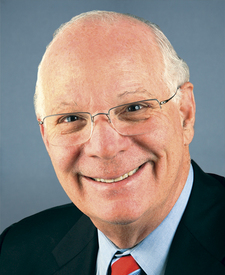
IntroducedMr. Cardin introduced the following bill; which was read twice …
Stakeholder Effects
cui bono?How this legislation distributes effects. Mention counts reflect frequency, not effect magnitude.
Americans considering travel to Russia, Belarusian citizens seeking U.S. visas, Belarusian individuals in exile
Customs and Border Protection, Executive Branch (reduced flexibility on sanctions), State Department and CBP
Positive-direction: USAGM (Radio Free Europe/Radio Liberty, Voice of America)
Negative-direction: Customs and Border Protection, Executive Branch (reduced flexibility on sanctions), State Department and CBP, State Department and DHS, State Department and USAID
Belarusian government (Lukashenko regime), Russian government, Russian government and state-owned enterprises
Russian civil society organizations in exile, Russian democratic opposition organizations
Kremlin state media and propaganda apparatus, Russian state media
Independent Russian-language media outlets
Russian individuals and entities under existing EO sanctions
U.S. financial institutions processing Russia-related transactions
Bill Structure & Actor Mappings
Who is "The Secretary" in each section?
- "the_president"
- → President of the United States
- "the_secretary"
- → Secretary of State
- "the_administrator"
- → Administrator of USAID
Key Definitions
Terms defined in this bill
A Russian individual who has been unable to return to the Russian Federation since February 24, 2022, because of a credible threat of persecution
A Belarusian individual who has been unable to return to Belarus because of a credible threat of persecution
A threat that causes an individual to have a reasonable fear of persecution as a result of the pro-democracy activity of that individual
An individual who advocates for democratic reform
We use a combination of our own taxonomy and classification in addition to large language models to assess meaning and potential beneficiaries. High confidence means strong textual evidence. Always verify with the original bill text.
Learn more about our methodology