To provide for the admission of the State of Washington, D.C. into the Union.
Analysis under review: This bill has generated analysis that may be too generic or incomplete. Clause-level evidence remains available below.
Summary
What This Bill Does
The bill defines admits Washington, D.C. as the 51st state (Washington, Douglass Commonwealth) upon Presidential proclamation, granting full statehood status on equal footing with other states, establishes procedures for electing 2 Senators and 1 Representative from the new state, increasing House membership from 435 to 436 until reapportionment, and requires the President to issue a proclamation within 90 days of certified election results announcing the new state's admission. It relies on definition changes, appropriations, reporting requirements, and exemptions. The main policy areas are Federal Government, Criminal Justice, Constitutional Law, and Education.
Who Benefits and How
State of Washington, Douglass Commonwealth could see lower costs, D.C. voters would be affected, and D.C. residents could gain revenue opportunities.
Who Bears the Burden and How
Federal Government could face higher costs, State of Washington, Douglass Commonwealth could lose revenue opportunities, and Federal Government (Treasury) could face higher costs.
Key Provisions
- Defines admits Washington, D.C. as the 51st state (Washington, Douglass Commonwealth) upon Presidential proclamation, granting full statehood status on equal footing with other states.
- Establishes procedures for electing 2 Senators and 1 Representative from the new state, increasing House membership from 435 to 436 until reapportionment.
- Requires the President to issue a proclamation within 90 days of certified election results announcing the new state's admission.
- Defines terminates the legal status of the Capital as a municipal corporation, establishing it solely as the federal seat of government without municipal functions.
- Defines transfers legislative powers to the new state, continues existing government officials in their roles, and maintains existing contracts and interstate compacts while limiting federal police enforcement in...
Evidence Chain:
This summary is generated from the full bill text using AI analysis. Expand "Detailed Analysis" below for identified beneficiaries/burden bearers with clause-level evidence links.
At a Glance
What This Bill Does
The bill defines admits Washington, D.C. as the 51st state (Washington, Douglass Commonwealth) upon Presidential proclamation, granting full statehood status on equal footing with other states, establishes procedures for electing 2 Senators and 1 Representative from the new state, increasing House membership from 435 to 436 until reapportionment, and requires the President to issue a proclamation within 90 days of certified election results announcing the new state's admission.
Key Policy Areas
Federal Government, Criminal Justice, Constitutional Law, Education
Primary Purpose
The bill defines admits Washington, D.C. as the 51st state (Washington, Douglass Commonwealth) upon Presidential proclamation, granting full statehood status on equal footing with other states, establishes procedures for electing 2 Senators and 1 Representative from the new state, increasing House membership from 435 to 436 until reapportionment, and requires the President to issue a proclamation within 90 days of certified election results announcing the new state's admission.
Policy Domains
Title I - Admission into the Union (Sections 101-103)
Identified Gains
- State of Washington, Douglass Commonwealth
- D.C. voters
- D.C. residents
- State government of Washington, Douglass Commonwealth
- Former D.C. employees with federal civil service status
Identified Costs
- Federal Government
- State of Washington, Douglass Commonwealth
- Federal Government (Treasury)
- U.S. Capitol Police, Park Police, Secret Service
- U.S. Attorney's Office
Sponsors



Legislative Progress
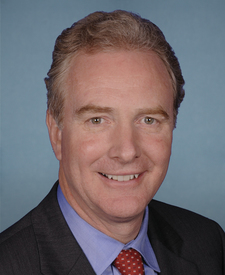
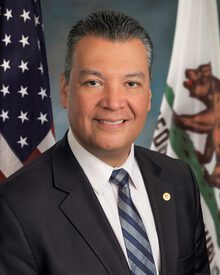
IntroducedMr. Van Hollen (for himself, Mr. Schumer, Mr. Peters, Ms. …
Stakeholder Effects
cui bono?How this legislation distributes effects. Mention counts reflect frequency, not effect magnitude.
Coast Guard, Court Services and Offender Supervision Agency employees, Department of Defense
Federal government faces effects in multiple directions
Positive-direction: Coast Guard, Court Services and Offender Supervision Agency employees, Department of Defense, Federal Government property owners, Federal offices required to be in seat of government, U.S. Parole Commission employees
Negative-direction: Executive Branch - The President, Federal Government (Treasury), Federal Government - transition planning, U.S. Attorney's Office
Capital district residents, Criminal defendants in Washington, Douglass Commonwealth, D.C. residents
D.C. government officials and agencies, State government of Washington, Douglass Commonwealth, State of Washington, Douglass Commonwealth
State of Washington, Douglass Commonwealth faces effects in multiple directions
D.C. court employees, D.C. judges with accrued retirement benefits, Federal judges and officials
Positive-direction: D.C. court employees, D.C. judges with accrued retirement benefits, Federal judges and officials
Negative-direction: Federal judiciary administration, Federal pretrial services agencies
D.C. government retirees, Former D.C. employees with federal civil service status
Private schools in Washington, Douglass Commonwealth
Bill Structure & Actor Mappings
Who is "The Secretary" in each section?
- "the_mayor"
- → Mayor of the District of Columbia
- "the_president"
- → President of the United States
- "the_chair"
- → Chair of the National Capital Planning Commission
- "the_president"
- → President of the United States
- "the_president"
- → President of the United States
- "the_attorney_general"
- → Attorney General of the United States
- "the_president"
- → President of the United States
- "the_mayor"
- → Mayor of the District of Columbia
- "the_council"
- → Council of the District of Columbia
- "the_commission"
- → Statehood Transition Commission
Note: The term 'District of Columbia' is replaced throughout federal law with either 'Capital' (for the federal seat of government) or 'Washington, Douglass Commonwealth' (for the new state), creating dual jurisdictions
Key Definitions
Terms defined in this bill
A defined geographic area including the principal Federal monuments, White House, Capitol Building, Supreme Court Building, and adjacent Federal office buildings
The area serving as the seat of the Government of the United States, as described in section 112
The State of Washington, Douglass Commonwealth
The proposed Constitution of the State of Washington, D.C., as approved by the Council on October 18, 2016
We use a combination of our own taxonomy and classification in addition to large language models to assess meaning and potential beneficiaries. High confidence means strong textual evidence. Always verify with the original bill text.
Learn more about our methodology