To provide for the admission of the State of Washington, D.C. into the Union.
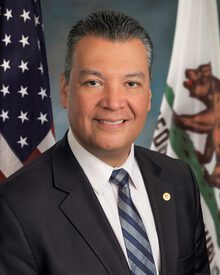
Sponsors




Legislative Progress
IntroducedMr. Van Hollen (for himself, Mr. Schumer, Mr. Peters, Ms. …
Summary
What This Bill Does
The Washington, D.C. Admission Act admits the District of Columbia as the 51st state, to be called Washington, Douglass Commonwealth. The bill creates a much smaller federal "Capital" district containing only the core federal buildings (White House, Capitol, Supreme Court, and surrounding federal offices on the National Mall), while the rest of the current D.C. becomes a full state with voting representation in Congress.
Who Benefits and How
D.C. Residents (approximately 700,000 people): Gain full voting representation in Congress with 2 Senators and 1 Representative, ending their status as the only American citizens in a major jurisdiction without congressional voting rights.
Democratic Party: Likely to gain 2 Democratic Senators and 1 Democratic Representative, given D.C.'s heavily Democratic voting patterns (typically 90%+ Democratic in presidential elections).
D.C. Government Officials and Employees: Gain full state sovereignty and autonomy from congressional oversight, with existing officials continuing in their roles as state officials.
Federal Employees in Criminal Justice Roles: Court employees, public defenders, parole officers, and prosecutors currently serving D.C. retain their federal benefits during the transition period.
D.C. Retirees: Continue receiving federal retirement benefits already accrued under existing federal programs.
Who Bears the Burden and How
Federal Government (Taxpayers): Must continue funding D.C.'s court system, public defender service, prosecution, and parole services during transition periods until the new state takes over. Also continues paying retirement benefits for eligible former D.C. employees.
State of Washington, Douglass Commonwealth: Cannot tax federal property within its borders and must waive claims to federal real estate, limiting potential revenue sources.
Federal Agencies: Capitol Police, Park Police, and Secret Service lose enforcement authority in the new state (except in the small Capital district), requiring coordination with state law enforcement.
Other States: Representation in Congress slightly diluted with addition of 3 new members (temporarily 436 House members instead of 435 until reapportionment).
Key Provisions
-
Statehood: Admits D.C. as the 51st state upon Presidential proclamation following elections for 2 Senators and 1 Representative
-
Capital District: Creates a small federal enclave around the National Mall, White House, Capitol, and Supreme Court to satisfy the Constitution's requirement for a federal seat of government
-
Voting Rights for Capital Residents: The few remaining residents of the small Capital district can vote in federal elections through their previous state of residence
-
23rd Amendment: Includes expedited procedures for Congress to propose repealing the 23rd Amendment (which currently gives D.C. 3 electoral votes) to avoid the anomaly of electoral votes for a now-unpopulated Capital
-
Transition Services: Federal government continues providing courts, public defenders, prosecutors, and parole services until the state establishes its own systems
-
Employee Protections: Federal employees transferred to state service retain their federal benefits (health insurance, retirement, life insurance)
-
National Capital Planning: Adds a Washington, Douglass Commonwealth resident to the National Capital Planning Commission
Evidence Chain:
This summary is derived from the structured analysis below. See "Detailed Analysis" for per-title beneficiaries/burden bearers with clause-level evidence links.
Primary Purpose
Admits Washington, D.C. as the 51st state (Washington, Douglass Commonwealth) while retaining a small federal Capital district around the National Mall, White House, and Capitol Building
Policy Domains
Legislative Strategy
"Grant D.C. residents full voting representation in Congress through statehood while preserving federal control over a small Capital district"
Likely Beneficiaries
- D.C. residents (voting representation in Congress)
- Democratic Party (likely 2 additional Democratic senators)
- D.C. government officials (full state sovereignty)
- Federal court employees and U.S. Parole Commission employees (continued federal benefits)
Likely Burden Bearers
- Political opponents of D.C. statehood
- Federal agencies that lose jurisdiction over D.C.
- Capital National Guard (reorganization required)
- Taxpayers (transition costs and continued federal funding obligations)
Bill Structure & Actor Mappings
Who is "The Secretary" in each section?
- "the_mayor"
- → Mayor of the District of Columbia
- "the_president"
- → President of the United States
- "the_chair"
- → Chair of the National Capital Planning Commission
- "the_president"
- → President of the United States
- "the_president"
- → President of the United States
- "the_attorney_general"
- → Attorney General of the United States
- "the_president"
- → President of the United States
- "the_mayor"
- → Mayor of the District of Columbia
- "the_council"
- → Council of the District of Columbia
- "the_commission"
- → Statehood Transition Commission
Note: The term 'District of Columbia' is replaced throughout federal law with either 'Capital' (for the federal seat of government) or 'Washington, Douglass Commonwealth' (for the new state), creating dual jurisdictions
Key Definitions
Terms defined in this bill
A defined geographic area including the principal Federal monuments, White House, Capitol Building, Supreme Court Building, and adjacent Federal office buildings
The area serving as the seat of the Government of the United States, as described in section 112
The State of Washington, Douglass Commonwealth
The proposed Constitution of the State of Washington, D.C., as approved by the Council on October 18, 2016
We use a combination of our own taxonomy and classification in addition to large language models to assess meaning and potential beneficiaries. High confidence means strong textual evidence. Always verify with the original bill text.
Learn more about our methodology