To establish minimum Federal standards for sports betting, and for other purposes.
Analysis under review: This bill has generated analysis that may be too generic or incomplete. Clause-level evidence remains available below.
Summary
What This Bill Does
The SAFE Bet Act creates a federal framework for legalized sports wagering that allows states to opt in and regulate sports betting within their borders. It makes unlicensed sports wagering a civil violation (not criminal) with fines up to $10,000 or 3x the wager amount, while establishing minimum standards for consumer protection, age verification, and problem gambling prevention.
Who Benefits and How
Licensed sports wagering operators (casinos, sportsbooks) gain legal clarity and a regulated market if their state opts in. States gain explicit authority to tax and regulate sports betting. Indian Tribes gain recognition of their authority to offer sports wagering on tribal lands through compacts. Consumers who want to bet legally gain access to regulated platforms with protections.
Who Bears the Burden and How
Unlicensed gambling operators face civil penalties and enforcement actions. Sports wagering operators must comply with extensive regulations including location verification, age verification, responsible gambling programs, and data sharing requirements. States must establish regulatory entities and submit applications to the Attorney General. HHS must conduct annual gambling surveys and maintain a national self-exclusion list.
Key Provisions
- Creates state opt-in program requiring AG approval of state sports wagering programs
- Prohibits proposition bets on amateur athletics and college sports
- Requires annual HHS surveys on problem gambling and establishes national self-exclusion list
- Preserves state and tribal authority over taxation and additional regulations
Evidence Chain:
This summary is generated from the full bill text using AI analysis. Expand "Detailed Analysis" below for identified beneficiaries/burden bearers with clause-level evidence links.
At a Glance
What This Bill Does
Establishes a federal framework for legal sports wagering by creating a state opt-in program with consumer protections, prohibiting unlicensed sports betting, and addressing gambling disorder through public health measures.
Key Policy Areas
Gaming/Gambling, Consumer Protection, Public Health, State Regulation
Primary Purpose
Establishes a federal framework for legal sports wagering by creating a state opt-in program with consumer protections, prohibiting unlicensed sports betting, and addressing gambling disorder through public health measures.
Policy Domains
Title I - Sports Wagering Authorization
Identified Gains
- Licensed sports wagering operators (casinos, sportsbooks)
- States seeking to legalize sports betting
- Sports bettors seeking legal access
Identified Costs
- Unlicensed gambling operators (face civil penalties)
- Sports wagering operators (compliance requirements)
- States (must establish regulatory programs)
Title II - Public Health Measures
Identified Gains
- Individuals with gambling disorders (access to self-exclusion)
- Public health researchers
Identified Costs
- HHS (must conduct surveys and maintain self-exclusion list)
- CDC (gambling surveillance system)
Title III - State and Tribal Authority
Identified Gains
- Indian Tribes (recognized authority for sports wagering on tribal lands)
- States (preserved taxation authority)
Legislative Progress
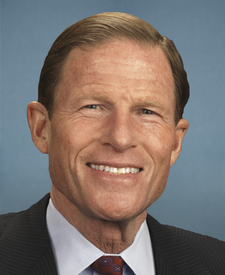
IntroducedMr. Blumenthal introduced the following bill; which was read twice …
Stakeholder Effects
cui bono?How this legislation distributes effects. Mention counts reflect frequency, not effect magnitude.
Indian Tribes with gaming operations, Licensed sports wagering operators in opt-in states, Sports betting industry
Positive-direction: Indian Tribes with gaming operations, Licensed sports wagering operators in opt-in states, Sports wagering operators seeking legal state markets, Tribal gaming operators
Negative-direction: Sports betting industry, Sports wagering operators, Unlicensed sports betting operations (offshore, illegal)
CDC, CDC epidemiology divisions, HHS/SAMHSA research divisions
Independent public health researchers, Public health and addiction researchers, Public health researchers
Consumers/sports bettors, Individuals who previously faced criminal charges for sports betting, Individuals with gambling disorders
State governments seeking to legalize sports betting, State regulatory agencies, States with sports betting programs
Positive-direction: States with sports betting programs
Negative-direction: State governments seeking to legalize sports betting, State regulatory agencies
Bill Structure & Actor Mappings
Who is "The Secretary" in each section?
- "the_attorney_general"
- → Attorney General of the United States
- "state_regulatory_entity"
- → State-designated public entity for regulating sports wagering
- "the_director"
- → Director of the Centers for Disease Control and Prevention
- "the_secretary"
- → Secretary of Health and Human Services
- "the_surgeon_general"
- → Surgeon General of the United States
Key Definitions
Terms defined in this bill
A wager placed on an athletic event or sporting event involving human competitors
A person or entity that offers sports wagering under applicable state law
A person or entity that offers licensed sports wagering over the internet, including through an internet website and mobile devices, on behalf of a licensed gaming facility
Gambling disorder as used by the American Psychiatric Association in DSM-5, including pathological gambling, gambling addiction, and compulsive gambling
A State with a State sports wagering program approved by the Attorney General
We use a combination of our own taxonomy and classification in addition to large language models to assess meaning and potential beneficiaries. High confidence means strong textual evidence. Always verify with the original bill text.
Learn more about our methodology