Laken Riley Act
Summary
What This Bill Does
Mandates detention of certain inadmissible noncitizens tied to specified theft and violence-related offenses and grants state attorneys general standing to sue federal officials over several immigration detention, release, parole, and visa-enforcement decisions.
Who Benefits and How
States seeking more aggressive federal immigration enforcement and supporters of mandatory detention policies gain new litigation tools and broader detention triggers.
Who Bears the Burden and How
Affected noncitizens face broader mandatory detention, while DHS, DOJ, State Department officials, and federal courts face more enforcement obligations and state-driven litigation.
DHS detention facilities, immigration courts, and federal immigration officers must implement the covered-offense detention and custody rules.
Key Provisions
- Expands mandatory-detention triggers for certain inadmissible noncitizens who are charged with, arrested for, convicted of, or admit specified theft-related offenses, assault of a law-enforcement officer, or crimes causing death or serious bodily injury.
- Requires DHS to issue detainers and effectively and expeditiously take custody of covered individuals when they are not otherwise detained.
- Grants state attorneys general or other authorized state officers standing to seek injunctive relief over alleged violations involving detention and removal, release, bond or parole, visa discontinuation, and removal-period detention.
- Uses a low harm threshold, requires expedited disposition of those cases, and exempts certain state enforcement actions from an existing INA judicial-review limitation.
Evidence Chain:
This summary is generated from the full bill text using AI analysis. Expand "Detailed Analysis" below for identified beneficiaries/burden bearers with clause-level evidence links.
At a Glance
What This Bill Does
Mandates detention of certain inadmissible noncitizens tied to specified theft and violence-related offenses and grants state attorneys general standing to sue federal officials over several immigration detention, release, parole, and visa-enforcement decisions.
Key Policy Areas
Immigration, Criminal Justice, Government Operations
Primary Purpose
Mandates detention of certain inadmissible noncitizens tied to specified theft and violence-related offenses and grants state attorneys general standing to sue federal officials over several immigration detention, release, parole, and visa-enforcement decisions.
Policy Domains
whole_bill
Identified Gains
- Immigration detention officials
- State attorneys general
- Victims of crimes charged to inadmissible aliens
- Department of Homeland Security
Identified Costs
- Noncitizens charged with covered offenses
- Immigration judges
- DHS detention facilities
Sponsors



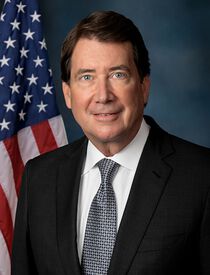
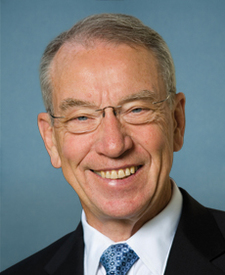
Legislative Progress
Signed into LawBecame Public Law No: 119-1.
Signed by President.
Presented to President.
Motion to reconsider laid on the table Agreed to without …
On passage Passed by the Yeas and Nays: 263 - …
Passed/agreed to in House: On passage Passed by the Yeas …
Considered as unfinished business. (consideration: CR H285-286)
POSTPONED PROCEEDINGS - At the conclusion of the debate on …
The previous question was ordered pursuant to the rule.
DEBATE - The House proceeded with one hour of debate …
Stakeholder Effects
cui bono?How this legislation distributes effects. Mention counts reflect frequency, not effect magnitude.
Department of Homeland Security, Department of Homeland Security/ICE, Federal district courts
Positive-direction: State attorneys general
Negative-direction: Department of Homeland Security, Department of Homeland Security/ICE, Federal district courts
Undocumented immigrants charged with theft offenses
On Passage of the Bill S. 5
S. 5, As Amended
On the Amendment S.Amdt. 8 to S. 5 (No short title on file)
Ernst Amdt No. 8, As Amended
On the Cloture Motion S. 5
Motion to Invoke Cloture: S. 5
On the Amendment S.Amdt. 23 to S. 5 (No short title on file)
Coons Amdt. No. 23
On the Amendment S.Amdt. 14 to S.Amdt. 8 to S. 5 (No short title on file)
Cornyn Amdt. No. 14
On the Motion to Proceed S. 5
Motion to Proceed to S. 5
On Cloture on the Motion to Proceed S. 5
Motion to Invoke Cloture: Motion to Proceed to S. 5
Bill Structure & Actor Mappings
Who is "The Secretary" in each section?
- "attorney_general"
- → Attorney General
- "secretary_of_state"
- → Secretary of State
- "secretary_homeland_security"
- → Secretary of Homeland Security
We use a combination of our own taxonomy and classification in addition to large language models to assess meaning and potential beneficiaries. High confidence means strong textual evidence. Always verify with the original bill text.
Learn more about our methodology