To hold law enforcement accountable for misconduct in court, improve transparency through data collection, and reform police training and policies.
Analysis under review: This bill has generated analysis that may be too generic or incomplete. Clause-level evidence remains available below.
Summary
What This Bill Does
This legislation comprehensively reforms police accountability by eliminating qualified immunity for law enforcement officers in civil rights lawsuits, requiring body cameras, banning chokeholds and no-knock warrants in drug cases, and mandating extensive data collection on use of force and racial profiling. It establishes national databases for tracking officer misconduct and decertification.
Who Benefits and How
Civil rights plaintiffs gain the ability to sue law enforcement officers without the qualified immunity defense. Community-based organizations receive new grant funding for violence interruption programs and police oversight. Victims of police misconduct gain stronger legal remedies and independent investigation requirements.
Who Bears the Burden and How
State and local law enforcement agencies face substantial new compliance requirements including mandatory body cameras, data reporting, racial profiling policies, and training programs. States must implement officer certification/decertification systems and ban chokeholds or lose federal grant funding. Federal law enforcement agencies must adopt body cameras and new use-of-force standards.
Key Provisions
- Eliminates qualified immunity defense for law enforcement officers in civil rights cases
- Requires body-worn cameras for federal officers and conditions state/local grants on body camera programs
- Bans chokeholds, carotid holds, and no-knock warrants in drug cases
- Creates national misconduct and decertification databases that are publicly accessible
- Conditions Byrne and COPS grant funding on compliance with new training, data collection, and policy requirements
Evidence Chain:
This summary is generated from the full bill text using AI analysis. Expand "Detailed Analysis" below for identified beneficiaries/burden bearers.
At a Glance
What This Bill Does
To hold law enforcement accountable for misconduct through reforms to qualified immunity, data collection requirements, training standards, and oversight mechanisms
Key Policy Areas
Law Enforcement, Civil Rights, Criminal Justice, Government Oversight
Primary Purpose
To hold law enforcement accountable for misconduct through reforms to qualified immunity, data collection requirements, training standards, and oversight mechanisms
Policy Domains
Title I - Police Accountability
Identified Gains
Contextual inference, no direct clause citation- Civil rights plaintiffs
- Victims of police misconduct
- Community-based organizations
Contextual inference, no direct clause citation
Identified Costs
Contextual inference, no direct clause citation- Law enforcement officers
- State and local governments
- Law enforcement agencies
Contextual inference, no direct clause citation
Title II - Law Enforcement Transparency
Identified Gains
Contextual inference, no direct clause citation- The public
- Civil rights organizations
- Hiring law enforcement agencies
Contextual inference, no direct clause citation
Identified Costs
Contextual inference, no direct clause citation- Law enforcement agencies
- State governments
- Local governments
Contextual inference, no direct clause citation
Title IV - Law Enforcement Agency Policies
Identified Gains
Contextual inference, no direct clause citation- Individuals in police custody
- Detainees
- Arrestees
Contextual inference, no direct clause citation
Identified Costs
Contextual inference, no direct clause citation- Law enforcement officers
- State legislatures
Contextual inference, no direct clause citation
Title III - Improving Police Training and Policies
Identified Gains
Contextual inference, no direct clause citation- Communities of color
- Civilians
- Body camera manufacturers
- Training providers
Contextual inference, no direct clause citation
Identified Costs
Contextual inference, no direct clause citation- Law enforcement agencies
- State and local governments
- Federal law enforcement officers
Contextual inference, no direct clause citation
Sponsors

Legislative Progress
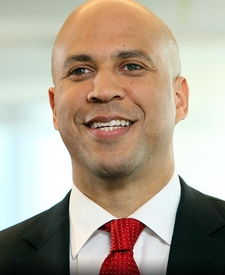
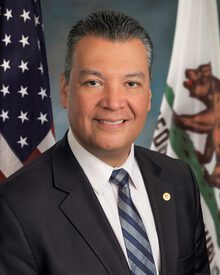
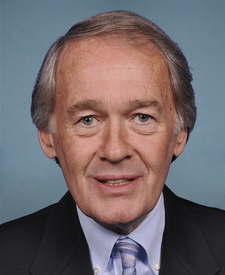
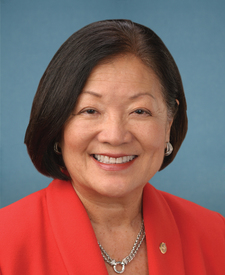
IntroducedMr. Booker (for himself, Mr. Durbin, Mr. Warnock, Mr. Padilla, …
Stakeholder Effects
cui bono?How this legislation distributes effects. Mention counts reflect frequency, not effect magnitude.
Bureau of Justice Statistics, Civilian review boards, DOJ Community Relations Service
Law enforcement officers faces effects in multiple directions
Positive-direction: Civilian review boards, DOJ Community Relations Service, Department of Justice, Department of Justice Civil Rights Division, Federal law enforcement officers (off-duty), Law enforcement agencies implementing body cameras, Law enforcement agencies in minority communities, State attorneys general, Tribal law enforcement agencies
Negative-direction: Defense Logistics Agency, Federal drug enforcement officers, Federal law enforcement agencies, Federal law enforcement officers, Grant recipients subject to racial profiling requirements, Law enforcement agencies collecting data, Law enforcement agencies engaged in racial profiling, Law enforcement agencies receiving COPS grants, Law enforcement agencies seeking accreditation, Law enforcement agencies subject to investigation, Law enforcement agencies subject to oversight, Law enforcement officers involved in deadly force incidents, Law enforcement officers seeking employment, Law enforcement officers with misconduct records, Local law enforcement agencies receiving military equipment, State legislatures
Civilians encountering federal law enforcement, Civilians encountering law enforcement, Complainants and individuals in data
Civil liberties advocates, Civil rights organizations (NAACP, ACLU, etc.), Communities concerned about police militarization
Higher education institutions conducting evaluation, Law enforcement training providers, School resource officers
Body camera manufacturers, Body camera manufacturers and vendors, In-car camera system manufacturers
Law enforcement accreditation organizations, Law enforcement accreditation organizations (CALEA, etc.), Professional law enforcement associations
Facial recognition technology vendors, Facial recognition vendors, Law enforcement technology vendors
Positive-direction: Law enforcement technology vendors
Negative-direction: Facial recognition technology vendors, Facial recognition vendors
Civil rights attorneys, Civil rights plaintiffs and victims of police misconduct
Bill Structure & Actor Mappings
Who is "The Secretary" in each section?
- "the_attorney_general"
- → Attorney General of the United States
- "the_director"
- → Director of the Federal Bureau of Investigation
- "the_attorney_general"
- → Attorney General of the United States
- "the_attorney_general"
- → Attorney General of the United States
- "the_attorney_general"
- → Attorney General of the United States
Key Definitions
Terms defined in this bill
A warrant that allows a law enforcement officer to enter a property without requiring the law enforcement officer to announce the presence of the law enforcement officer or the intention of the law enforcement officer to enter the property
The application of any pressure to the throat or windpipe, the use of a maneuver that restricts blood or oxygen flow to the brain, including by applying pressure or bodyweight to an individuals head, neck, or back
Any officer, agent, or employee of a State or unit of local government authorized by law or by a government agency to engage in or supervise the prevention, detection, or investigation of any violation of criminal law
Has the meaning given the term in section 115 of title 18, United States Code
The percentage of stops and searches in which a law enforcement agent finds drugs, a gun, or something else that leads to an arrest
The practice of a law enforcement agent or agency relying, to any degree, on actual or perceived race, ethnicity, national origin, religion, gender, gender identity, or sexual orientation in selecting which individual to subject to routine or spontaneous investigatory activities
We use a combination of our own taxonomy and classification in addition to large language models to assess meaning and potential beneficiaries. High confidence means strong textual evidence. Always verify with the original bill text.
Learn more about our methodology