To improve end-of-life care.
Analysis under review: This bill has generated analysis that may be too generic or incomplete. Clause-level evidence remains available below.
Summary
What This Bill Does
This bill improves end-of-life care in the United States by establishing a national public education campaign on advance care planning, creating quality measures for end-of-life care, expanding telehealth access for advance care planning services, and studying the feasibility of a national advance directive registry. It also creates pilot programs for end-of-life care training in medical schools and develops continuing education curricula for healthcare providers.
Who Benefits and How
- Patients and families benefit from improved access to advance care planning information, better coordination of end-of-life wishes, and expanded telehealth options for discussing care preferences
- Healthcare providers and certified chaplains benefit from new training programs, continuing education curricula, and online resources to better support patients with end-of-life planning
- Medical schools and nursing schools may receive grants to establish end-of-life training requirements in their degree programs
- Telehealth providers benefit from removed geographic restrictions for advance care planning services
Who Bears the Burden and How
- HHS, CDC, CMS, AHRQ, and HRSA must implement new programs, websites, and quality measures
- Healthcare providers participating in Medicare, Medicaid, and CHIP face new quality reporting requirements for end-of-life care
- GAO must conduct feasibility studies on a national advance directive registry
Key Provisions
- Establishes a national public education campaign on advance care planning to run for at least 5 years
- Creates end-of-life quality measures for healthcare provider settings under Medicare/Medicaid
- Removes geographic restrictions for telehealth advance care planning services starting January 1, 2024
- Directs study of a national uniform advance directive policy and feasibility of a national registry
Evidence Chain:
This summary is generated from the full bill text using AI analysis. Expand "Detailed Analysis" below for identified beneficiaries/burden bearers.
At a Glance
What This Bill Does
Improves end-of-life care through advance care planning education, quality measures, telehealth access, and research on establishing a national uniform policy for advance directives
Key Policy Areas
Healthcare, Medicare/Medicaid, Medical Education, Public Health
Primary Purpose
Improves end-of-life care through advance care planning education, quality measures, telehealth access, and research on establishing a national uniform policy for advance directives
Policy Domains
Title I - Advance Care Planning Education and Quality
Identified Gains
Contextual inference, no direct clause citation- Patients facing end-of-life decisions
- Healthcare providers
- Medical and nursing schools
- Certified chaplains
- Telehealth providers
Contextual inference, no direct clause citation
Identified Costs
Contextual inference, no direct clause citation- HHS and subordinate agencies
- Healthcare providers under Medicare/Medicaid/CHIP
Contextual inference, no direct clause citation
Title II - Studies and Reports
Identified Gains
Contextual inference, no direct clause citation- Patients transferring between healthcare settings
- Healthcare IT vendors
- Policy researchers
Contextual inference, no direct clause citation
Identified Costs
Contextual inference, no direct clause citation- GAO
- Office of Assistant Secretary for Planning and Evaluation
- National Coordinator for Health IT
Contextual inference, no direct clause citation
Legislative Progress
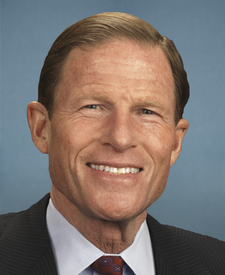
IntroducedMr. Blumenthal introduced the following bill; which was read twice …
Stakeholder Effects
cui bono?How this legislation distributes effects. Mention counts reflect frequency, not effect magnitude.
Electronic health record vendors, Healthcare IT interoperability companies, Healthcare providers implementing end-of-life care programs
Positive-direction: Healthcare IT interoperability companies, Healthcare providers implementing end-of-life care programs, Healthcare providers seeking continuing education, Healthcare quality measurement organizations, Palliative care educators and trainers, Physicians and healthcare providers offering telehealth, Telehealth service providers
Negative-direction: Electronic health record vendors, Hospice providers
Agency for Healthcare Research and Quality, Centers for Disease Control and Prevention, Centers for Medicare & Medicaid Services
Continuing medical education providers, Medical schools and schools of osteopathic medicine, Nursing schools
General public, Medicare beneficiaries, Patients making end-of-life decisions
Nursing homes and long-term care facilities
Bill Structure & Actor Mappings
Who is "The Secretary" in each section?
- "the_director"
- → Director of AHRQ or Director of CDC (context-dependent)
- "the_secretary"
- → Secretary of Health and Human Services
- "the_administrator"
- → Administrator of CMS or Administrator of HRSA (context-dependent)
- "the_secretary"
- → Secretary of Health and Human Services
- "the_comptroller_general"
- → Comptroller General (GAO)
- "the_national_coordinator"
- → National Coordinator for Health IT
Key Definitions
Terms defined in this bill
The process of discussion of care in the event that an individual is unable to make treatment decisions on their own behalf, clarification of related values and goals, and embodiment of preferences through written documents and medical orders
A written or otherwise recorded instruction, such as a living will or durable power of attorney for health care, recognized under the law of the State in which it was executed
A member of clergy who has met requirements under the Common Qualifications and Competencies for Professional Chaplains and is board certified by a national chaplaincy organization
All aspects of care of a patient with a potentially fatal condition, including care focused on preparations for an impending death
The person designated in a health care power of attorney to make medical decisions on behalf of the person who executed such power of attorney in case of incapacity
We use a combination of our own taxonomy and classification in addition to large language models to assess meaning and potential beneficiaries. High confidence means strong textual evidence. Always verify with the original bill text.
Learn more about our methodology