Diversity Jurisdiction Inflation Adjustment Act
Summary
What This Bill Does
The Diversity Jurisdiction Inflation Adjustment Act changes the monetary threshold for federal diversity jurisdiction under title 28. A civil case relying on diversity of citizenship would need at least $150,000 in controversy, exclusive of interest and costs, rather than the current statutory amount of more than $75,000. Cases authorized by another express federal statute are not displaced by the general rule.
The threshold becomes inflation-indexed. On January 1, 2030, and every tenth January 1 thereafter, it must be adjusted for the change in the Consumer Price Index for All Urban Consumers. The first calculation compares September of the year before the adjustment with September 2025; later calculations use the September preceding the prior adjustment. Each result is rounded to the nearest $25,000, with exact midpoints rounded upward.
The Director of the Administrative Office of the United States Courts must calculate each adjustment and, by November 15 before it takes effect, submit the amount, CPI percentage change, and new threshold for Federal Register publication. The existing cost rule is retained: when a plaintiff files originally in federal court but ultimately recovers less than the required amount, a district court may deny the plaintiff costs and impose costs on the plaintiff.
Who Benefits and How
Federal district courts and their clerks benefit from fewer diversity cases involving claims below the higher threshold, freeing capacity for federal-question and larger interstate disputes. Defendants in sub-$150,000 diversity disputes may avoid federal litigation costs when no other basis for federal jurisdiction exists. State courts receive authority over more interstate civil cases. The Administrative Office receives a predictable formula instead of waiting for Congress to revise the threshold manually.
Who Bears the Burden and How
Plaintiffs with interstate claims between the old and new thresholds lose access to federal court based solely on diversity and generally must proceed in state court. Their attorneys must reassess forum strategy, removal exposure, pleading, and valuation. State trial courts and clerks may receive additional civil caseload. The Administrative Office must perform and publish the decennial calculation. Plaintiffs who choose federal court and recover below the indexed minimum remain exposed to denial or assessment of costs.
Key Provisions
- Raises the diversity-jurisdiction amount in controversy to at least $150,000, exclusive of interest and costs.
- Requires CPI-based adjustments on January 1, 2030, and every ten years thereafter.
- Requires each adjusted threshold to be rounded to the nearest $25,000 and published in advance.
- Directs the Administrative Office of the United States Courts to calculate and report each adjustment.
- Preserves judicial discretion to deny or impose costs when an original federal plaintiff recovers below the threshold.
Evidence Chain:
This summary is generated from the full bill text using AI analysis. Expand "Detailed Analysis" below for identified beneficiaries/burden bearers.
At a Glance
What This Bill Does
Raises the federal diversity-jurisdiction amount in controversy from more than $75,000 to at least $150,000 and creates automatic Consumer Price Index adjustments every ten years beginning in 2030.
Key Policy Areas
Federal Courts, Civil Litigation, Jurisdiction
Primary Purpose
Raises the federal diversity-jurisdiction amount in controversy from more than $75,000 to at least $150,000 and creates automatic Consumer Price Index adjustments every ten years beginning in 2030.
Policy Domains
Federal diversity-jurisdiction amount in controversy
Identified Gains
Contextual inference, no direct clause citation- United States district courts
- Federal district court clerks
- Defendants in sub-$150,000 diversity disputes
- Federal litigants with larger interstate claims
- Administrative Office of the United States Courts
Contextual inference, no direct clause citation
Identified Costs
Contextual inference, no direct clause citation- Plaintiffs with diversity claims below $150,000
- Attorneys handling smaller interstate civil disputes
- State trial courts
- State court clerks
- Administrative Office inflation-calculation staff
- Federal plaintiffs recovering below the indexed threshold
Contextual inference, no direct clause citation
Sponsors

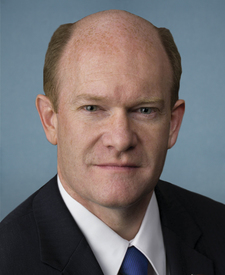


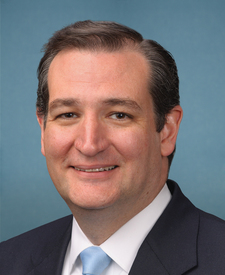
Legislative Progress
Passed SenateHeld at the desk.
Received in the House.
Message on Senate action sent to the House.
Passed Senate without amendment by Unanimous Consent. (consideration: CR S4550-4551; …
Passed/agreed to in Senate: Passed Senate without amendment by Unanimous …
Senate Committee on the Judiciary discharged by Unanimous Consent.
Read twice and referred to the Committee on the Judiciary.
Introduced in Senate
Mr. Kennedy (for himself, Mr. Coons, Mr. Cruz, and Mr. …
Stakeholder Effects
cui bono?How this legislation distributes effects. Mention counts reflect frequency, not effect magnitude.
Administrative Office inflation-calculation staff, State trial courts, United States district courts
Positive-direction: United States district courts
Negative-direction: Administrative Office inflation-calculation staff, State trial courts
Federal plaintiffs recovering below the indexed threshold, Plaintiffs with diversity claims below $150,000
Bill Structure & Actor Mappings
Who is "The Secretary" in each section?
- "state_courts"
- → State trial courts
- "diversity_defendant"
- → Defendant in a diversity action
- "diversity_plaintiff"
- → Plaintiff invoking diversity jurisdiction
- "federal_district_courts"
- → United States district courts
- "administrative_office_director"
- → Director of the Administrative Office of the United States Courts
Key Definitions
Terms defined in this bill
At least $150,000 initially, exclusive of interest and costs, subject to decennial inflation adjustments.
The Consumer Price Index for All Urban Consumers published by the Department of Labor.
We use a combination of our own taxonomy and classification in addition to large language models to assess meaning and potential beneficiaries. High confidence means strong textual evidence. Always verify with the original bill text.
Learn more about our methodology