S4726-119

Reported

PEACE in Sudan Act

119th Congress Introduced Jun 9, 2026

Summary

What This Bill Does

The reported PEACE in Sudan Act directs State, Treasury, Defense, the intelligence community, Justice, Commerce, Labor, Agriculture, and the U.S. Mission to the United Nations to coordinate a five-year response to Sudan's war. Within 90 days and semiannually, State and the Director of National Intelligence must report on foreign arms, combatants, drones, intelligence support, sanctions evasion, business interests, non-state armed groups, private military companies, resource trafficking, and violations of U.S. end-use rules and the U.N. arms embargo. State must separately report on atrocities since April 15, 2023, including child recruitment, starvation, sexual violence, attacks on civilians, humanitarian obstruction, medical and religious targeting, ethnic violence, and chemical-weapons monitoring. A 180-day strategy must address negotiations, staffing, partner coordination, the war economy, foreign military support, humanitarian access, reconstruction, trade, and potential U.S. investment, followed by congressional briefings every 90 days. State, Treasury, and Justice must assess Sudanese armed actors for specially designated global terrorist status. The President may block property, prohibit loans, credit, and foreign exchange, revoke visas, and impose IEEPA penalties on foreign persons supporting belligerents, atrocities, arms-embargo violations, resource smuggling, humanitarian obstruction, attacks on civilians, private military activity, or efforts to block civilian government. Intelligence, law-enforcement, food, medicine, agriculture, humanitarian, and goods-import activities are protected by exceptions. Treasury must oppose premature long-term international reconstruction or capacity-building support that benefits covered actors, while lifesaving basic-needs projects remain exempt and a national-security waiver is available. The reported bill bars direct institutional, debt-relief, and security assistance to Sudan, subject to waiver, but removes the introduced blanket bar on nonhumanitarian development assistance. It extends the Special Envoy for Sudan authority from two to five years; requires an updated business advisory on Sudanese gold, gum arabic, smuggling, and military-linked entities; assesses sanctions coordination and expansion of the U.N. arms embargo; and requires annual reports on U.S. aid and military leaders' foreign-held assets. Several requirements terminate after a verified peace and cessation of atrocities, while the entire Act sunsets after five years and does not authorize military force.

Who Benefits and How

Sudanese civilian communities, atrocity survivors, journalists, medical providers, aid workers, religious communities, children vulnerable to recruitment, and recipients of food, shelter, health, water, and sanitation assistance may gain diplomatic pressure, better public attribution, humanitarian exemptions, and sanctions aimed at conflict enablers. Humanitarian organizations and basic-needs projects remain eligible for protected transactions and international financing. Congressional committees, sanctions officials, diplomats, intelligence analysts, and international partners gain recurring information on foreign intervention, atrocities, war-economy networks, arms-embargo violations, and military assets. U.S. reconstruction investors and regional developers gain a framework for possible transparent post-conflict trade and investment after a credible peace.

Who Bears the Burden and How

Foreign governments, Sudanese armed leaders, private military companies, arms suppliers, resource smugglers, banks, and commercial actors that support the war face investigation, public exposure, blocked property, credit and foreign-exchange restrictions, visa loss, or IEEPA penalties. Government of Sudan institutions and security forces lose specified U.S. and international support unless a waiver or humanitarian exception applies. State, Treasury, Defense, Justice, the intelligence community, U.S. financial institutions, consular officers, aid administrators, international-finance representatives, and the U.N. mission assume extensive screening, strategy, reporting, briefing, licensing, and coordination work. The final bill narrows some introduced funding prohibitions and time-limits the package, reducing but not eliminating those burdens.

Key Provisions

  • Requires semiannual reports on foreign military support, non-state armed groups, war-economy businesses, arms transfers, and atrocities.
  • Directs a 180-day ceasefire, accountability, humanitarian, reconstruction, and investment strategy with quarterly briefings.
  • Authorizes property blocking, financial restrictions, visa revocation, and IEEPA penalties against qualifying foreign persons.
  • Exempts intelligence, law enforcement, food, medicine, agriculture, humanitarian transactions, and goods imports from specified sanctions.
  • Restricts premature international reconstruction support and direct U.S. institutional, debt-relief, and security assistance.
  • Extends the Special Envoy for Sudan authority to five years and requires an updated Sudan Business Risk Advisory.
  • Requires U.N. arms-embargo coordination and annual reporting on U.S. aid and foreign-held military assets.
  • Establishes peace-based termination conditions, a five-year sunset, and an express bar on construing the Act to authorize military force.

Evidence Chain:

This summary is generated from the full bill text using AI analysis. Expand "Detailed Analysis" below for identified beneficiaries/burden bearers with clause-level evidence links.

At a Glance

What This Bill Does

Uses reporting, diplomacy, targeted sanctions, assistance restrictions, and humanitarian safeguards to deter external support for Sudan's war, hold atrocity perpetrators accountable, and promote a durable civilian peace.

Key Policy Areas

Foreign Affairs, Sanctions, Human Rights, Foreign Assistance, Trade

Primary Purpose

Uses reporting, diplomacy, targeted sanctions, assistance restrictions, and humanitarian safeguards to deter external support for Sudan's war, hold atrocity perpetrators accountable, and promote a durable civilian peace.

Policy Domains

Foreign Affairs Sanctions Human Rights Foreign Assistance Trade

PEACE in Sudan Act

Identified Gains
  • Sudanese civilian communities
  • Humanitarian aid organizations in Sudan
  • Sudanese medical providers
  • Congressional foreign-affairs committees
  • State Department Office of Sudan Affairs staff
  • United States reconstruction developers
Model: codex-gpt-5 | Version: bill_summary_v2 | Source: rs
Sudanese medical providers: , , , , , , ,
Sudanese civilian communities: , , , , , , ,
Humanitarian aid organizations in Sudan: , , , , , , ,
United States reconstruction developers: , , , , , , ,
Congressional foreign-affairs committees: , , , , , , ,
State Department Office of Sudan Affairs staff: , , , , , , ,
Identified Costs
  • Sudanese Armed Forces officers
  • Rapid Support Forces leaders
  • Private military company contractors
  • Treasury Department sanctions administrators
  • State Department consular officers
  • Government of Sudan agencies
  • United States financial institutions
Model: codex-gpt-5 | Version: bill_summary_v2 | Source: rs
Government of Sudan agencies: , , , , , , ,
Rapid Support Forces leaders: , , , , , , ,
Sudanese Armed Forces officers: , , , , , , ,
State Department consular officers: , , , , , , ,
Private military company contractors: , , , , , , ,
United States financial institutions: , , , , , , ,
Treasury Department sanctions administrators: , , , , , , ,

Legislative Progress

Reported
Introduced Committee Passed
Jul 27, 2026

Placed on Senate Legislative Calendar under General Orders. Calendar No. …

Jul 27, 2026

Committee on Foreign Relations. Reported by Senator Risch with an …

Jun 17, 2026

Committee on Foreign Relations. Ordered to be reported with an …

Jun 9, 2026

Read twice and referred to the Committee on Foreign Relations.

Jun 9, 2026

Introduced in Senate

Jun 9, 2026

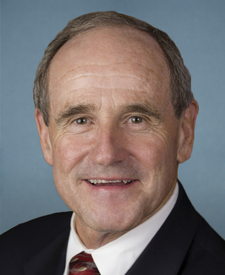
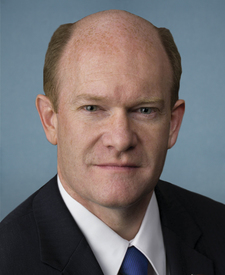
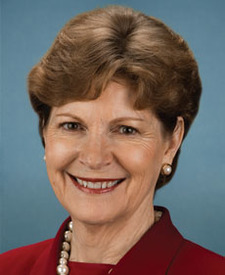
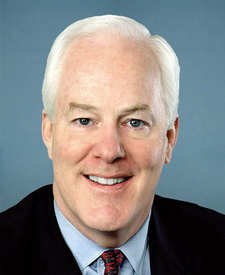
Mr. Risch (for himself, Mr. Coons, Mr. Cornyn, Mrs. Shaheen, …

Jun 9, 2026

Mr. Risch (for himself, Mr. Coons, Mr. Cornyn, and Mrs. …

Stakeholder Effects

cui bono?

How this legislation distributes effects. Mention counts reflect frequency, not effect magnitude.

Government
108 mentions across 29 clauses
+36 positive -70 negative ?2 uncertain

Agriculture Department food-assistance staff, Commerce Department trade analysts, Congressional foreign-affairs committees

Congressional foreign-affairs committees, Government of Sudan institutions, Sudanese Armed Forces officials, Treasury Department sanctions administrators face effects in multiple directions

Positive-direction: Congressional judiciary committees, Congressional war-powers committees, Defense Department operational planners, Foreign Sudan sanctions targets, Special Envoy for Sudan office staff, State Department Sudan policy staff, Treasury Department Sudan policy staff

Negative-direction: Agriculture Department food-assistance staff, Commerce Department trade analysts, Defense Department Africa policy staff, Department of Justice counterterrorism attorneys, Director of National Intelligence staff, European Union sanctions officials, Foreign governments supplying Sudanese belligerents, Foreign persons supporting Sudanese atrocities, Labor Department supply-chain analysts, President of the United States, State Department Office of Sudan Affairs staff, State Department Sudan analysts, State Department business-risk analysts, State Department consular officers, State Department counterterrorism staff, State Department foreign-assistance staff, State Department human-rights analysts, Sudanese Armed Forces sanctions targets, Sudanese Armed Forces senior officials, Treasury Department financial-intelligence staff, Treasury Department international-affairs staff, Treasury Department sanctions staff, Treasury Department terrorism-finance staff, United Nations Panel of Experts on Sudan, United Nations Security Council members, United States Mission to the United Nations staff, United States international-finance representatives

General Public
29 mentions across 25 clauses
+25 positive -3 negative ?1 uncertain

Sudanese atrocity survivors, Sudanese child soldiers, Sudanese civilian communities

Positive-direction: Sudanese child soldiers, Sudanese civilian communities, Sudanese recipients of basic-needs assistance, Sudanese recipients of humanitarian assistance, Sudanese survivors of atrocities, United States military service members

Negative-direction: Sudanese atrocity survivors

Defense
25 mentions across 23 clauses
+2 positive -22 negative ?1 uncertain

Armed actors in Sudan assessed for terrorist designation, Private military companies operating in Sudan, Rapid Support Forces leaders

Rapid Support Forces leaders faces effects in multiple directions

Finance
15 mentions across 13 clauses
+3 positive -12 negative

Foreign banks holding Sudanese military assets, Foreign banks holding blocked Sudan-related assets, International financial institution staff

United States financial institutions faces effects in multiple directions

Positive-direction: United States reconstruction investors

Negative-direction: Foreign banks holding Sudanese military assets, Foreign banks holding blocked Sudan-related assets, International financial institution staff, Sudanese debt-relief programs

Nonprofits
13 mentions across 13 clauses
+11 positive -1 negative ?1 uncertain

Humanitarian aid organizations in Sudan, Lifesaving humanitarian projects in Sudan

Humanitarian aid organizations in Sudan faces effects in multiple directions

Construction
4 mentions across 4 clauses
+2 positive -2 negative

Sudanese infrastructure developers, Sudanese reconstruction projects

Positive-direction: Sudanese infrastructure developers

Negative-direction: Sudanese reconstruction projects

Mining
3 mentions across 3 clauses
-3 negative

Sudanese gold traders, United States companies sourcing Sudanese gold

Trade
3 mentions across 3 clauses
+3 positive

Food and medicine suppliers serving Sudan, Responsible trade compliance teams

12/16
sections analyzed
Full impact breakdown

Bill Structure & Actor Mappings

Who is "The Secretary" in each section?

Domains
Foreign Affairs Sanctions Human Rights Foreign Assistance Trade
Actor Mappings
"legal_partner"
→ Attorney General
"financial_lead"
→ Secretary of the Treasury
"diplomatic_lead"
→ Secretary of State
"security_partner"
→ Secretary of Defense
"international_forum"
→ United States Mission to the United Nations
"sanctions_authority"
→ President of the United States
"intelligence_partner"
→ Director of National Intelligence
"congressional_oversight"
→ Senate Foreign Relations and House Foreign Affairs Committees

Key Definitions

Terms defined in this bill

3 terms
"atrocity" §atrocity

War crimes, crimes against humanity, or genocide.

"foreign person" §foreign_person

An individual or entity that is not a United States person.

"United States person" §united_states_person

A U.S. citizen or national, lawful permanent resident, entity organized under U.S. law, or person in the United States.

We use a combination of our own taxonomy and classification in addition to large language models to assess meaning and potential beneficiaries. High confidence means strong textual evidence. Always verify with the original bill text.

Learn more about our methodology