S4723-119

Reported

Eliminate PRC Organized Crime Act

119th Congress Introduced Jun 9, 2026

Summary

What This Bill Does

The Eliminate PRC Organized Crime Act authorizes, but does not require, the State Department to create a capacity-building program for law-enforcement agencies in Latin America and the Caribbean. Assistance may support consultations, financial-crime training, asset forfeiture, digital forensics, intercept coordination, intelligence, and vetting against compromise by PRC-linked criminal groups involved in narcotics, money laundering, illicit finance, transnational repression, human trafficking, illegal fishing, and foreign interference. The program may operate despite the general foreign police-aid restriction. A country failing counternarcotics obligations may still receive aid after a national-interest determination and 15-day congressional notice. Within one year, DNI and State must report on aid, outcomes, criminal activity, PRC policing agreements, cross-regional patterns, PRC assistance, and legal-assistance requests.

Who Benefits and How

Eligible Latin American and Caribbean law-enforcement agencies gain training, investigative tools, intelligence support, and vetting capacity. Communities harmed by narcotics, trafficking, illegal fishing, laundering, and repression may gain stronger investigations. U.S. law-enforcement and intelligence agencies gain regional partners and threat reporting. Congress gains detailed oversight data.

Who Bears the Burden and How

State Department staff must design and monitor any assistance, coordinate with Justice and intelligence officials, vet recipients, and notify Congress of national-interest exceptions. DNI and State must produce the one-year report. Recipient agencies must undergo screening, while PRC-linked criminal organizations face increased investigation, prosecution, forfeiture, and disruption risk.

Key Provisions

  • Authorizes law-enforcement capacity assistance despite the general foreign police-aid restriction.
  • Provides training, technical assistance, intelligence coordination, and recipient vetting.
  • Requires a national-interest finding and 15-day notice for counternarcotics-noncompliant recipients.
  • Requires a one-year, primarily unclassified report on assistance, threats, PRC policing ties, and cross-regional patterns.

Evidence Chain:

This summary is generated from the full bill text using AI analysis. Expand "Detailed Analysis" below for identified beneficiaries/burden bearers with clause-level evidence links.

At a Glance

What This Bill Does

Authorizes foreign-assistance support for Latin American and Caribbean law enforcement efforts against PRC-linked transnational criminal organizations and requires intelligence reporting.

Key Policy Areas

Foreign Assistance, Transnational Crime, China Policy

Primary Purpose

Authorizes foreign-assistance support for Latin American and Caribbean law enforcement efforts against PRC-linked transnational criminal organizations and requires intelligence reporting.

Policy Domains

Foreign Assistance Transnational Crime China Policy

Eliminate PRC Organized Crime Act

Identified Gains
  • Latin American law-enforcement agencies
  • Caribbean law-enforcement agencies
  • Communities harmed by transnational crime
  • United States law-enforcement agencies
  • Congressional oversight committees
Model: codex-gpt-5 | Version: bill_summary_v2 | Source: rs
Caribbean law-enforcement agencies: ,
Congressional oversight committees: ,
United States law-enforcement agencies: ,
Latin American law-enforcement agencies: ,
Communities harmed by transnational crime: ,
Identified Costs
  • State Department assistance staff
  • Department of Justice coordinators
  • Intelligence Community analysts
  • Recipient-agency vetting offices
  • PRC-linked transnational criminal organizations
Model: codex-gpt-5 | Version: bill_summary_v2 | Source: rs
Intelligence Community analysts: ,
Recipient-agency vetting offices: ,
State Department assistance staff: ,
Department of Justice coordinators: ,
PRC-linked transnational criminal organizations: ,

Legislative Progress

Reported
Introduced Committee Passed
Jul 27, 2026

Placed on Senate Legislative Calendar under General Orders. Calendar No. …

Jul 27, 2026

Committee on Foreign Relations. Reported by Senator Risch with an …

Jul 27, 2026

Reported by Mr. Risch, with an amendment and an amendment …

Jun 17, 2026

Committee on Foreign Relations. Ordered to be reported with an …

Jun 9, 2026

Read twice and referred to the Committee on Foreign Relations.

Jun 9, 2026

Introduced in Senate

Jun 9, 2026

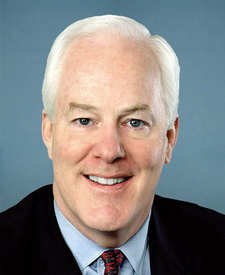
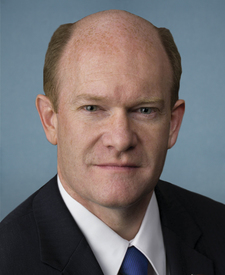
Mr. Cornyn (for himself and Mr. Coons) introduced the following …

Stakeholder Effects

cui bono?

How this legislation distributes effects. Mention counts reflect frequency, not effect magnitude.

Government
15 mentions across 5 clauses
+5 positive -5 negative ?5 uncertain

Caribbean law-enforcement agencies, Congressional oversight committees, Department of Justice coordinators

Positive-direction: Caribbean law-enforcement agencies, Congressional oversight committees, Latin American law-enforcement agencies

Negative-direction: Department of Justice coordinators, Intelligence Community analysts, State Department assistance staff

General Public
6 mentions across 4 clauses
+2 positive -2 negative ?2 uncertain

China-linked transnational crime operators, Communities harmed by transnational crime, Human-trafficking survivors

Positive-direction: Communities harmed by transnational crime, Human-trafficking survivors

Negative-direction: China-linked transnational crime operators, PRC-linked transnational crime operators

Professional Services
1 mention across 1 clause
?1 uncertain

Legislative compliance counsel

Agriculture
1 mention across 1 clause
+1 positive

Lawful fishing operators

3/6
sections analyzed
Full impact breakdown

Bill Structure & Actor Mappings

Who is "The Secretary" in each section?

Domains
Foreign Assistance Transnational Crime China Policy
Actor Mappings
"targets"
→ PRC-linked transnational criminal organizations
"recipients"
→ Latin American and Caribbean law-enforcement agencies
"coordination"
→ Attorney General and Director of National Intelligence
"program_lead"
→ Secretary of State

We use a combination of our own taxonomy and classification in addition to large language models to assess meaning and potential beneficiaries. High confidence means strong textual evidence. Always verify with the original bill text.

Learn more about our methodology