To prohibit the United States from collaborating with certain foreign countries of concern on fundamental research intended to support the military, intelligence, or security capabilities of the United States, to strengthen the security and integrity of the United States scientific and research enterprise, and for other purposes.
Analysis under review: This bill has generated analysis that may be too generic or incomplete. Clause-level evidence remains available below.
Summary
What This Bill Does
This bill restricts research collaboration between US institutions receiving federal funding and countries deemed threats to national security, particularly China. It creates a working group to identify problematic research partnerships, establishes new criminal penalties for researchers who fail to disclose foreign funding, and strengthens vetting of foreign researchers seeking access to sensitive technologies.
Who Benefits and How
US defense and intelligence agencies benefit from enhanced research security and better tracking of foreign influence in federally-funded research. Defense contractors and US-based research institutions that compete with foreign entities benefit from reduced foreign competition for federal grants. The national security establishment gains new tools to identify and prevent technology transfer to adversaries.
Who Bears the Burden and How
Researchers and academic institutions face new disclosure requirements, compliance burdens, and potential criminal penalties (up to 5 years imprisonment) for failing to report foreign compensation. Foreign researchers, especially from China and other 'countries of concern,' face restricted access to US research programs and visa barriers. Universities with international research partnerships must implement new certification and screening processes.
Key Provisions
- Creates working group to identify problematic China-US research collaborations and publish semiannual database
- Establishes criminal penalties up to 5 years imprisonment for federal grant application fraud involving undisclosed foreign compensation
- Requires mandatory reporting in Federal Awardee Performance database for disclosure violations
- Mandates certification that exchange visitors won't access export-controlled technology without proper licenses
Evidence Chain:
This summary is generated from the full bill text using AI analysis. Expand "Detailed Analysis" below for identified beneficiaries/burden bearers.
At a Glance
What This Bill Does
Prohibits research collaboration with countries of concern, strengthens research security, creates new fraud penalties for undisclosed foreign compensation, and enhances vetting of foreign researchers accessing sensitive technologies
Key Policy Areas
National Security, Science & Technology, Higher Education, Immigration, Criminal Justice
Primary Purpose
Prohibits research collaboration with countries of concern, strengthens research security, creates new fraud penalties for undisclosed foreign compensation, and enhances vetting of foreign researchers accessing sensitive technologies
Policy Domains
Research Security and Integrity Act
Identified Gains
Contextual inference, no direct clause citation- US intelligence and defense agencies
- Domestic defense contractors
- US-based research institutions competing for federal grants
Contextual inference, no direct clause citation
Identified Costs
Contextual inference, no direct clause citation- Researchers with foreign collaborations
- Academic institutions with international partnerships
- Foreign researchers from countries of concern
- Exchange visitor program sponsors
Contextual inference, no direct clause citation
Sponsors
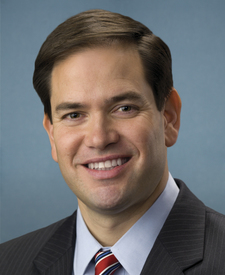
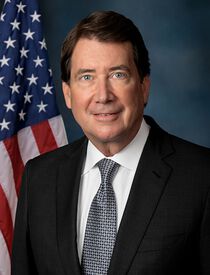

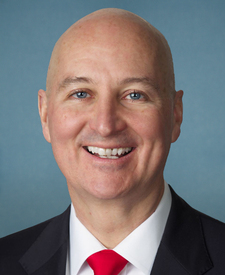
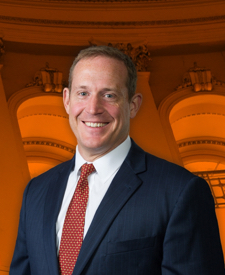
Legislative Progress
IntroducedMr. Rubio (for himself, Ms. Ernst, Mr. Hagerty, Mr. Ricketts, …
Stakeholder Effects
cui bono?How this legislation distributes effects. Mention counts reflect frequency, not effect magnitude.
Department of Defense research offices, Federal and state law enforcement, Federal grant-making agencies
Positive-direction: Law enforcement and intelligence agencies, US defense and intelligence agencies
Negative-direction: Department of Defense research offices, Federal and state law enforcement, Federal grant-making agencies, Federal research funding agencies, Intelligence community agencies, Law enforcement agencies, State Department consular offices, State Department visa processing offices
Compliant US-based researchers, Federal grant applicants with foreign ties, Foreign exchange researchers
Positive-direction: Compliant US-based researchers, US-based research institutions without foreign ties
Negative-direction: Federal grant applicants with foreign ties, Foreign exchange researchers, Foreign researchers from adversarial nations, Research institutions with classified or controlled technology, Researchers applying for federal grants, Researchers collaborating with Chinese entities, Researchers with foreign government support, Researchers with undisclosed foreign relationships, US researchers with China partnerships
Exchange visitor program sponsors, Universities and research institutions, Universities receiving federal research funding
Individuals subject to data collection under this Act, Visa applicants
Positive-direction: Individuals subject to data collection under this Act
Negative-direction: Visa applicants
Bill Structure & Actor Mappings
Who is "The Secretary" in each section?
- "director_ncsc"
- → Director of the National Counterintelligence and Security Center
- "secretary_state"
- → Secretary of State
- "federal_agencies"
- → Federal grant-making agencies
- "under_secretary_defense"
- → Under Secretary of Defense for Research and Engineering
Key Definitions
Terms defined in this bill
Knowingly making materially false statements in federal grant applications regarding foreign compensation or conflicts of interest
Any country identified as a threat to US national security in the Annual Threat Assessment or any covered nation under CHIPS Act (including China, Russia, Iran, North Korea)
We use a combination of our own taxonomy and classification in addition to large language models to assess meaning and potential beneficiaries. High confidence means strong textual evidence. Always verify with the original bill text.
Learn more about our methodology