Arctic Security and Diplomacy Act
Summary
What This Bill Does
The reported Arctic Security and Diplomacy Act establishes U.S. policy to limit foreign-adversary espionage and influence operations in the Arctic and U.S. waters, inform allies, condition federal support for marine surveys on counterespionage cooperation, use diplomatic pressure against violations, and maintain robust U.S. participation in the Arctic Council. Within 180 days, State, the intelligence community, and Homeland Security must produce a strategy to identify and counter espionage, enforce the bill's marine-research rules, and coordinate Arctic allies. Foreign vessels may not conduct marine scientific research in U.S. territorial waters, the exclusive economic zone, or relevant continental shelf areas without prior U.S. consent. State must operate an interagency application process, agencies must share information unless law prohibits it, and State generally cannot approve covered vessels tied to foreign adversaries. National-interest waivers require congressional notice within five days, and violations require notice within 15 days. State must also report within 180 days on comparison with existing multilateral consent regimes and the staffing and resources needed for timely review. Within one year, State must report on adversary activities, U.S. support, allied diplomacy, countermeasures, a possible allied Arctic security information-sharing framework and shared watchlists, and the effectiveness of existing agreements. Compared with the introduced version, the reported bill applies the operative prohibition to foreign vessels rather than foreign scientists, adds the consent-regime resource report, expressly preserves scientific diplomacy, expands Russian as well as Chinese threat findings, adds Arctic Council participation, and adds allied information-sharing analysis.
Who Benefits and How
U.S. national-security, maritime, and undersea-infrastructure interests gain advance review of foreign research vessels, interagency intelligence sharing, presumptive denial for covered vessels, rapid violation notices, allied coordination, and shared-watchlist analysis. Congress gains waiver, violation, staffing, and threat reporting. Arctic allies gain U.S. intelligence and diplomatic coordination, and legitimate marine researchers gain a defined consent process plus a requirement to assess adequate staffing for timely reviews and continued scientific diplomacy. Coastal communities and operators of subsea assets may face lower espionage and sabotage risk.
Who Bears the Burden and How
State, Homeland Security, intelligence agencies, and all agencies holding relevant research information must create the strategy, process applications, exchange information, assess vessels, issue rapid notices, coordinate allies, and prepare two reports. Congress must handle classified and unclassified oversight materials. Foreign research-vessel owners, operators, charterers, scientists, and sponsors must seek consent and may be denied when linked to foreign adversaries. China, Russia, Iran, North Korea, associated entities, and offending countries face heightened surveillance, diplomatic pressure, exclusion from support, and possible removal efforts in Arctic bodies.
Key Provisions
- Defines covered surveys, vessels, foreign adversaries, marine scientific research, and United States waters.
- Requires a 180-day interagency Arctic counterespionage strategy.
- Prohibits unapproved foreign-vessel marine research in United States waters.
- Bars approval for covered vessels unless State grants a national-interest waiver with five-day notice.
- Requires 15-day congressional notices of violations and a 180-day consent-regime resource report.
- Requires a one-year report on adversary operations, U.S. support, allied coordination, and countermeasures.
- Expands the final report to assess an allied information-sharing framework, shared watchlists, and existing agreements.
Evidence Chain:
This summary is generated from the full bill text using AI analysis. Expand "Detailed Analysis" below for identified beneficiaries/burden bearers with clause-level evidence links.
At a Glance
What This Bill Does
Creates a diplomatic, intelligence, and consent framework to counter foreign-adversary espionage and dual-use marine research in the Arctic and United States waters.
Key Policy Areas
National Security, Foreign Affairs, Maritime Policy, Scientific Research
Primary Purpose
Creates a diplomatic, intelligence, and consent framework to counter foreign-adversary espionage and dual-use marine research in the Arctic and United States waters.
Policy Domains
Arctic Security and Diplomacy Act
Identified Gains
- United States maritime-security agencies
- Operators of United States undersea infrastructure
- Arctic allied governments
- Legitimate marine research institutions
- United States Arctic communities
- Congressional oversight committees
Identified Costs
- State Department Arctic-security staff
- Department of Homeland Security maritime staff
- Intelligence community elements
- Foreign research-vessel operators
- Foreign-adversary research entities
- Federal agencies holding marine-research information
Sponsors
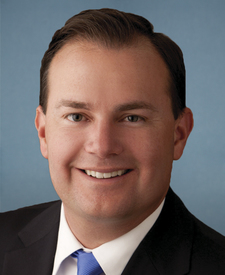
Mike Lee
R-UT | Primary Sponsor

Legislative Progress
ReportedPlaced on Senate Legislative Calendar under General Orders. Calendar No. …
Committee on Foreign Relations. Reported by Senator Risch with an …
Committee on Foreign Relations. Ordered to be reported with an …
Read twice and referred to the Committee on Foreign Relations.
Introduced in Senate
Mr. Lee introduced the following bill; which was read twice …
Mr. Lee (for himself and Mrs. Shaheen) introduced the following …
Stakeholder Effects
cui bono?How this legislation distributes effects. Mention counts reflect frequency, not effect magnitude.
Arctic allied governments, Congressional oversight committees, Department of Homeland Security maritime staff
Positive-direction: Arctic allied governments, Congressional oversight committees
Negative-direction: Department of Homeland Security maritime staff, Federal agencies holding marine-research information, Foreign-adversary research entities, Intelligence community elements, People's Republic of China Arctic entities, Russian Federation Arctic entities, State Department Arctic Council staff, State Department Arctic-security staff, State Department consent reviewers
United States undersea-infrastructure operators
Foreign marine scientists, Legitimate marine research institutions, Marine research institutions
Positive-direction: Legitimate marine research institutions
Negative-direction: Foreign marine scientists
Bill Structure & Actor Mappings
Who is "The Secretary" in each section?
- "allied_partners"
- → Canada, Denmark, Finland, Iceland, Norway, and Sweden
- "diplomatic_lead"
- → Secretary of State
- "security_partner"
- → Secretary of Homeland Security
- "high_risk_parties"
- → Covered vessels associated with foreign adversaries
- "regulated_parties"
- → Foreign marine research vessels and sponsors
- "intelligence_partner"
- → Heads of intelligence community elements
Key Definitions
Terms defined in this bill
A foreign-adversary vessel or a foreign vessel State reasonably believes is associated with an adversary in a way that threatens U.S. security.
The territorial sea, exclusive economic zone, and the continental shelf as it pertains to marine research and seabed or subsoil activity.
We use a combination of our own taxonomy and classification in addition to large language models to assess meaning and potential beneficiaries. High confidence means strong textual evidence. Always verify with the original bill text.
Learn more about our methodology