To require Federal law enforcement agencies to report on cases of missing or murdered Indians, and for other purposes.
Analysis under review: This bill has generated analysis that may be too generic or incomplete. Clause-level evidence remains available below.
Summary
What This Bill Does
To require Federal law enforcement agencies to report on cases of missing or murdered Indians, and for other purposes.. The local Codex analysis identifies the main policy area as Technology, Health, Education, Public Lands and uses the stored bill text to provide context for clause-level classification.
Who Benefits and How
Program beneficiaries and regulated parties receiving clearer authority, Federal, state, local, or tribal implementers named in the bill may benefit where the bill creates funding, authority, exemptions, eligibility, or procedural clarity.
Who Bears the Burden and How
Agencies responsible for implementation and reporting, Regulated entities subject to new or modified requirements may bear new administrative, reporting, compliance, or implementation responsibilities.
Key Provisions
- Establishes or modifies federal legal authority described in the bill text.
- Directs agencies, regulated parties, or program participants to follow the updated statutory framework.
- Provides bill-level context for downstream clause analysis.
Evidence Chain:
This summary is generated from the full bill text using AI analysis. Expand "Detailed Analysis" below for identified beneficiaries/burden bearers.
At a Glance
What This Bill Does
To require Federal law enforcement agencies to report on cases of missing or murdered Indians, and for other purposes..
Key Policy Areas
Technology, Health, Education, Public Lands
Primary Purpose
To require Federal law enforcement agencies to report on cases of missing or murdered Indians, and for other purposes..
Policy Domains
Billwide scope
Identified Gains
Contextual inference, no direct clause citation- Program beneficiaries and regulated parties receiving clearer authority
- Federal, state, local, or tribal implementers named in the bill
Contextual inference, no direct clause citation
Identified Costs
Contextual inference, no direct clause citation- Agencies responsible for implementation and reporting
- Regulated entities subject to new or modified requirements
Contextual inference, no direct clause citation
Sponsors
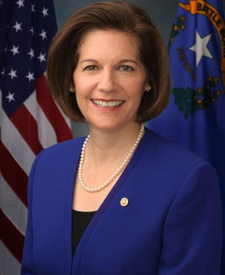
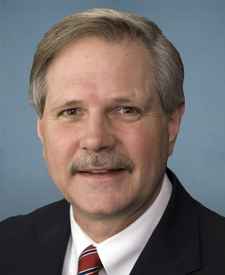
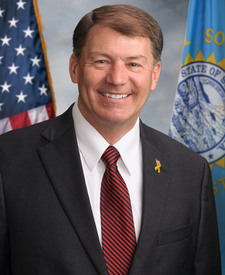
Legislative Progress
Passed SenateReported by Mr. Schatz, with an amendment
Ms. Cortez Masto (for herself and Mr. Hoeven) introduced the …
Ms. Cortez Masto (for herself, Mr. Hoeven, and Mr. Rounds) …
Passed Senate (inferred from es version)
Stakeholder Effects
cui bono?How this legislation distributes effects. Mention counts reflect frequency, not effect magnitude.
BIA Office of Justice Services law enforcement officers, BIA and tribal law enforcement officers, BIA law enforcement job applicants
Positive-direction: BIA Office of Justice Services law enforcement officers, BIA and tribal law enforcement officers, BIA law enforcement job applicants, Tribal justice agencies, Tribal law enforcement officers, Tribal law enforcement organizations
Negative-direction: Bureau of Indian Affairs, Bureau of Indian Affairs Office of Justice Services, Department of Justice, Federal Bureau of Investigation, National Institute of Justice
Department of Health and Human Services, Government Accountability Office
State governments (in consortium with tribes)
Bill Structure & Actor Mappings
Who is "The Secretary" in each section?
- "the_secretary"
- → Secretary of Health and Human Services and the Attorney General shall coordin...
Key Definitions
Terms defined in this bill
a case involving— a death investigation into the death of an Indian
the Deputy Bureau Director of the Office of Justice Services of the Bureau of Indian Affairs
the Office of Justice Services of the Bureau of Indian Affairs, the Federal Bureau of Investigation, and any other Federal law enforcement agency that— has jurisdiction over crimes in Indian country
a case involving— a missing Indian
the Secretary of the Interior
a case involving an allegation of sexual violence (as defined in section 204(a) of Public Law 90–284 (25 U
a case involving— unclaimed Indian remains identified by Federal, Tribal, State, or local law enforcement
a case involving— unidentified Indian remains
the Alaska Native Village Statistical Area covering all or any portion of a Native village (as defined in section 3 of the Alaska Native Claims Settlement Act (43 U
each of— the Federal Bureau of Investigation
We use a combination of our own taxonomy and classification in addition to large language models to assess meaning and potential beneficiaries. High confidence means strong textual evidence. Always verify with the original bill text.
Learn more about our methodology