SAFE for Survivors Act of 2026
Summary
What This Bill Does
The SAFE for Survivors Act of 2026 builds a broad workplace and economic-security system for people affected by domestic violence, dating violence, sexual assault, stalking, trafficking, family violence, and intimate visual depiction abuses including deepfakes. It starts with congressional findings on job loss, lost workdays, economic abuse, health impacts, and employer unreadiness, then defines the covered victims, family and household members, employers, public agencies, insurers, and benefit programs that later titles regulate.
The bill gives employees at least 40 workdays of safe leave in a 12-month period, with at least 10 workdays paid. Employees could use leave for medical care, counseling, victim services, relocation and housing safety, legal proceedings, funeral and grieving needs, child or adult-dependent care, financial services, public assistance, accessibility accommodations, and other steps needed for safety or recovery. Employers would have to allow oral or written requests, accept limited certification for absences longer than three workdays, keep records confidential, restore employees to equivalent jobs, and maintain group health coverage during leave.
The bill separately bars employers from denying jobs, firing, harassing, retaliating against, or refusing reasonable safety accommodations for qualified employees because they are victims or because an abuser causes workplace disruption. Public agencies administering benefits could not deny, reduce, terminate, sanction, or otherwise discriminate against applicants or recipients because of victim status. State unemployment systems would have to treat voluntary separation from work as qualifying when the separation is attributable to a covered act of violence, and State TANF agencies could use TANF funds for expedited short-term emergency benefits during safe leave.
The insurance title prohibits health, life, disability, property, casualty, and ERISA-plan insurers from denying, canceling, limiting, repricing, or refusing claims because an applicant, insured person, or related person is or may be a victim. It also protects continuation of health coverage when an abuser is the named policyholder and imposes privacy limits on survivor status, shelter addresses, contact information, medical conditions, and relationship-status data. The Federal Trade Commission would enforce these insurance rules as unfair or deceptive acts, and applicants or insured victims could also sue for injunctions, compensatory and punitive damages, attorney fees, expert fees, and statutory damages.
Who Benefits and How
Employees affected by qualifying acts of violence benefit most directly because safe leave converts recovery, safety planning, legal participation, relocation, childcare, and financial stabilization from reasons to lose a job into protected leave uses. Family and household members of victims also benefit when an employee needs leave to help them obtain services or safety. Employees who request accommodation benefit from a required interactive process and examples such as schedule changes, transfers, contact-information changes, workstation changes, confidentiality steps, enhanced security, parking changes, locks, documentation assistance, leave, and job restructuring.
Victim services organizations, community-based organizations, Tribal coalitions, State domestic violence coalitions, territorial coalitions, and sexual assault coalitions benefit from expanded Violence Against Women Act grant eligibility to help employers, labor organizations, and workers understand the new protections. A national or state victim-services organization would also be eligible for a Department of Labor grant to develop model training and technical assistance for unemployment claims reviewers and hearing personnel.
Public assistance recipients and unemployment claimants who are victims benefit because agencies could not penalize them based on victim status and would have to provide notice, trained review, confidentiality, and a documentation path that includes sworn statements, police or court records, professional documentation, and other approved evidence. Insured victims benefit from nondiscrimination rules, claim-payment protections, health-coverage continuation when an abuser loses policyholder status, access to their own insurance records, and privacy limits on disclosures that could reveal a shelter address or survivor status.
Who Bears the Burden and How
Employers bear the largest private compliance burden. They would have to provide 40 workdays of safe leave, pay at least 10 of those days, preserve job restoration and health coverage, limit certification requests, separate confidential records, post federal notices, avoid using leave as a negative factor, and defend against private suits, Department of Labor complaints, civil penalties, liquidated damages, and equitable relief if they interfere with leave or retaliate. Employers also must conduct accommodation processes and show undue hardship before refusing certain survivor safety modifications.
Insurers and employer health plans bear new underwriting, claims, continuation-coverage, privacy, and litigation burdens. They could not price, cancel, refuse, or limit coverage because of survivor status or survivor-related claims, and violations could trigger FTC enforcement, private litigation, statutory damages, punitive damages, and fee awards. State TANF and unemployment agencies must adjust eligibility, application, notice, training, confidentiality, reporting, and expedited-payment processes. Federal agencies including the Department of Labor, Equal Employment Opportunity Commission, Federal Trade Commission, Department of Health and Human Services, Centers for Disease Control and Prevention, Department of Justice Office on Violence Against Women, Office of Personnel Management, Office of Congressional Workplace Rights, and congressional/federal employment bodies receive new rulemaking, enforcement, outreach, and reporting responsibilities.
Key Provisions
- Voids predispute arbitration agreements and joint-action waivers for claims under the safe-leave, survivor discrimination, and insurance titles, with courts deciding enforceability rather than arbitrators.
- Expands Violence Against Women Act workplace-assistance grants to victim services organizations and Tribal, State, and territorial domestic violence and sexual assault coalitions.
- Creates 40 workdays of annual safe leave, including 10 paid days, with intermittent leave, confidentiality, limited certification, job restoration, and group health coverage protections.
- Creates private, Department of Labor, congressional-employee, presidential-employee, federal-employee, Library of Congress, and GAO enforcement paths for safe-leave violations.
- Allows TANF funds to provide expedited nonrecurrent short-term emergency benefits during safe leave.
- Bars employment and public-assistance discrimination tied to survivor status and requires reasonable safety accommodations unless they impose undue hardship.
- Prevents denial of unemployment benefits solely because a worker left employment for reasons attributable to a qualifying act of violence.
- Prohibits survivor-related insurance discrimination and privacy disclosures, with FTC and private enforcement.
- Directs Labor, HHS, CDC, and DOJ's Office on Violence Against Women to run outreach, education, model-policy, training, and workplace-response study activities through fiscal years 2027 through 2031.
Evidence Chain:
This summary is generated from the full bill text using AI analysis. Expand "Detailed Analysis" below for identified beneficiaries/burden bearers with clause-level evidence links.
At a Glance
What This Bill Does
Creates a federal survivor economic-security framework by giving employees safe leave after gender-based violence, barring retaliation and survivor-status discrimination, protecting unemployment, TANF, and insurance access, and funding workplace assistance and public outreach.
Key Policy Areas
Labor and Employment, Crime and Law Enforcement, Social Welfare, Insurance
Primary Purpose
Creates a federal survivor economic-security framework by giving employees safe leave after gender-based violence, barring retaliation and survivor-status discrimination, protecting unemployment, TANF, and insurance access, and funding workplace assistance and public outreach.
Policy Domains
Title I - Grant program reauthorization
Identified Gains
- Victim services organizations
- Tribal domestic violence coalitions
- State sexual assault coalitions
Identified Costs
- Office on Violence Against Women grant administrators
- Grant evaluation contractors
Title V - Insurance discrimination and outreach
Identified Gains
- Insured victims of qualifying violence
- Victims needing confidential insurance records
- Survivors learning about safe-leave rights
Identified Costs
- Insurers setting survivor-related premiums
- Federal Trade Commission survivor insurance enforcement
- Secretary of Labor survivor outreach campaign
Title II - Safe leave from employment
Identified Gains
- Employees needing safe leave after qualifying violence
- Family members of qualifying-violence victims
- Employees harmed by safe-leave violations
Identified Costs
- Employers covered by safe-leave rules
- Secretary of Labor safe-leave enforcement
- Office of Congressional Workplace Rights Board
Title IV - Unemployment compensation
Identified Gains
- Unemployment claimants leaving work due to qualifying violence
- Victim services organization training grantees
Identified Costs
- State unemployment agencies
- Unemployment claims reviewers
- Secretary of Labor unemployment grant reporting
Title VI - Severability
Identified Gains
- Survivor protection provisions preserved by severability
Identified Costs
- Courts reviewing SAFE for Survivors Act provisions
Title III - Employment and public assistance discrimination protections
Identified Gains
- Qualified employees needing survivor safety accommodations
- Public assistance recipients who are victims
- Congressional employees covered by survivor protections
Identified Costs
- Employers covered by survivor accommodation rules
- Public agencies administering assistance benefits
- Equal Employment Opportunity Commission enforcement
Sponsors

Legislative Progress
In CommitteeRead twice and referred to the Committee on Health, Education, …
Introduced in Senate
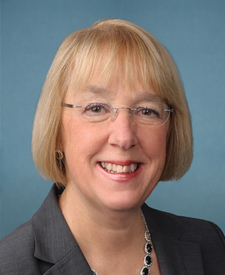
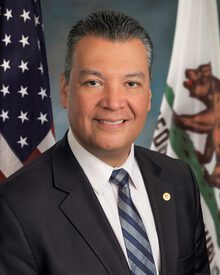
Mrs. Murray (for herself, Ms. Baldwin, Mr. Blumenthal, Ms. Duckworth, …
Stakeholder Effects
cui bono?How this legislation distributes effects. Mention counts reflect frequency, not effect magnitude.
Congressional employees covered by survivor protections, Employees bringing Title III discrimination claims, Employees bringing survivor discrimination claims
Positive-direction: Congressional employees covered by survivor protections, Employees bringing Title III discrimination claims, Employees bringing survivor discrimination claims, Employees harmed by safe-leave violations, Employees needing safe leave after qualifying violence, Employees participating in safe-leave proceedings, Employees reading safe-leave notices, Employees requesting safe leave, Employees with confidential accommodation records, Employees with confidential safe-leave certifications, Qualified employees needing survivor safety accommodations
Negative-direction: Secretary of Labor safe-leave enforcement, Secretary of Labor safe-leave regulations, Secretary of Labor survivor outreach campaign, Secretary of Labor unemployment grant reporting
Employers covered by SAFE for Survivors Act definitions, Employers covered by safe-leave rules, Employers covered by survivor accommodation definitions
Positive-direction: Employers receiving safe-leave guidance
Negative-direction: Employers covered by safe-leave rules, Employers covered by survivor accommodation rules, Employers posting safe-leave notices, Employers retaliating against safe-leave users, Employers subject to stronger local leave rules, Employers using predispute arbitration agreements, Employers violating safe-leave rules, Employers violating survivor discrimination protections, Employers without workplace violence policies
Applicants denied insurance because of survivor status, Applicants harmed by insurer discrimination, Insurance discrimination coverage definitions
Positive-direction: Applicants denied insurance because of survivor status, Applicants harmed by insurer discrimination, Insured victims bringing Title V insurance claims, Insured victims of qualifying violence, Insured victims suing insurers, Victims needing confidential insurance records
Negative-direction: Insurers setting survivor-related premiums, Insurers using predispute arbitration agreements, Insurers violating survivor insurance protections
Survivor protection provisions preserved by severability, Survivors bringing Title II safe-leave claims, Survivors covered by SAFE for Survivors Act definitions
Public agencies administering assistance benefits, Public agencies violating survivor assistance protections, Public assistance applicants needing safety procedures
Positive-direction: Public assistance recipients bringing discrimination claims, Public assistance recipients who are victims
Negative-direction: Public agencies administering assistance benefits, Public agencies violating survivor assistance protections
Courts reviewing SAFE for Survivors Act provisions, Federal courts deciding arbitration applicability, Federal courts hearing survivor insurance claims
Victim services organization training grantees, Victim services organizations disseminating survivor resources, Victim services organizations providing workplace resources
Office of Congressional Workplace Rights Board, Office of Congressional Workplace Rights Board regulations, Office of Congressional Workplace Rights safe-leave regulations
Bill Structure & Actor Mappings
Who is "The Secretary" in each section?
- "the_director"
- → Director of the Office on Violence Against Women
- "the_attorney_general"
- → Attorney General
- "the_board"
- → Office of Congressional Workplace Rights Board
- "the_director"
- → Director of the Office of Personnel Management
- "the_librarian"
- → Librarian of Congress
- "the_president"
- → President
- "the_secretary"
- → Secretary of Labor
- "the_comptroller_general"
- → Comptroller General of the United States
- "the_board"
- → Office of Congressional Workplace Rights Board
- "the_commission"
- → Equal Employment Opportunity Commission
- "the_attorney_general"
- → Attorney General
- "state"
- → State unemployment agency
- "the_secretary"
- → Secretary of Labor
- "the_secretary"
- → Secretary of Labor
- "the_commission"
- → Federal Trade Commission
- "the_attorney_general"
- → Attorney General acting through the Office on Violence Against Women
- "the_secretary_of_health_and_human_services"
- → Secretary of Health and Human Services
Key Definitions
Terms defined in this bill
Includes domestic violence, dating violence, sexual assault, stalking, trafficking, family violence, sexual harassment, communication of intimate visual depictions, and related conduct covered by the bill.
Includes insurers, agents, brokers, adjusters, third-party administrators, employers offering ERISA plans, health insurance issuers, and health, life, disability, property, and casualty insurers.
An adult in a committed relationship with another adult, including mutual responsibility for welfare, shared residence, financial interdependence, or other indicia of partnership.
Includes transfer, schedule changes, work contact-information changes, workstation relocation, confidentiality, enhanced safety procedures, parking changes, locks, documentation assistance, leave, time off, and job restructuring unless they impose undue hardship.
We use a combination of our own taxonomy and classification in addition to large language models to assess meaning and potential beneficiaries. High confidence means strong textual evidence. Always verify with the original bill text.
Learn more about our methodology