Digital Opportunity Foundation Act of 2026
Summary
What This Bill Does
The Digital Opportunity Foundation Act of 2026 would create a Foundation for Digital Opportunity to supplement, rather than replace, the work of the National Telecommunications and Information Administration and the Federal Communications Commission. The Foundation would be incorporated as a state-law nonprofit, qualify under section 501(c) of the tax code, and remain outside federal, state, and local government. Its mission would be to combine federal, philanthropic, private, state, and local resources to increase affordable broadband and technology adoption, digital and artificial-intelligence literacy, privacy and cybersecurity awareness, and access to telehealth, education, benefits, and economic opportunities.
Within 90 days of enactment, the Commerce Secretary would establish a five-member unpaid organizing committee. The committee would incorporate the Foundation, obtain tax-exempt status, arrange initial facilities and staff, and appoint the first voting directors. It would complete that work within 180 days after its creation and then terminate. Members could receive reimbursement for necessary expenses.
The Foundation would have at least 15 appointed voting directors drawn from academia, industry, nonprofits and civil-rights organizations, digital-inclusion practitioners, state, local, and Tribal governments, community anchor institutions, and philanthropy. Six federal officials would serve as nonvoting ex officio directors. Directors would be unpaid but reimbursable, serve no more than two sequential terms, and operate under bylaws with ethics and conflict-of-interest controls. Through notice-and-comment rulemaking, the NTIA Assistant Secretary could alter the bylaws to protect fair administration, conform them to other rules, or advance the statute's purposes.
The Foundation could fund studies, competitions, community grants, digital-literacy and technology-capacity projects, workforce and researcher training, data collection, public communications, meetings, publications, and other mission-related work. Grant selection would consider comparative merit, community impact, geographic diversity, need, cost-effectiveness, and the Foundation's strategic plan. The Foundation would consult a broad stakeholder group annually and develop public qualitative and quantitative evaluation methods with periodic third-party review. It could also back an otherwise underfunded Tribal Broadband Connectivity Program grant.
The Foundation could establish for-profit subsidiaries, including an impact investment fund, partner with economic-development corporations and business incubators, build or administer facilities, and fund startups. It could raise and accept private gifts, grants, property, and bequests, use Commerce and FCC capabilities, and transfer funds to Commerce subject to federal research-funding limits. The Commerce Secretary could provide federal facilities and support services when advantageous to departmental programs.
A strategic plan would be due within one year of enactment. The Foundation would issue public activity and financial reports one year after establishment and every two years thereafter, obtain annual audits, and maintain records for Commerce and Government Accountability Office review. GAO would evaluate the Foundation within five years and every five years thereafter. The Board would enforce financial-disclosure, recusal, ethics, audit, and intellectual-property policies.
The United States would not guarantee or be liable for the Foundation's debts, defaults, acts, or omissions. Federal advisory-committee law would not apply to the Foundation, and the Anti-Deficiency Act would not apply to federal personnel when carrying out Foundation activities using Foundation funds. The bill would preserve the Commerce Secretary's other legal authority and responsibilities. It would authorize, but not itself appropriate, whatever sums Congress later determines necessary for the organizing committee in FY2027, Foundation activities in FY2028, and administration and operations from FY2029 onward.
Who Benefits and How
Populations covered by the Digital Equity Act, communities with low broadband adoption, older and rural residents, and people needing accessible digital services could benefit from grants, training, devices, support, privacy education, and stronger online access. Community organizations, libraries, minority-serving institutions, Tribal broadband projects, digital-inclusion practitioners, researchers, and education providers could receive funding or program support. Digital-technology startups and business incubators could receive capital through Foundation subsidiaries. Broadband and technology providers could gain customers as adoption increases.
Who Bears the Burden and How
Federal taxpayers would finance any later appropriations, which have no stated dollar cap or end date for ongoing administration. Commerce, NTIA, FCC, GAO, and other participating federal personnel would establish, support, oversee, audit, and coordinate with the new organization. Foundation directors, employees, grant applicants, and recipients would face governance, conflict, application, evaluation, accounting, and reporting requirements. Existing federal digital programs and private donors would need to coordinate with the Foundation to avoid duplication. The federal liability disclaimer leaves creditors and partners to bear the Foundation's private default risk rather than the United States.
Key Provisions
- Establishes a tax-exempt nongovernmental Foundation for Digital Opportunity.
- Creates a temporary organizing committee and a cross-sector governing board.
- Authorizes community grants, training, research, evaluation, and digital-inclusion programs.
- Allows for-profit subsidiaries, impact investment, incubator partnerships, and startup funding.
- Permits support for otherwise underfunded Tribal Broadband Connectivity Program grants.
- Requires strategic plans, biennial public reports, annual audits, and recurring GAO reviews.
- Authorizes necessary sums for startup and continuing operations without a fixed total.
- Exempts the Foundation from federal advisory-committee law and limits federal liability.
Evidence Chain:
This summary is generated from the full bill text using AI analysis. Expand "Detailed Analysis" below for identified beneficiaries/burden bearers with clause-level evidence links.
At a Glance
What This Bill Does
Establish a tax-exempt, nongovernmental Foundation for Digital Opportunity to raise and deploy public and private resources for broadband adoption, digital inclusion, digital and artificial-intelligence literacy, and related economic-development programs.
Key Policy Areas
Broadband, Digital Equity, Artificial Intelligence, Cybersecurity, Federal Grants, Nonprofit Governance, Economic Development
Primary Purpose
Establish a tax-exempt, nongovernmental Foundation for Digital Opportunity to raise and deploy public and private resources for broadband adoption, digital inclusion, digital and artificial-intelligence literacy, and related economic-development programs.
Policy Domains
Section 2 - establishment, programs, governance, and funding of the Foundation
Identified Gains
- Digital Equity Act covered populations
- Communities with low broadband adoption
- Community digital-inclusion organizations
- Minority-serving institutions
- Tribal broadband grant recipients
- Digital-literacy researchers and trainers
- Digital-inclusion startups and incubators
- Broadband and technology providers
Identified Costs
- Federal taxpayers financing Foundation appropriations
- Commerce Department Foundation support staff
- Foundation directors and personnel
- Foundation grant applicants and recipients
- Government Accountability Office evaluators
- Foundation creditors without a federal guarantee
Sponsors
Legislative Progress
In CommitteeRead twice and referred to the Committee on Commerce, Science, …
Introduced in Senate
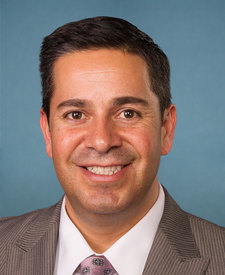
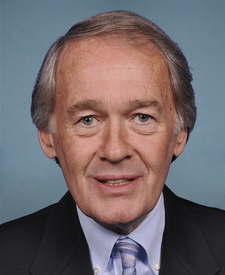
Mr. Luján (for himself and Mr. Markey) introduced the following …
Stakeholder Effects
cui bono?How this legislation distributes effects. Mention counts reflect frequency, not effect magnitude.
Communities with low broadband adoption, Digital Equity Act covered populations, Digital-inclusion startups receiving Foundation investment
Commerce Department Foundation support staff, Federal officers using Foundation funds, Government Accountability Office Foundation evaluators
Positive-direction: Federal officers using Foundation funds
Negative-direction: Commerce Department Foundation support staff, Government Accountability Office Foundation evaluators
Community digital-inclusion organizations, Foundation grant applicants
Positive-direction: Community digital-inclusion organizations
Negative-direction: Foundation grant applicants
Federal taxpayers financing Foundation appropriations, Federal taxpayers protected from Foundation debts
Positive-direction: Federal taxpayers protected from Foundation debts
Negative-direction: Federal taxpayers financing Foundation appropriations
Minority-serving institutions participating in Foundation programs
Digital-literacy researchers receiving Foundation support
Business incubators partnering with Foundation subsidiaries
Foundation personnel subject to governance controls
Bill Structure & Actor Mappings
Who is "The Secretary" in each section?
- "board"
- → Foundation organizing committee and Board of Directors
- "funders"
- → Public, philanthropic, and private funders
- "agencies"
- → Commerce, NTIA, FCC, and GAO officials
- "grantees"
- → Community digital-inclusion organizations and institutions
- "startups"
- → Digital-inclusion startups and business incubators
- "taxpayers"
- → Federal taxpayers
- "foundation"
- → Foundation for Digital Opportunity
- "covered_populations"
- → Digital Equity Act covered populations and low-adoption communities
Note: {'scope_ids': ['foundation_for_digital_opportunity'], 'description': "The Foundation supplements existing federal programs and does not preempt the Commerce Secretary's authority; grants and services remain discretionary, appropriations have no fixed amount, and the United States does not guarantee Foundation obligations."}
Key Definitions
Terms defined in this bill
Skills for securely finding, evaluating, organizing, creating, and communicating information, including basic AI use, digital privacy, and cybersecurity.
Activities needed for affordable access to and use of broadband, user-appropriate internet and AI-enabled devices, applications and content, digital and AI literacy training, technical support, privacy awareness, and cybersecurity awareness.
A state-incorporated, section 501(c) tax-exempt nonprofit that is expressly not a federal, state, or local government agency or instrumentality.
We use a combination of our own taxonomy and classification in addition to large language models to assess meaning and potential beneficiaries. High confidence means strong textual evidence. Always verify with the original bill text.
Learn more about our methodology