S4540-119

In Committee

Reproductive Health Care Accessibility Act

119th Congress Introduced May 14, 2026

Summary

What This Bill Does

The Reproductive Health Care Accessibility Act builds a federal program package around accessible sexual and reproductive health care for individuals with disabilities. The bill finds that adults with disabilities, including people who can become pregnant and parents with disabilities, face barriers to reproductive health care such as inaccessible facilities, lack of accessible medical diagnostic equipment, transportation barriers, delays in preventive services, and provider training gaps. It also finds that individuals with disabilities face higher reproductive-related cancer mortality, higher maternal mortality and morbidity, earlier menopause, reproductive autonomy barriers, and lower representation in medical and allied health education.

The bill amends the Public Health Service Act to create a HRSA training program for health care professionals and trainees on equitable sexual and reproductive health care for individuals with disabilities. Eligible public or private nonprofit entities include multidisciplinary providers such as federally qualified health centers and Title X clinics, institutions of higher education, disability-led entities, reproductive rights and justice entities, Indian Tribes, Tribal organizations, Urban Indian organizations, and consortia. Training must cover disability clinical care curricula, intersectional discrimination, culturally and linguistically competent care, self-determination, disability rights, and evidence-based or evidence-informed reproductive health practices. Award recipients must evaluate outcomes, report to HHS within 180 days after the award period, and HHS must compile and publish annual reports in accessible formats. The bill authorizes $10 million per year for fiscal years 2027 through 2031 for this training program.

The bill also creates a provider workforce pipeline program to help individuals with disabilities enter sexual and reproductive health care careers, including abortion care and maternal health care. It authorizes grants, contracts, or cooperative agreements to nonprofit health and educational entities such as medical schools, osteopathic medical schools, nursing schools, and other higher education institutions. Funds may support applicant pools, education pipelines, mentorship, recruiting and retaining students and faculty with disabilities, curricula, faculty and student research, community-based training experiences, and stipends that do not count against Federal or State benefit resource limits. The bill authorizes $15 million per year for fiscal years 2027 through 2031 for this provider workforce program and creates a parallel reproductive nursing workforce expansion under Public Health Service Act section 821, also authorized at $15 million per year for fiscal years 2027 through 2031.

The bill creates a reproductive health education grant program for accessible sexual and reproductive health education for individuals with disabilities, including youth, abortion care options, perinatal health needs, and legal rights. It authorizes $10 million per year for fiscal years 2027 through 2031 for the education program. It directs HHS, acting through the Administration for Community Living, to establish a National Technical Assistance Center with $10 million per year for fiscal years 2027 through 2031 to provide best practices to states, territories, Indian Tribes, Tribal organizations, and Urban Indian organizations; help providers deliver accessible reproductive care; help covered entities comply with Federal laws; and develop resources related to accessible diagnostic equipment and the Barrier-Free Health Care Initiative. It also requires an HHS study, authorized at $15 million for fiscal year 2027, on effective programs, Federal-State-Tribal-local partnerships, and interagency agreements needed for data and public health research, with a report to Senate and House committees within three years.

Who Benefits and How

Individuals with disabilities who need sexual and reproductive health care benefit because the bill funds provider training, patient education, technical assistance, research, and coordination aimed at reducing barriers to accessible, comprehensive, culturally and linguistically appropriate care. Disabled people who can become pregnant, disabled parents, youth with disabilities, and people seeking contraception, preventive services, abortion care options, perinatal care, family planning, cancer screening, and maternal health care benefit from programs focused on accessibility and reproductive autonomy. Individuals with disabilities pursuing careers in sexual and reproductive health care or reproductive nursing benefit from education pipelines, mentorship, stipends, faculty recruitment, research support, and benefit-protection language. FQHCs, Title X clinics, medical schools, nursing schools, institutions of higher education, disability-led entities, reproductive rights and justice entities, Indian Tribes, Tribal organizations, Urban Indian organizations, states, territories, and providers can receive grants, contracts, cooperative agreements, training, or technical assistance.

Who Bears the Burden and How

HHS, HRSA, the Administration for Community Living, and the Secretary of Health and Human Services bear the largest administrative burden because they must design grant criteria, award grants, contracts, and cooperative agreements, consult across agencies, evaluate reports, publish accessible compilations, establish a National Technical Assistance Center, conduct a research study, and report to Congress. Grant recipients bear application, program design, evaluation, reporting, accessible-format, stakeholder engagement, training, and subaward management duties. Federal taxpayers bear the cost of multiple authorizations: $10 million per year for workforce training, $15 million per year for provider workforce expansion, $15 million per year for nursing workforce expansion, $10 million per year for reproductive health education, $10 million per year for the technical assistance center, and $15 million for fiscal year 2027 for the research study.

Key Provisions

  • Establishes a HRSA reproductive health care training program for health care professionals and trainees serving individuals with disabilities, with recipient evaluations, HHS annual compilations, public accessible posting, and $10 million per year for fiscal years 2027 through 2031.
  • Creates a $15 million per year provider workforce program for fiscal years 2027 through 2031 to recruit, mentor, retain, and support individuals with disabilities entering sexual and reproductive health care careers, including abortion care and maternal health care.
  • Expands reproductive nursing workforce grants by authorizing $15 million per year for fiscal years 2027 through 2031 for education pipelines, mentorship, stipends, faculty recruitment, research, and community-based training for individuals with disabilities.
  • Authorizes $10 million per year for fiscal years 2027 through 2031 for accessible reproductive health education programs for individuals with disabilities, including youth, abortion care options, perinatal needs, and legal rights.
  • Establishes a National Technical Assistance Center funded at $10 million per year for fiscal years 2027 through 2031 to provide best practices, provider technical assistance, compliance resources, and resources on accessible medical diagnostic equipment.
  • Requires an HHS research study and three-year congressional report on effective accessible reproductive health programs, partnerships, memoranda of understanding, interagency agreements, and data needs, with $15 million authorized for fiscal year 2027.

Evidence Chain:

This summary is generated from the full bill text using AI analysis. Expand "Detailed Analysis" below for identified beneficiaries/burden bearers with clause-level evidence links.

At a Glance

What This Bill Does

The bill creates HHS, HRSA, and Administration for Community Living grant, training, education, technical-assistance, and research programs to improve accessible sexual and reproductive health care for individuals with disabilities and to increase representation of individuals with disabilities in reproductive health professions.

Key Policy Areas

Healthcare, Disability Policy, Education, Government Operations

Primary Purpose

The bill creates HHS, HRSA, and Administration for Community Living grant, training, education, technical-assistance, and research programs to improve accessible sexual and reproductive health care for individuals with disabilities and to increase representation of individuals with disabilities in reproductive health professions.

Policy Domains

Healthcare Disability Policy Education Government Operations

Findings on disability barriers to reproductive health care

Identified Gains
  • Individuals with disabilities needing reproductive health care
  • Disabled people who can become pregnant
  • Parents with disabilities
Model: codex-gpt-5 | Version: bill_summary_v2 | Source: is
Parents with disabilities:
Disabled people who can become pregnant:
Individuals with disabilities needing reproductive health care:

Workforce training for accessible reproductive health care

Identified Gains
  • Individuals with disabilities needing reproductive health care
  • FQHCs providing reproductive health care
  • Title X clinics
  • Health care professionals receiving disability training
  • Indian Tribes running health programs
Model: codex-gpt-5 | Version: bill_summary_v2 | Source: is
Title X clinics:
Indian Tribes running health programs:
FQHCs providing reproductive health care:
Health care professionals receiving disability training:
Individuals with disabilities needing reproductive health care:
Identified Costs
  • Health Resources and Services Administration
  • Administration for Community Living
  • Training grant recipients
  • Federal taxpayers funding training grants
Model: codex-gpt-5 | Version: bill_summary_v2 | Source: is
Training grant recipients:
Administration for Community Living:
Federal taxpayers funding training grants:
Health Resources and Services Administration:

Provider and nursing workforce pipeline programs

Identified Gains
  • Individuals with disabilities entering reproductive health professions
  • Individuals with disabilities entering reproductive nursing
  • Medical schools
  • Nursing schools
  • Community-based reproductive health providers
Model: codex-gpt-5 | Version: bill_summary_v2 | Source: is
Medical schools:
Nursing schools: ,
Community-based reproductive health providers: ,
Individuals with disabilities entering reproductive nursing:
Individuals with disabilities entering reproductive health professions:
Identified Costs
  • Secretary of Health and Human Services
  • Health professions grant recipients
  • Nursing workforce grant recipients
  • Federal taxpayers funding workforce grants
Model: codex-gpt-5 | Version: bill_summary_v2 | Source: is
Nursing workforce grant recipients:
Health professions grant recipients:
Secretary of Health and Human Services: ,
Federal taxpayers funding workforce grants: ,

Education, technical assistance, and research

Identified Gains
  • Youth with disabilities needing reproductive health education
  • Individuals with disabilities seeking abortion care information
  • States coordinating accessible care
  • Health care providers receiving technical assistance
  • Covered entities complying with federal disability laws
Model: codex-gpt-5 | Version: bill_summary_v2 | Source: is
States coordinating accessible care: ,
Health care providers receiving technical assistance:
Covered entities complying with federal disability laws:
Youth with disabilities needing reproductive health education:
Individuals with disabilities seeking abortion care information:
Identified Costs
  • Secretary of Health and Human Services
  • Administration for Community Living
  • Education grant recipients
  • National Technical Assistance Center operators
  • Federal taxpayers funding education and research programs
Model: codex-gpt-5 | Version: bill_summary_v2 | Source: is
Education grant recipients:
Administration for Community Living: ,
Secretary of Health and Human Services: , ,
National Technical Assistance Center operators:
Federal taxpayers funding education and research programs: , ,

Legislative Progress

In Committee
Introduced Committee Passed
May 14, 2026

Read twice and referred to the Committee on Health, Education, …

May 14, 2026

Introduced in Senate

May 14, 2026

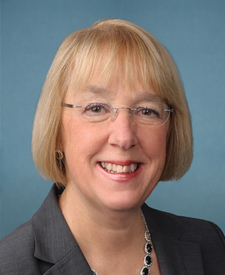
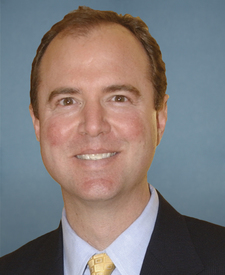
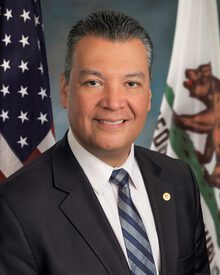
Mrs. Murray (for herself, Ms. Duckworth, Ms. Alsobrooks, Mr. Blumenthal, …

Stakeholder Effects

cui bono?

How this legislation distributes effects. Mention counts reflect frequency, not effect magnitude.

Education
13 mentions across 4 clauses
+9 positive -4 negative

Education grant recipients, Health professions grant recipients, Individuals with disabilities seeking abortion care information

Positive-direction: Individuals with disabilities seeking abortion care information, Medical schools, Nursing schools, Osteopathic medical schools, Youth with disabilities needing reproductive health education

Negative-direction: Education grant recipients, Health professions grant recipients, Nursing workforce grant recipients

Federal Administration
11 mentions across 8 clauses
-11 negative

Administration for Community Living, Health Resources and Services Administration, Secretary of Health and Human Services

Health Care Providers
9 mentions across 6 clauses
+7 positive -2 negative

Community-based reproductive health providers, Covered entities complying with federal disability laws, Health care professionals receiving disability training

Positive-direction: Community-based reproductive health providers, Covered entities complying with federal disability laws, Health care professionals receiving disability training, Health care providers receiving technical assistance, Nurse-managed health clinics

Negative-direction: Training grant recipients

Taxpayers
8 mentions across 8 clauses
-8 negative

Federal taxpayers funding nursing workforce grants, Federal taxpayers funding reproductive health education grants, Federal taxpayers funding reproductive health research

Health Care
7 mentions across 5 clauses
+7 positive

Disabled people who can become pregnant, Individuals with disabilities facing diagnostic equipment barriers, Individuals with disabilities needing reproductive health care

Labor
4 mentions across 3 clauses
+4 positive

Individuals with disabilities entering reproductive health professions, Individuals with disabilities entering reproductive nursing, Reproductive health nurses

Community Health Centers
3 mentions across 3 clauses
+3 positive

FQHCs providing reproductive health care, FQHCs providing reproductive health education

Family Planning Clinics
3 mentions across 3 clauses
+3 positive

Title X clinics

9/10
sections analyzed
Full impact breakdown

Bill Structure & Actor Mappings

Who is "The Secretary" in each section?

Domains
Healthcare Disability Policy
Actor Mappings
"providers"
→ Health care providers and facilities
"disabled_individuals"
→ Individuals with disabilities needing reproductive health care
Domains
Healthcare Education Disability Policy
Actor Mappings
"acl"
→ Administration for Community Living
"hrsa"
→ Health Resources and Services Administration
"secretary"
→ Secretary of Health and Human Services
"eligible_entities"
→ Nonprofit providers, higher education institutions, disability-led entities, reproductive rights entities, Tribes, Tribal organizations, and Urban Indian organizations
Domains
Healthcare Education Disability Policy
Actor Mappings
"schools"
→ Medical schools, nursing schools, osteopathic medical schools, and higher education institutions
"secretary"
→ Secretary of Health and Human Services
"disabled_students"
→ Individuals with disabilities entering reproductive health professions
Domains
Healthcare Disability Policy Government Operations
Actor Mappings
"acl"
→ Administration for Community Living
"states"
→ States, territories, Indian Tribes, Tribal organizations, and Urban Indian organizations
"secretary"
→ Secretary of Health and Human Services
"covered_entities"
→ Covered entities subject to federal accessibility laws

Key Definitions

Terms defined in this bill

3 terms
"disability" §disability

The meaning used for purposes of the Americans with Disabilities Act of 1990.

"eligible training entities" §id538576E65F6E403AB65E6BE33AE9E4F5

Public or private nonprofit entities with demonstrated expertise serving individuals with disabilities, including FQHCs, Title X clinics, higher education institutions, disability-led entities, reproductive rights and justice entities, Indian Tribes, Tribal organizations, Urban Indian organizations, and consortia.

"National Technical Assistance Center" §id70F0C665BD48446F835AFC17FE16F77D

An HHS/ACL center that provides best practices, provider technical assistance, compliance resources, and accessible-care resources for states, territories, Tribes, Tribal organizations, Urban Indian organizations, covered entities, providers, and individuals with disabilities.

We use a combination of our own taxonomy and classification in addition to large language models to assess meaning and potential beneficiaries. High confidence means strong textual evidence. Always verify with the original bill text.

Learn more about our methodology