To permanently establish the E-Verify employment eligibility verification system, to mandate the use of E-Verify by all employers, and for other purposes.
Analysis under review: This bill has generated analysis that may be too generic or incomplete. Clause-level evidence remains available below.
Summary
What This Bill Does
This bill, To permanently establish the E-Verify employment eligibility verification system, to mandate the use of E-Verify by all employers, and for other purposes., changes federal law or congressional policy affecting federal agencies and legislative administrators. The main policy domain is Government Operations, Labor, Criminal Justice.
Who Benefits and How
federal agencies and legislative administrators may benefit from new authority, funding, eligibility, regulatory clarity, or reduced risk created by the bill.
Who Bears the Burden and How
federal implementing agencies may take on implementation duties, reporting obligations, compliance costs, or oversight responsibilities.
Key Provisions
- Section id7d03910708ae4476bd86f1d0adbeda63: 1. Short title; table of contents This Act may be cited as the Mandatory E-Verify Act of 2024. The table of contents for this Act is as follows:
- Section id67ccb68b715d4a3c83f1d21a1051c525: 2. Establishment of permanent E-Verify Section 274A(d) of the Immigration and Nationality Act (8 U.S.C. 1324a(d)) is amended to read as follows:...
- Section id8C82CD7FA32C4E2C935FBB6FBAEA905D: 3. Mandatory E-Verify for all employers Any person or other entity hiring, recruiting, or referring an individual for employment in the United States shall...
- Section id080C9CC5531342CA9B3FB74D2F21507A: 4. Penalty for failure to use E-Verify If a person or entity fails to utilize E-Verify in accordance with this Act and the amendments made by this Act,...
- Section idC9D1000ED7824F2080950E3197FA3803: 5. Enhanced penalties for unauthorized employment Section 274A of the Immigration and Nationality Act (8 U.S.C. 1324a) is amended— in subsection (e)— in...
Evidence Chain:
This summary is generated from the full bill text using AI analysis. Expand "Detailed Analysis" below for identified beneficiaries/burden bearers with clause-level evidence links.
At a Glance
What This Bill Does
This bill, To permanently establish the E-Verify employment eligibility verification system, to mandate the use of E-Verify by all employers, and for other purposes., changes federal law or congressional policy affecting federal agencies and legislative administrators.
Key Policy Areas
Government Operations, Labor, Criminal Justice
Primary Purpose
This bill, To permanently establish the E-Verify employment eligibility verification system, to mandate the use of E-Verify by all employers, and for other purposes., changes federal law or congressional policy affecting federal agencies and legislative administrators.
Policy Domains
Whole bill
Identified Gains
- federal agencies and legislative administrators
Identified Costs
- federal implementing agencies
Sponsors



Legislative Progress
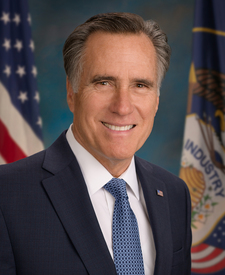
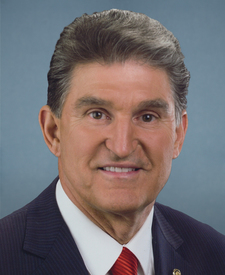
IntroducedMr. Romney (for himself, Mr. Cotton, Mr. Cassidy, Mr. Lankford, …
Impact analysis is available but no clear stakeholder effects identified. View clause-level analysis →
Bill Structure & Actor Mappings
Who is "The Secretary" in each section?
- "the_commission"
- → The commission identified in the operative section
- "the_administrator"
- → The Administrator identified in the operative section
- "secretary_of_treasury"
- → Secretary of the Treasury
- "secretary_of_agriculture"
- → Secretary of Agriculture
- "secretary_of_homeland_security"
- → Secretary of Homeland Security
We use a combination of our own taxonomy and classification in addition to large language models to assess meaning and potential beneficiaries. High confidence means strong textual evidence. Always verify with the original bill text.
Learn more about our methodology