S4443-119

Reported

Eastern Mediterranean Gateway Act

119th Congress Introduced Apr 29, 2026

Summary

What This Bill Does

The Eastern Mediterranean Gateway Act directs the Secretary of State to prioritize the Eastern Mediterranean in U.S. foreign policy, with emphasis on energy security and defense cooperation, and permits institutionalized multilateral strategic dialogues with IMEC countries. Its nonbinding findings and sense of Congress support U.S. leadership in the Greece-Cyprus-Israel-U.S. 3+1 format, the East Mediterranean Gas Forum, Abraham Accords expansion, regional energy and transportation infrastructure, and trilateral work on maritime security, cybersecurity, and critical infrastructure. Starting within one year, State must report annually for five years and every two years thereafter for ten years on implementation, energy projects, and defense cooperation. The report must assess how IMEC increases connections and trade among U.S. partners to counter PRC influence. State must also brief Congress on each U.S.-IMEC multilateral initiative, analyze the Cyprus Centre for Land, Open Seas, and Port Security as a model for broader cooperation, and, with Energy, report on creating or expanding bilateral research and development programs modeled on U.S.-Israel foundations. Covered Eastern Mediterranean countries are Egypt, Greece, Cyprus, and Israel; listed IMEC participants include the EU, Germany, France, Italy, Saudi Arabia, India, the UAE, and the United States, and State may designate others. The reported version makes State rather than Energy the recurring-report lead, drops mandatory DHS coordination on the Cyprus study, narrows report recipients to the congressional foreign-affairs committees, and adds the PRC-influence assessment.

Who Benefits and How

Egypt, Greece, Cyprus, and Israel gain explicit U.S. policy priority for energy, defense, infrastructure, innovation, and diplomatic formats. India, Gulf partners, and European IMEC participants may gain stronger corridor links and U.S.-supported trade and connectivity. Eastern Mediterranean electricity interconnectors, LNG terminals, ports, research foundations, cybersecurity and maritime-security programs, and U.S. energy and infrastructure companies gain policy visibility and potential program expansion. Congress gains recurring implementation reporting and initiative briefings.

Who Bears the Burden and How

State must lead multilateral diplomacy, prioritize the region, track projects and defense cooperation, assess IMEC trade and PRC influence, brief Congress, analyze the Cyprus Centre, and study bilateral-program costs and feasibility. Energy must support the bilateral-program study. Congressional foreign-affairs committee staff must absorb recurring reports and briefings. PRC-backed infrastructure interests face greater competition, while countries and project sponsors seeking U.S. support may need to align with corridor, transparency, security, and cooperation priorities.

Key Provisions

  • Requires State to prioritize Eastern Mediterranean energy security and defense cooperation.
  • Authorizes institutionalized multilateral dialogues with IMEC countries.
  • Requires recurring implementation reports with an assessment of trade connectivity and PRC influence.
  • Requires congressional briefings on each U.S.-IMEC multilateral initiative.
  • Requires analysis of the Cyprus port-security center as a multilateral model.
  • Requires a State-Energy feasibility report on adapting U.S.-Israel bilateral research programs.
  • Defines four Eastern Mediterranean countries and permits State to add IMEC countries.

Evidence Chain:

This summary is generated from the full bill text using AI analysis. Expand "Detailed Analysis" below for identified beneficiaries/burden bearers with clause-level evidence links.

At a Glance

What This Bill Does

Makes Egypt, Greece, Cyprus, and Israel a priority gateway for U.S. diplomacy supporting the India-Middle East-Europe Economic Corridor, energy security, defense cooperation, and regional connectivity.

Key Policy Areas

Eastern Mediterranean, Energy Security, Economic Corridors

Primary Purpose

Makes Egypt, Greece, Cyprus, and Israel a priority gateway for U.S. diplomacy supporting the India-Middle East-Europe Economic Corridor, energy security, defense cooperation, and regional connectivity.

Policy Domains

Eastern Mediterranean Energy Security Economic Corridors

Eastern Mediterranean Gateway Act

Identified Gains
  • Egyptian, Greek, Cypriot, and Israeli government agencies
  • Eastern Mediterranean energy infrastructure operators
  • India and Gulf corridor partners
  • United States energy and infrastructure companies
  • Cyprus port-security programs
  • Congressional foreign-affairs committees
Model: codex-gpt-5 | Version: bill_summary_v2 | Source: rs
Cyprus port-security programs: , ,
India and Gulf corridor partners: , ,
Congressional foreign-affairs committees: , ,
United States energy and infrastructure companies: , ,
Eastern Mediterranean energy infrastructure operators: , ,
Egyptian, Greek, Cypriot, and Israeli government agencies: , ,
Identified Costs
  • State Department Eastern Mediterranean staff
  • Department of Energy international-program staff
  • Congressional foreign-affairs committee staff
  • PRC-backed infrastructure competitors
  • Regional project sponsors seeking United States support
  • IMEC reporting and coordination officials
Model: codex-gpt-5 | Version: bill_summary_v2 | Source: rs
PRC-backed infrastructure competitors: , ,
IMEC reporting and coordination officials: , ,
State Department Eastern Mediterranean staff: , ,
Congressional foreign-affairs committee staff: , ,
Department of Energy international-program staff: , ,
Regional project sponsors seeking United States support: , ,

Legislative Progress

Reported
Introduced Committee Passed
Jul 27, 2026

Placed on Senate Legislative Calendar under General Orders. Calendar No. …

Jul 27, 2026

Committee on Foreign Relations. Reported by Senator Risch with an …

Jul 27, 2026

Reported by Mr. Risch, with an amendment

Jun 17, 2026

Committee on Foreign Relations. Ordered to be reported with an …

Apr 29, 2026

Read twice and referred to the Committee on Foreign Relations.

Apr 29, 2026

Introduced in Senate

Apr 29, 2026

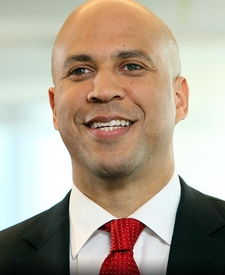
Mr. Booker (for himself and Mr. McCormick) introduced the following …

Apr 29, 2026

Mr. Booker (for himself, Mr. McCormick, Ms. Rosen, Mr. Cramer, …

Stakeholder Effects

cui bono?

How this legislation distributes effects. Mention counts reflect frequency, not effect magnitude.

Government
33 mentions across 12 clauses
+12 positive -8 negative ?13 uncertain

Congressional energy and foreign-affairs committees, Congressional energy committees, Congressional foreign-affairs committees

Department of Energy international-program staff, Department of Homeland Security port-security analysts face effects in multiple directions

Positive-direction: Congressional energy and foreign-affairs committees, Congressional foreign-affairs committees, Cyprus Centre for Land, Open Seas, and Port Security, Eastern Mediterranean partner governments, Egyptian, Greek, Cypriot, and Israeli government agencies, House Foreign Affairs Committee, Senate Foreign Relations Committee, State Department congressional-affairs staff

Negative-direction: Congressional energy committees, People's Republic of China infrastructure officials, State Department Eastern Mediterranean staff, State Department IMEC designation staff

Energy
6 mentions across 5 clauses
+3 positive ?3 uncertain

Eastern Mediterranean energy and trade projects, Eastern Mediterranean energy infrastructure operators, Eastern Mediterranean energy operators

Professional Services
1 mention across 1 clause
?1 uncertain

Legislative compliance counsel

Nonprofits
1 mention across 1 clause
+1 positive

Regional research and development organizations

7/14
sections analyzed
Full impact breakdown

Bill Structure & Actor Mappings

Who is "The Secretary" in each section?

Domains
Eastern Mediterranean Energy Security Economic Corridors
Actor Mappings
"energy_partner"
→ Secretary of Energy
"diplomatic_lead"
→ Secretary of State
"oversight_bodies"
→ Senate Foreign Relations and House Foreign Affairs Committees
"corridor_partners"
→ India, Gulf states, and European IMEC participants
"regional_partners"
→ Egypt, Greece, Cyprus, and Israel
"studied_institution"
→ Cyprus Centre for Land, Open Seas, and Port Security

We use a combination of our own taxonomy and classification in addition to large language models to assess meaning and potential beneficiaries. High confidence means strong textual evidence. Always verify with the original bill text.

Learn more about our methodology