TEACH Improvement Act of 2026
Summary
What This Bill Does
The TEACH Improvement Act of 2026 rewrites the Higher Education Act's TEACH Grant program. It defines an eligible institution as a higher education institution that the Secretary of Education determines provides high-quality teacher preparation and professional development, extensive clinical experience, pedagogical coursework, mentoring, supervision, support services, financial responsibility, and no heightened cash monitoring or provisional certification. It defines post-baccalaureate programs and teacher candidates for the revised program.
The bill requires the Secretary to pay eligible institutions amounts needed to provide TEACH Grants to qualifying teacher candidates. Most students would receive $4,000 for each of the first two years and $5,000 for each of the second two years of attendance. Current or prospective teachers seeking graduate degrees under the teacher-specific pathway would receive $5,000 for each year of attendance. At least 85 percent of funds to an eligible institution must be advanced before each payment period unless the Secretary publishes an alternative timely payment system, and the Secretary may pay teacher candidates directly if an institution does not participate in the disbursement system. Grants are reduced for part-time attendance and cannot exceed cost of attendance when combined with other assistance. Undergraduate and post-baccalaureate recipients may receive up to $18,000 total, and graduate recipients may receive up to $10,000 total. Remedial, English-language, and approved study-abroad coursework can count when the institution determines it is necessary.
The bill adds institutional accountability based on TEACH Grant-to-loan conversion rates. Beginning with award year 2026-2027, institutions where 50 percent or more of covered TEACH Grant recipients have grants converted to loans during a three-year period become ineligible for three years to offer grants to new TEACH recipients and then may reapply only under heightened requirements for three award years. Institutions with 40 percent or more conversion rates face a three-year heightened status: they may not offer first-year TEACH Grants, must provide student teaching experience before offering grants, must provide extra financial aid counseling, and must create a task force and improvement plan to reduce loan conversions. Institutions can regain full eligibility after three award years if their conversion rate falls below 40 percent and they show progress on the improvement plan. The Secretary must provide technical assistance and disseminate best practices for minimizing conversions.
The bill revises TEACH Grant applications and service obligations. Student applicants must meet student-aid eligibility, have a 3.25 GPA or score above the 75th percentile on an admissions test, and pursue teaching coursework. Teacher applicants seeking graduate degrees must be teachers, retirees with shortage-field expertise, teachers using alternative certification, or practicing teachers seeking an additional credential in a shortage field. Applicants must agree to serve as full-time teachers for at least four academic years within eight years after completing the course of study, teach in an eligible school, teach in math, science, foreign language, bilingual education, special education, reading, career and technical education, school mental health, or another approved high-need field or area, submit annual employment certification, and meet state certification requirements. Failure to satisfy the service obligation converts grant amounts to loans, but the bill also creates reconsideration and reconversion relief for improper conversions, including loan discharge, interest and fee discharge, payment reallocation or reimbursement, negative credit-reporting correction requests, and renewed service-obligation windows.
The bill lets recipients continue satisfying service obligations if a field or school was high-need when they began but later loses that designation. It requires the Secretary to establish extenuating-circumstance categories for excusing part of a service obligation, notify recipients annually about employment certification, maintain searchable public lists of qualifying schools and high-need fields, notify recipients of required certification deadlines, adjust deadlines when service windows are extended, and provide alternatives when a school cannot or will not provide employment certification. It permanently authorizes such sums as necessary from funds not otherwise appropriated to provide TEACH Grants to eligible applicants.
The Secretary must report to authorizing committees within two years and every two years after that on schools and students served by TEACH Grant recipients, including recipient counts, degrees, school, local education agency, state, field taught, service duration, and other evaluation data. The Secretary must also report within one year and annually after that on loan conversions, institutions under heightened requirements, grant reconversions, complaints to the Department of Education or Consumer Financial Protection Bureau, demographic information about recipients, and best practices for minimizing conversions. The bill also requires regulations ensuring accurate administrative oversight and appropriate penalties for third-party servicers whose failures cause TEACH Grant recipients to lose benefits.
Who Benefits and How
Teacher candidates benefit from higher grant amounts, advance payments, direct-payment flexibility, eligibility for remedial and study-abroad coursework, clearer application rules, continued eligibility when high-need designations change, extenuating-circumstance relief, certification deadline notices, and alternatives when schools do not provide employment certification. TEACH Grant recipients harmed by mistaken or delayed loan conversions benefit from reconsideration, grant reinstatement, discharge of loan balances, interest, and fees, payment reimbursement or reallocation, credit-reporting correction requests, and extended service windows. Eligible teacher-preparation institutions benefit from grant funding, 85 percent prepayment, technical assistance, and clear paths to restore eligibility after high conversion rates. Schools in high-need fields and locations benefit from teacher-service incentives.
Who Bears the Burden and How
The Department of Education bears administrative burden because the Secretary must define eligibility standards, pay institutions or teacher candidates, publish regulations, monitor conversion rates, enforce institutional sanctions, provide technical assistance, maintain public lists, send annual notices, adjudicate reconsideration and reconversion requests, request credit-reporting corrections, report to Congress, and regulate third-party servicers. Institutions with high TEACH Grant loan conversion rates bear compliance burdens, temporary eligibility limits, counseling duties, student-teaching prerequisites, task-force duties, and improvement-plan obligations. Teacher candidates bear service-obligation and certification duties, and recipients who fail to satisfy service obligations can still face loan conversion. Third-party servicers bear oversight and penalty exposure for failures that cause recipients to lose benefits. Federal taxpayers bear costs from mandatory such-sums-as-necessary funding.
Key Provisions
- Rewrites the TEACH Grant subpart with definitions for eligible institutions, post-baccalaureate programs, and teacher candidates.
- Requires TEACH Grant payments of $4,000 and $5,000 per year for qualifying students, $5,000 per year for specified teacher applicants, 85 percent institutional prepayment, part-time reductions, and $18,000 or $10,000 aggregate limits.
- Establishes 50 percent and 40 percent institutional loan-conversion thresholds that trigger ineligibility, heightened requirements, counseling, student-teaching prerequisites, task forces, improvement plans, technical assistance, and reentry conditions.
- Requires teacher candidates to meet academic or teacher-pathway eligibility rules and agree to four years of full-time qualifying teaching within an eight-year service-obligation window.
- Provides reconversion relief for mistaken or delayed TEACH Grant loan conversions, including loan discharge, interest and fee discharge, payment reimbursement or reallocation, and credit-reporting correction requests.
- Requires public qualifying-school and high-need-field lists, annual certification notices, certification deadline rules, and certification alternatives when schools do not cooperate.
- Authorizes such sums as necessary for TEACH Grants and requires biennial and annual reports on recipients, service, conversions, complaints, demographics, and best practices.
- Directs the Secretary to regulate third-party servicer oversight and penalties for failures that cause TEACH Grant recipients to lose benefits.
Evidence Chain:
This summary is generated from the full bill text using AI analysis. Expand "Detailed Analysis" below for identified beneficiaries/burden bearers with clause-level evidence links.
At a Glance
What This Bill Does
The bill rewrites the Higher Education Act TEACH Grant subpart to increase grant amounts, define eligible teacher-preparation institutions and teacher candidates, revise service-obligation and loan-conversion rules, impose institutional accountability for high conversion rates, require Department of Education reporting, and regulate third-party servicer accountability.
Key Policy Areas
Education, Higher Education, Student Financial Aid, Workforce Development, Government Operations
Primary Purpose
The bill rewrites the Higher Education Act TEACH Grant subpart to increase grant amounts, define eligible teacher-preparation institutions and teacher candidates, revise service-obligation and loan-conversion rules, impose institutional accountability for high conversion rates, require Department of Education reporting, and regulate third-party servicer accountability.
Policy Domains
TEACH Grant reporting and third-party servicer accountability
Identified Gains
- Congressional authorizing committees
- TEACH Grant recipients
- Department of Education oversight staff
Identified Costs
- Secretary of Education
- Third-party TEACH Grant servicers
Teacher candidate applications, service obligations, loan conversion, and reconversion relief
Identified Gains
- TEACH Grant recipients with wrongful loan conversions
- Teacher candidates in high-need fields
- Student loan borrowers with reinstated TEACH Grants
Identified Costs
- Secretary of Education
- Teacher candidates with service obligations
- Consumer reporting agencies
TEACH Grant definitions, payments, institutional eligibility, and funding
Identified Gains
- Teacher candidates
- Eligible teacher-preparation institutions
- Prospective teachers in high-need fields
- Schools in high-need communities
Identified Costs
- Secretary of Education
- Institutions with high TEACH loan conversion rates
- Federal taxpayers
Sponsors
Legislative Progress
In CommitteeRead twice and referred to the Committee on Health, Education, …
Introduced in Senate
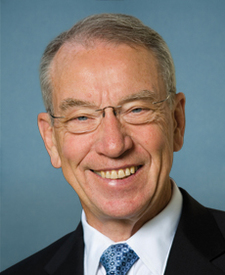
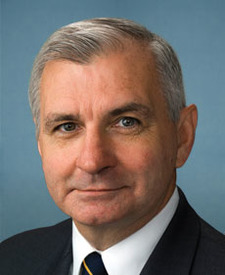
Mr. Grassley (for himself, Mr. Reed, and Mr. Gallego) introduced …
Stakeholder Effects
cui bono?How this legislation distributes effects. Mention counts reflect frequency, not effect magnitude.
Current teachers seeking shortage-field credentials, Eligible schools verifying employment, Eligible teacher-preparation institutions
Positive-direction: Current teachers seeking shortage-field credentials, Eligible schools verifying employment, Eligible teacher-preparation institutions, Institutions with high TEACH loan conversion rates, Student loan borrowers with reinstated TEACH Grants, TEACH Grant recipients harmed by servicer failures, TEACH Grant recipients with wrongful loan conversions, Teacher-preparation institutions meeting quality criteria, Teachers in high-need fields
Negative-direction: Institutions under heightened cash monitoring
Congressional authorizing committees, Consumer Financial Protection Bureau, Department of Education
Department of Education faces effects in multiple directions
Positive-direction: Congressional authorizing committees
Negative-direction: Consumer Financial Protection Bureau
Eligible TEACH Grant applicants, Post-baccalaureate teacher candidates, TEACH Grant recipients
Third-party TEACH Grant servicers
Third-party TEACH Grant servicers faces effects in multiple directions
Bill Structure & Actor Mappings
Who is "The Secretary" in each section?
- "secretary"
- → Secretary of Education
- "institutions"
- → Eligible teacher-preparation institutions
- "teacher_candidates"
- → Teacher candidates
- "high_conversion_institutions"
- → Institutions with high TEACH loan conversion rates
- "schools"
- → Eligible schools
- "secretary"
- → Secretary of Education
- "teach_recipients"
- → TEACH Grant recipients
- "teacher_candidates"
- → Teacher candidates
- "secretary"
- → Secretary of Education
- "servicers"
- → Third-party TEACH Grant servicers
- "recipients"
- → TEACH Grant recipients
- "authorizing_committees"
- → Congressional authorizing committees
Key Definitions
Terms defined in this bill
A student or teacher applicant who satisfies the eligibility pathways in section 420N(a)(2).
An institution of higher education that the Secretary determines provides high-quality teacher preparation and support, is financially responsible, is not under heightened cash monitoring or provisional certification, and provides or assists with pedagogical coursework, monitoring, mentoring, supervision, and support services.
The eight-year period after completing the course of study in which a TEACH Grant recipient must complete at least four academic years of full-time qualifying teaching.
We use a combination of our own taxonomy and classification in addition to large language models to assess meaning and potential beneficiaries. High confidence means strong textual evidence. Always verify with the original bill text.
Learn more about our methodology