S4413-119

In Committee

Protecting America’s Workers Act

119th Congress Introduced Apr 28, 2026

Summary

What This Bill Does

The Protecting America's Workers Act is a broad OSHA enforcement and worker-protection bill. It expands who can represent employees, clarifies when OSHA can cede jurisdiction to another federal agency, strengthens anti-retaliation protections for workers who report hazards or refuse dangerous work, and broadens the general duty clause so each exposed worker can count as a separate violation. It also updates national consensus standards, requires injury and fatality reporting, makes recordkeeping an ongoing duty, creates victim and family participation rights, tightens citation and abatement procedures, raises OSHA civil and criminal penalties, adds interest on contested penalties, increases federal oversight of deficient state OSHA plans, and expands NIOSH health hazard evaluations and worker-safety training grants.

Who Benefits and How

Workers covered by OSHA benefit because the bill gives them stronger rights to report injuries, refuse work that reasonably appears likely to cause serious harm, receive representation through authorized employee representatives, and benefit from updated safety standards. Injured workers and families of workers killed on the job gain notice, access to citations and reports, opportunities to be heard in settlement and review proceedings, and family liaisons in OSHA area offices. Employees in states with weak OSHA plans benefit because the Secretary of Labor can reassert concurrent federal enforcement while deficiencies are remedied. Nonprofit safety-training organizations benefit from grant authority to develop training capacity and materials for high-risk workers.

Who Bears the Burden and How

Covered employers bear the largest burden because the bill requires more reporting, recordkeeping, hazard abatement, evidence preservation, and anti-retaliation compliance. Employers that contest citations face continuing abatement duties for serious, willful, or repeated violations, higher daily failure-to-correct penalties, prejudgment interest, larger civil penalties, and expanded criminal exposure for knowing violations that cause death or serious bodily harm. OSHA, NIOSH, the Occupational Safety and Health Review Commission, and state OSHA agencies also bear administrative burdens because they must run new investigations, hearings, notice procedures, state-plan reviews, health hazard evaluations, and grant programs.

Key Provisions

  • Expands OSHA-related rights for authorized employee representatives, retaliation complainants, injured workers, and families of workers killed or harmed on the job.
  • Requires employers to report serious injuries and fatalities, maintain accurate injury records as an ongoing duty, preserve evidence after major incidents, and abate serious cited hazards during contests unless a stay is granted.
  • Strengthens enforcement by treating each exposed worker as a possible separate violation, extending citation timing for continuing violations, barring unclassified citations, and allowing employees to contest weak citation classifications or penalties.
  • Establishes stronger monetary and criminal consequences, including much higher OSHA civil penalties, inflation adjustments, interest on contested penalties, and prison exposure for knowing violations tied to death or serious bodily harm.
  • Adds federal oversight tools for deficient state OSHA plans and expands NIOSH health hazard evaluations plus nonprofit safety-training grants.

Evidence Chain:

This summary is generated from the full bill text using AI analysis. Expand "Detailed Analysis" below for identified beneficiaries/burden bearers with clause-level evidence links.

At a Glance

What This Bill Does

The Protecting America's Workers Act broadly amends the Occupational Safety and Health Act to expand OSHA coverage, strengthen worker anti-retaliation and victim-participation rights, tighten employer reporting and abatement duties, raise civil and criminal penalties, and increase federal oversight of state workplace-safety plans.

Key Policy Areas

Labor, Government Operations

Primary Purpose

The Protecting America's Workers Act broadly amends the Occupational Safety and Health Act to expand OSHA coverage, strengthen worker anti-retaliation and victim-participation rights, tighten employer reporting and abatement duties, raise civil and criminal penalties, and increase federal oversight of state workplace-safety plans.

Policy Domains

Labor Government Operations

Coverage, definitions, and federal jurisdiction

Identified Gains
  • Authorized employee representatives
  • Workers covered by OSHA
  • Workers under other federal agency safety standards
Model: codex-gpt-5 | Version: bill_summary_v2 | Source: is
Workers covered by OSHA:
Authorized employee representatives:
Workers under other federal agency safety standards:
Identified Costs
  • Secretary of Labor
  • Federal agencies with occupational safety jurisdiction
  • Employers covered by OSHA
Model: codex-gpt-5 | Version: bill_summary_v2 | Source: is
Secretary of Labor:
Employers covered by OSHA:
Federal agencies with occupational safety jurisdiction:

Worker rights, retaliation, reporting, records, and victim participation

Identified Gains
  • Employees reporting workplace injuries
  • Workers refusing dangerous tasks
  • Victims of workplace injuries
  • Family members of deceased workers
Model: codex-gpt-5 | Version: bill_summary_v2 | Source: is
Victims of workplace injuries: ,
Workers refusing dangerous tasks:
Family members of deceased workers: ,
Employees reporting workplace injuries: ,
Identified Costs
  • Covered employers
  • OSHA area offices
  • Occupational Safety and Health Review Commission
Model: codex-gpt-5 | Version: bill_summary_v2 | Source: is
Covered employers: , ,
OSHA area offices: ,
Occupational Safety and Health Review Commission: ,

Employer duties, abatement, contests, and penalties

Identified Gains
  • Workers exposed to recognized hazards
  • Employees challenging weak OSHA citations
  • OSHA enforcement staff
Model: codex-gpt-5 | Version: bill_summary_v2 | Source: is
OSHA enforcement staff: , ,
Workers exposed to recognized hazards: ,
Employees challenging weak OSHA citations:
Identified Costs
  • Employers with serious OSHA citations
  • Employers with willful OSHA violations
  • Corporate officers responsible for knowing safety violations
Model: codex-gpt-5 | Version: bill_summary_v2 | Source: is
Employers with serious OSHA citations: , ,
Employers with willful OSHA violations: ,
Corporate officers responsible for knowing safety violations:

State-plan oversight, NIOSH evaluations, training grants, and effective dates

Identified Gains
  • Workers in deficient state-plan states
  • Current employees requesting hazard evaluations
  • Nonprofit safety-training organizations
  • High-risk workers receiving OSHA training
Model: codex-gpt-5 | Version: bill_summary_v2 | Source: is
Workers in deficient state-plan states:
Nonprofit safety-training organizations:
High-risk workers receiving OSHA training:
Current employees requesting hazard evaluations:
Identified Costs
  • State occupational safety and health agencies
  • National Institute for Occupational Safety and Health
  • Secretary of Labor
Model: codex-gpt-5 | Version: bill_summary_v2 | Source: is
Secretary of Labor: , ,
State occupational safety and health agencies: ,
National Institute for Occupational Safety and Health:

Legislative Progress

In Committee
Introduced Committee Passed
Apr 28, 2026

Read twice and referred to the Committee on Health, Education, …

Apr 28, 2026

Introduced in Senate

Apr 28, 2026

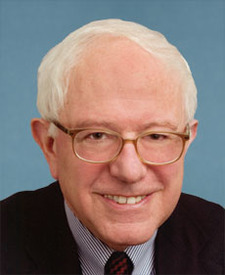
Mr. Sanders (for himself, Ms. Baldwin, Ms. Alsobrooks, Mr. Blumenthal, …

Stakeholder Effects

cui bono?

How this legislation distributes effects. Mention counts reflect frequency, not effect magnitude.

Labor
45 mentions across 22 clauses
+29 positive -16 negative

Authorized employee representatives, Corporate officers responsible for safety violations, Current employees requesting hazard evaluations

Positive-direction: Authorized employee representatives, Current employees requesting hazard evaluations, Employees challenging OSHA citations, Employees in serious workplace incidents, Employees reporting workplace hazards, Employees reporting workplace injuries, Employees reviewing OSHA citations, Employers receiving OSHA citations, Employers receiving OSHA training, Family members of deceased workers, Former employees requesting hazard evaluations, High-risk workers receiving OSHA training, Victims of workplace injuries, Workers at cited workplaces, Workers at multi-employer worksites, Workers at uncorrected hazardous worksites, Workers covered by OSHA standards, Workers exposed to serious safety violations, Workers exposed to unresolved hazards, Workers in deficient state-plan states, Workers in public-sector workplaces, Workers protected by OSHA penalties, Workers refusing dangerous tasks, Workers relying on injury records, Workers represented in OSHA matters, Workers under federal safety standards, Workplace safety researchers

Negative-direction: Corporate officers responsible for safety violations, Employers accused of OSHA retaliation, Employers committing knowing OSHA violations, Employers contesting OSHA citations, Employers contesting OSHA penalties, Employers contesting serious OSHA citations, Employers covered by OSHA, Employers creating workplace hazards, Employers failing to abate OSHA violations, Employers receiving hazard determinations, Employers subject to OSHA reporting rules, Employers subject to updated OSHA standards, Employers violating OSHA standards, Employers with OSHA recordkeeping duties, Employers with continuing OSHA violations, Employers with fatal workplace incidents

Federal Administration
20 mentions across 18 clauses
+3 positive -17 negative

Department of Labor whistleblower investigators, National Institute for Occupational Safety and Health, OSHA area offices

Positive-direction: OSHA enforcement staff, OSHA penalty collection

Negative-direction: Department of Labor whistleblower investigators, National Institute for Occupational Safety and Health, OSHA area offices, OSHA citation staff, OSHA family liaisons, OSHA incident investigators, Occupational Safety and Health Administration, Occupational Safety and Health Review Commission, Secretary of Labor

Government
4 mentions across 3 clauses
-4 negative

Federal agencies with workplace-safety rules, Public-sector workplaces without state plans, State occupational safety agencies

Construction
2 mentions across 2 clauses
-2 negative

Site-controlling employers

Nonprofits
1 mention across 1 clause
+1 positive

Nonprofit safety-training organizations

22/28
sections analyzed
Full impact breakdown

Bill Structure & Actor Mappings

Who is "The Secretary" in each section?

Domains
Labor Government Operations
Actor Mappings
"osha"
→ Occupational Safety and Health Administration
"secretary"
→ Secretary of Labor
"federal_agencies"
→ Federal agencies with occupational safety jurisdiction
Domains
Labor
Actor Mappings
"secretary"
→ Secretary of Labor
"commission"
→ Occupational Safety and Health Review Commission
"authorized_representative"
→ Authorized employee representative
Domains
Labor
Actor Mappings
"employers"
→ Employers covered by OSHA
"secretary"
→ Secretary of Labor
"commission"
→ Occupational Safety and Health Review Commission
Domains
Labor Government Operations
Actor Mappings
"niosh"
→ National Institute for Occupational Safety and Health
"secretary"
→ Secretary of Labor
"state_agencies"
→ State occupational safety and health agencies

Key Definitions

Terms defined in this bill

3 terms
"authorized employee representative" §H390C0D5DF56B4C44BDE0C7C0C78104D8

A person or organization representing at least one employee at a workplace, including representatives authorized by employees.

"significant incident" §HE61A3A76E3A0474B92F3A6DF047E1FE3

An incident at a workplace that results in inpatient hospitalization of two or more employees for medical treatment.

"victim" §HEE7C12D95198499689454C50F85AAD81

An employee or former employee harmed in a work-related incident under OSHA investigation, or a qualifying family member if the worker dies or cannot exercise the rights.

We use a combination of our own taxonomy and classification in addition to large language models to assess meaning and potential beneficiaries. High confidence means strong textual evidence. Always verify with the original bill text.

Learn more about our methodology