To establish American opportunity accounts, and for other purposes.
Analysis under review: This bill has generated analysis that may be too generic or incomplete. Clause-level evidence remains available below.
Summary
What This Bill Does
This bill creates a universal 'baby bonds' program where every child born after December 31, 2023 receives a federally-funded savings account. Each account starts with a $1,000 government deposit at birth, followed by annual contributions of $0 to $2,000 based on household income (lower-income families receive larger contributions). The funds are invested in Treasury securities and can be accessed at age 18.
Who Benefits and How
Children from low-income families benefit most, receiving up to $2,000 annually in government contributions, which could grow to approximately $50,000 by age 18. All children born after 2023 receive at least $1,000 at birth. Account holders can use funds tax-free for education before age 18 or for any purpose after 18. The accounts do not count against eligibility for federal benefits like student financial aid or Medicaid.
Who Bears the Burden and How
Federal taxpayers fund the program through mandatory appropriations to the American Opportunity Fund. The Treasury Department bears administrative costs for managing accounts. Higher-income families (above 500% of poverty line) receive only the initial $1,000 with no annual contributions. The program requires creation of a new federal board modeled on the Thrift Savings Plan.
Key Provisions
- $1,000 initial deposit for every child born after December 31, 2023
- Annual contributions of $0-$2,000 on sliding scale based on household income
- Funds invested in Treasury securities
- Tax-exempt contributions and distributions
- Accounts protected from counting toward federal benefit eligibility
- Accessible at age 18 (or earlier for qualified education expenses)
Evidence Chain:
This summary is generated from the full bill text using AI analysis. Expand "Detailed Analysis" below for identified beneficiaries/burden bearers.
At a Glance
What This Bill Does
Establishes federally-funded American Opportunity accounts (baby bonds) for all children born after 2023, with an initial $1,000 deposit and annual contributions up to $2,000 based on household income, accessible at age 18 for education, homeownership, and wealth building.
Key Policy Areas
Social Welfare, Wealth Building, Child Development, Financial Services, Tax Policy
Primary Purpose
Establishes federally-funded American Opportunity accounts (baby bonds) for all children born after 2023, with an initial $1,000 deposit and annual contributions up to $2,000 based on household income, accessible at age 18 for education, homeownership, and wealth building.
Policy Domains
American Opportunity Accounts Act
Identified Gains
Contextual inference, no direct clause citation- Children from low-income families
- All children born after 2023
- Young adults entering adulthood
- Financial literacy organizations
Contextual inference, no direct clause citation
Identified Costs
Contextual inference, no direct clause citation- Federal taxpayers
- Treasury Department (administration)
- Higher-income families (receive less benefit)
Contextual inference, no direct clause citation
Sponsors
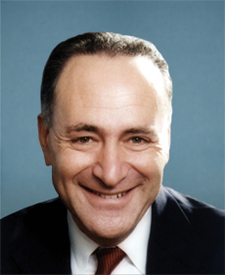
Legislative Progress
IntroducedMr. Booker (for himself, Mr. Durbin, Mr. Markey, Mr. Merkley, …
Stakeholder Effects
cui bono?How this legislation distributes effects. Mention counts reflect frequency, not effect magnitude.
AO account holders, Account holders, Account holders (earnings)
Positive-direction: AO account holders, Account holders, Account holders (earnings), Account holders and families, Account holders receiving federal benefits, All children born after 2023, Children born after December 31, 2023, Children from low-income families (under 100% poverty), Surviving spouses and estates, Young adults turning 18
Negative-direction: Taxpayers
American Opportunity Fund, American Opportunity Fund Board, American Opportunity Fund Board (new entity)
Positive-direction: American Opportunity Fund, Congress (oversight), Fund fiduciaries and Board members
Negative-direction: American Opportunity Fund Board, Department of Labor, Executive Director and Board, Federal tax revenue, Social Security Administration, Treasury Department (administration), Treasury Department (issuing securities)
Bill Structure & Actor Mappings
Who is "The Secretary" in each section?
- "the_board"
- → American Opportunity Fund Board
- "the_secretary"
- → Secretary of the Treasury
- "the_executive_director"
- → Executive Director of the American Opportunity Fund Board
Key Definitions
Terms defined in this bill
A fund established in the Treasury of the United States to hold all amounts for the program, invested in Treasury securities
An American Opportunity account established for each eligible individual, identified by a unique IRS-recognized personal identifier
A sliding scale contribution from $0 to $2,000 based on household income, with lower-income households receiving larger contributions
Any individual born after December 31, 2007, who has not yet attained age 18, and has a valid Federal Government issued identification number recognized by the IRS
We use a combination of our own taxonomy and classification in addition to large language models to assess meaning and potential beneficiaries. High confidence means strong textual evidence. Always verify with the original bill text.
Learn more about our methodology