Energy Security Pacts Act
Summary
What This Bill Does
The reported Energy Security Pacts Act permits the Secretary of State to establish multiyear pacts and permits a Director to contract for technical support, make capacity-building grants to foreign-assistance-eligible partners, and lead Country Pact Teams. Assistance excludes military aid, projects likely to cause major environmental, health, or safety hazards, activities failing foreign-aid transparency rules, and entities owned or managed by senior U.S. officials or immediate family members. Before project funding, State should assess domestic production and competitiveness effects. A Director may be appointed to negotiate and administer pacts, receive proposals, sign interagency agreements, coordinate donors, report annually for five years, lead optional Country Pact Teams, and use reimbursable details and direct hiring. New pact authority ends after 15 years; the Director and Council end 30 days after the last pact. Each pact requires Secretary approval after ambassador consultation, an interagency and partner constraints analysis, and 30-day congressional notice, text, documentation, and briefing. Eligible countries must satisfy World Bank income or graduation criteria, possess strategically important critical minerals or face U.S.-security-threatening adversary energy encroachment, and not be covered nations. Pacts must contain objectives, responsibilities, benchmarks, impacts, annual financial plans, donor roles, transparent proposal and competitive procurement processes, sustainability plans, community consultation, critical-mineral infrastructure, and tax-free U.S. assistance. They cannot exclude an energy technology categorically, last more than ten years, or exceed two concurrent pacts per country. Increased or extended assistance requires 30-day notice. The President should create a multiagency Council that should meet quarterly. GAO must evaluate pact efficiency and development impact within two years and annually until the final pact expires. The reported bill removes the introduced dedicated office mandate, foreign-operations transfer authority, and mandatory Council language.
Who Benefits and How
Eligible lower-income or graduating partner countries with strategic minerals or adversary energy exposure may gain technical contracts, capacity grants, coordinated project design, reliable power, critical-mineral infrastructure, and access to U.S. agencies and private investment. Affected communities gain required consultation and transparent benchmarks. U.S. energy, mining, engineering, and technical-support companies may gain contracts and competitive project opportunities. Domestic mineral producers gain an explicit pact goal and a pre-funding competitiveness assessment. Congress and GAO gain pact texts, advance briefings, annual reports, expenditure data, and recurring evaluations.
Who Bears the Burden and How
State, any appointed Director, Country Pact Teams, embassies, and participating agencies must perform constraints analyses, eligibility checks, negotiations, procurement oversight, financial planning, monitoring, reporting, and congressional consultation. GAO must evaluate every year after its initial two-year review until all pacts end. Partner governments must meet narrow eligibility rules, exempt U.S. aid from taxation, use competitive and transparent procedures, contribute where appropriate, collect benchmarks, consult communities, and sustain gains. Hazardous projects, covered nations, conflicted entities, and military activities are barred. The final bill provides no special funding-transfer mechanism.
Key Provisions
- Authorizes multiyear Energy Security Pacts and technical-support contracts and capacity grants.
- Limits eligibility to qualifying-income countries with strategic minerals or adversary energy encroachment.
- Requires constraints analysis, ambassador consultation, Secretary approval, and 30-day congressional review.
- Requires transparent procurement, benchmarks, financial plans, community consultation, tax exemption, and sustainability.
- Limits each pact to ten years and each country to no more than two concurrent pacts.
- Provides optional Director, Country Pact Team, and multiagency Council structures with 15-year authority sunset.
- Requires annual GAO efficiency and development-impact evaluations after two years.
Evidence Chain:
This summary is generated from the full bill text using AI analysis. Expand "Detailed Analysis" below for identified beneficiaries/burden bearers with clause-level evidence links.
At a Glance
What This Bill Does
Authorizes multiyear Energy Security Pacts with qualifying partner countries to improve reliable energy access, diversify critical-mineral and energy supply chains, counter adversary encroachment, and support U.S. commercial competitiveness.
Key Policy Areas
Foreign Assistance, Energy Security, Critical Minerals
Primary Purpose
Authorizes multiyear Energy Security Pacts with qualifying partner countries to improve reliable energy access, diversify critical-mineral and energy supply chains, counter adversary encroachment, and support U.S. commercial competitiveness.
Policy Domains
Energy Security Pacts Act
Identified Gains
- Eligible partner-country governments
- Partner-country energy consumers
- United States mineral producers
- United States energy contractors
- Affected partner-country communities
- Congressional oversight committees
Identified Costs
- State Department pact administrators
- Participating federal agencies
- Partner-country procurement officials
- Government Accountability Office evaluators
- Hazardous project developers
- Entities tied to senior government officials
Sponsors
Legislative Progress
ReportedPlaced on Senate Legislative Calendar under General Orders. Calendar No. …
Committee on Foreign Relations. Reported by Senator Risch with an …
Reported by Mr. Risch, with an amendment
Committee on Foreign Relations. Ordered to be reported with an …
Read twice and referred to the Committee on Foreign Relations.
Introduced in Senate
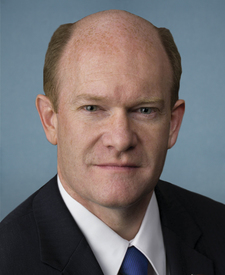
Mr. Coons (for himself and Mr. Ricketts) introduced the following …
Mr. Coons (for himself, Mr. Ricketts, Mr. Hickenlooper, and Mr. …
Stakeholder Effects
cui bono?How this legislation distributes effects. Mention counts reflect frequency, not effect magnitude.
Congressional foreign-affairs and appropriations committees, Congressional oversight committees, Congressional tax-writing committees
Congressional oversight committees, Eligible partner-country governments, President of the United States, Secretary of State face effects in multiple directions
Positive-direction: Congressional foreign-affairs and appropriations committees, Countries facing adversary energy encroachment, Income-qualified mineral partner governments, National Security Council, Potential Council agencies, State Department fund-transfer staff, State Department organizational managers, United States development-finance agencies
Negative-direction: Congressional tax-writing committees, Council agency personnel, Country Pact Team staff, Director for Energy Security Pacts, Energy Security Pacts Council agencies, Entities tied to senior government officials, Government Accountability Office evaluators, Office of Energy Security Pacts, Partner-country procurement officials, Partner-country project agencies, Senior United States Government officials, State Department pact administrators, Strategic countries lacking final eligibility
Critical mineral supply chains, Energy system operators, Energy technical-support contractors
Positive-direction: Critical mineral supply chains, Energy system operators, Energy technical-support contractors, United States energy companies, United States mineral producers
Negative-direction: Hazardous project developers, Projects displacing domestic production, United States domestic suppliers
Affected partner-country communities, Taxpayers
Taxpayers faces effects in multiple directions
Bill Structure & Actor Mappings
Who is "The Secretary" in each section?
- "country_teams"
- → Optional Country Pact Teams
- "program_manager"
- → Director for Energy Security Pacts
- "interagency_body"
- → Energy Security Pacts Council
- "approval_official"
- → Secretary of State
- "eligible_partners"
- → Qualifying partner-country governments
- "independent_evaluator"
- → Government Accountability Office
We use a combination of our own taxonomy and classification in addition to large language models to assess meaning and potential beneficiaries. High confidence means strong textual evidence. Always verify with the original bill text.
Learn more about our methodology