Dalilah’s Law Act
Analysis under review: This bill has generated analysis that may be too generic or incomplete. Clause-level evidence remains available below.
Summary
What This Bill Does
This bill, Dalilah’s Law Act, changes federal law or congressional policy affecting transportation operators and travelers. The main policy domain is Transportation, Immigration, Criminal Justice.
Who Benefits and How
transportation operators and travelers may benefit from new authority, funding, eligibility, regulatory clarity, or reduced risk created by the bill.
Who Bears the Burden and How
federal implementing agencies, transportation operators and travelers may take on implementation duties, reporting obligations, compliance costs, or oversight responsibilities.
Key Provisions
- Section S1: 1. Short title; table of contents This Act may be cited as the Dalilah’s Law Act. The table of contents for this Act is as follows:
- Section id74e20fdfa8084cf2bb65e7b0befd07b2: 101. Use of commercial driver’s licenses by illegal aliens in interstate commerce Chapter 2 of title 18, United States Code, is amended by inserting after...
- Section idb5bf7c46df0442cfb0d60d50d44b5463: 40B. Use of commercial driver’s licenses by illegal aliens in interstate commerce In this section— the terms commercial driver’s license and commercial vehicle...
- Section idbd4d46c0180148b98d6ccb224a04f6ba: 102. Death penalty aggravating factor Section 3592(c) of title 18, United States Code, is amended by inserting after paragraph (16) the following: (17)Illegal...
- Section id6771085c14404c70a29ea59fa5ceee00: 103. Immigration consequences Section 101(a)(43) of the Immigration and Nationality Act (8 U.S.C. 1101(a)(43)) is amended— in subparagraph (T), by striking and...
Evidence Chain:
This summary is generated from the full bill text using AI analysis. Expand "Detailed Analysis" below for identified beneficiaries/burden bearers with clause-level evidence links.
At a Glance
What This Bill Does
This bill, Dalilah’s Law Act, changes federal law or congressional policy affecting transportation operators and travelers.
Key Policy Areas
Transportation, Immigration, Criminal Justice
Primary Purpose
This bill, Dalilah’s Law Act, changes federal law or congressional policy affecting transportation operators and travelers.
Policy Domains
Whole bill
Identified Gains
- transportation operators and travelers
Identified Costs
- federal implementing agencies
- transportation operators and travelers
Sponsors




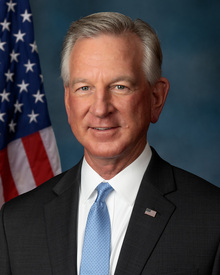
Legislative Progress
In CommitteeRead twice and referred to the Committee on the Judiciary.
Introduced in Senate
Mr. Cornyn (for himself, Mr. Budd, Mrs. Capito, Ms. Lummis, …
Impact analysis is available but no clear stakeholder effects identified. View clause-level analysis →
Bill Structure & Actor Mappings
Who is "The Secretary" in each section?
- "secretary_of_transportation"
- → Secretary of Transportation
Key Definitions
Terms defined in this bill
an alien (as defined in section 101 of the Immigration and Nationality Act (8 U.S.C. 1101)) who— is described under— section 237(a)(1)(C)(i) of the Immigration and Nationality Act (8 U.S.C. 1227(a)(1)(C)(i))
an alien (as defined in section 101 of the Immigration and Nationality Act (8 U.S.C. 1101)) who— is described under— section 237(a)(1)(C)(i) of the Immigration and Nationality Act (8 U.S.C. 1227(a)(1)(C)(i))
We use a combination of our own taxonomy and classification in addition to large language models to assess meaning and potential beneficiaries. High confidence means strong textual evidence. Always verify with the original bill text.
Learn more about our methodology