No Tax Breaks for Outsourcing Act
Analysis under review: This bill has generated analysis that may be too generic or incomplete. Clause-level evidence remains available below.
Summary
The No Tax Breaks for Outsourcing Act restructures US international corporate taxation to eliminate incentives for offshore profit shifting and job outsourcing. Section 2 replaces the current GILTI (Global Intangible Low-Taxed Income) regime with a country-by-country 'net CFC tested income' system, preventing companies from blending income from high-tax and low-tax countries to reduce their US tax burden. Section 3 applies foreign tax credit limitations on a per-country basis using taxable units, preventing cross-crediting of taxes paid in different jurisdictions. Section 4 limits interest deductions for US corporations in international financial reporting groups (over M revenue) to their proportional share of the group's net interest expense at 110%. Section 5 expands anti-inversion rules: foreign corporations are treated as domestic if they acquire a US company and former shareholders hold over 50% of the resulting entity, or if management and control remain primarily in the US (currently 80% for full recharacterization). Section 6 treats any foreign corporation whose management and control occurs primarily within the US as a domestic corporation for tax purposes, targeting publicly traded companies and those with M+ in assets.
Evidence Chain:
This summary is generated from the full bill text using AI analysis. Expand "Detailed Analysis" below for identified beneficiaries/burden bearers.
At a Glance
What This Bill Does
Close international tax loopholes that incentivize corporations to shift profits and jobs overseas by reforming GILTI taxation, implementing country-by-country foreign tax credit limits, restricting interest deductions for multinationals, tightening anti-inversion rules, and treating foreign corporations managed from the US as domestic corporations.
Who Benefits
- US Treasury (increased corporate tax revenue)
- Domestic-only businesses competing against multinationals
- US workers in industries where outsourcing is tax-motivated
Who Bears Costs
- Multinational corporations with significant offshore operations
- Companies using corporate inversions
- Foreign-incorporated companies managed from the US
Key Policy Areas
{'domain': 'Tax Policy', 'evidence': ['2', '3', '4', '5', '6']}, {'domain': 'International Trade', 'evidence': ['2', '3', '5', '6']}
Primary Purpose
Close international tax loopholes that incentivize corporations to shift profits and jobs overseas by reforming GILTI taxation, implementing country-by-country foreign tax credit limits, restricting interest deductions for multinationals, tightening anti-inversion rules, and treating foreign corporations managed from the US as domestic corporations.
Policy Domains
Legislative Strategy
"Systematically close every major mechanism for offshore profit shifting (income blending, cross-crediting, excessive interest deductions, corporate inversions, management-and-control arbitrage) to create a level playing field between domestic and international operations."
Sponsors



Legislative Progress
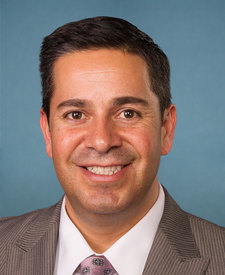
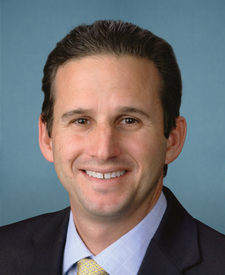
In CommitteeMr. Whitehouse (for himself, Mr. Durbin, Mr. Murphy, Mr. Reed, …
Read twice and referred to the Committee on Finance.
Introduced in Senate
Stakeholder Effects
cui bono?How this legislation distributes effects. Mention counts reflect frequency, not effect magnitude.
Companies using or planning corporate inversions, Foreign-incorporated companies with US-based management, Multinational corporations using cross-crediting strategies
Financial institutions with cross-border lending structures, Offshore holding companies managing US operations, Tax haven jurisdictions
US workers in industries prone to inversion-driven outsourcing
Bill Structure & Actor Mappings
Who is "The Secretary" in each section?
- "the_secretary"
- → Secretary of the Treasury
- "the_secretary"
- → Secretary of the Treasury
- "the_secretary"
- → Secretary of the Treasury
- "the_secretary"
- → Secretary of the Treasury
Key Definitions
Terms defined in this bill
A group of entities with at least one foreign and one domestic corporation (or foreign corp in US trade), preparing consolidated financials, with aggregate gross receipts over M
The taxpayer itself, each CFC, pass-through entity interests in different-country jurisdictions, and branches giving rise to taxable presence in another country
We use a combination of our own taxonomy and classification in addition to large language models to assess meaning and potential beneficiaries. High confidence means strong textual evidence. Always verify with the original bill text.
Learn more about our methodology