STAND with Taiwan Act of 2026
Analysis under review: This bill has generated analysis that may be too generic or incomplete. Clause-level evidence remains available below.
Summary
What This Bill Does
This bill, STAND with Taiwan Act of 2026, changes federal law or congressional policy affecting defense agencies, service members, and defense contractors. The main policy domain is Defense, Technology, Finance.
Who Benefits and How
defense agencies, service members, and defense contractors may benefit from new authority, funding, eligibility, regulatory clarity, or reduced risk created by the bill.
Who Bears the Burden and How
federal implementing agencies, defense agencies, service members, and defense contractors may take on implementation duties, reporting obligations, compliance costs, or oversight responsibilities.
Key Provisions
- Section idF192559E3A99428A937E598BE8EB04F6: 1. Short title; table of contents This Act may be cited as the Sanctions Targeting Aggressors of Neighboring Democracies with Taiwan Act of 2026 or the STAND...
- Section id2ac38719a2474d7793b374356d9376cf: 2. Findings Congress makes the following findings: Taiwan is a free and prosperous democracy of nearly 23,000,000 people, an important contributor to peace and...
- Section idc1929135336c42d482d2b1c5d960fa7f: 3. Sense of Congress It is the sense of Congress that— it is in the interest of the United States to maintain a free and open Indo-Pacific region, with peace...
- Section id5FE33B30ACB6436FB219DBC07EB04D22: 4. Definitions In this Act: The terms account, correspondent account, and payable-through account have the meanings given those terms in section 5318A of title...
- Section idc80bcb0e96f64dcd91fbf787d1ce658b: 101. Covered determinations In this Act, the term covered determination means— a determination by the President under subsection (b) that an actor described in...
Evidence Chain:
This summary is generated from the full bill text using AI analysis. Expand "Detailed Analysis" below for identified beneficiaries/burden bearers with clause-level evidence links.
At a Glance
What This Bill Does
This bill, STAND with Taiwan Act of 2026, changes federal law or congressional policy affecting defense agencies, service members, and defense contractors.
Key Policy Areas
Defense, Technology, Finance
Primary Purpose
This bill, STAND with Taiwan Act of 2026, changes federal law or congressional policy affecting defense agencies, service members, and defense contractors.
Policy Domains
Whole bill
Identified Gains
- defense agencies, service members, and defense contractors
Identified Costs
- federal implementing agencies
- defense agencies, service members, and defense contractors
Sponsors




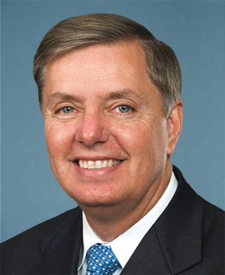
Legislative Progress
In CommitteeRead twice and referred to the Committee on Banking, Housing, …
Introduced in Senate
Mr. Sullivan (for himself, Mr. Graham, Ms. Duckworth, Mr. Kennedy, …
Impact analysis is available but no clear stakeholder effects identified. View clause-level analysis →
Bill Structure & Actor Mappings
Who is "The Secretary" in each section?
- "the_commission"
- → The commission identified in the operative section
- "secretary_of_commerce"
- → Secretary of Commerce
- "secretary_of_treasury"
- → Secretary of the Treasury
Key Definitions
Terms defined in this bill
any person with respect to which sanctions are imposed under this Act. The term top decision-making body, with respect to the People’s Republic of China and the Chinese Communist Party, includes— the Chinese Communist Party Politburo Standing Committee
We use a combination of our own taxonomy and classification in addition to large language models to assess meaning and potential beneficiaries. High confidence means strong textual evidence. Always verify with the original bill text.
Learn more about our methodology